Forbes endorses Pakistan tourism

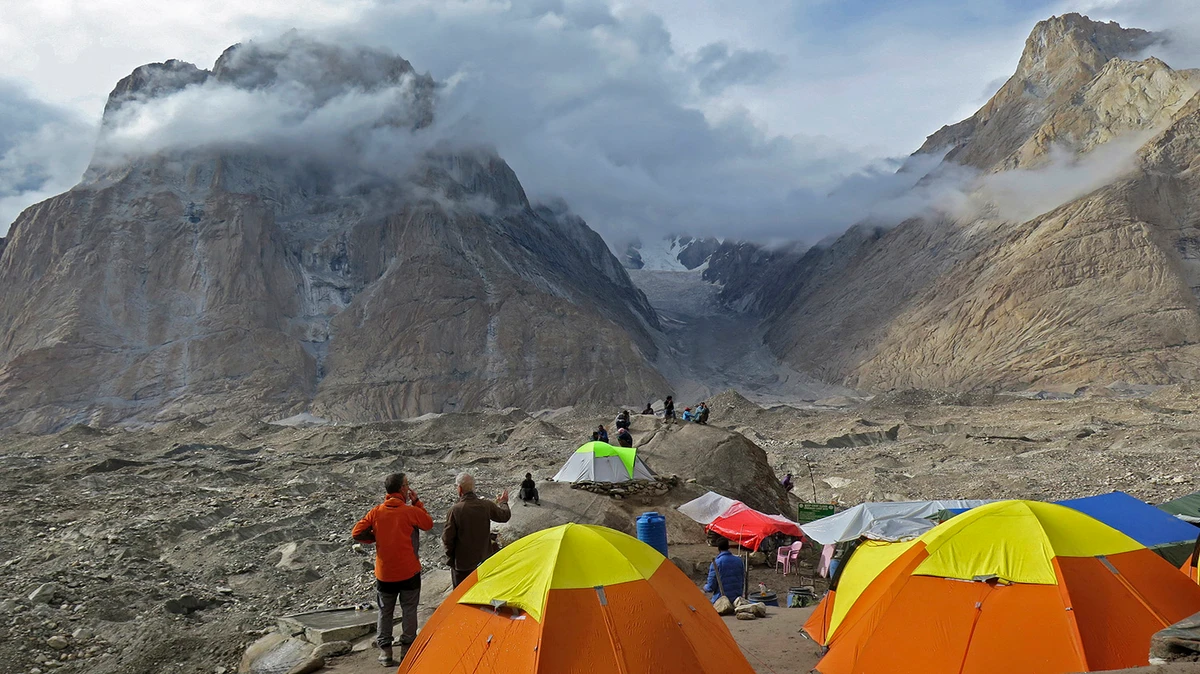
In this file photo, foreign tourists and porters rest at a camping site above Baltoro glacier in the Karakoram range of Pakistan's mountain northern Gilgit region on Aug. 12, 2019. (AFP)
Short Url
Updated 09 January 2020
Follow

Forbes endorses Pakistan tourism

  • The magazine has added Pakistan to its ‘10 Best Under-the-Radar Trips’ for 2020 list
  • Forbes mentions the visit of British royals as a significant feather in Pakistan’s tourism cap

ISLAMABAD: Forbes has joined the league of international publications that have added Pakistan to their list of must-visit places in 2020. The magazine has published a catalog, “The Not Hot List,” which mentions countries that skew away from popular and typical vacation spots and aims to seek out those “off the beaten path.”

In its “10 Best-Under-The-Radar Trips” for 2020 list, Pakistan’s northern areas are included for being the “ultimate” location for adventure seekers.

Forbes lists the recent visit of the Duke and Duchess of Cambridge, Prince William and Kate Middleton, as a significant feather in Pakistan’s tourism cap. It also mentions an adventure travel group, Wild Frontiers, which gives a curated 16-day group tour through the mountainous northwest frontier and introduces tourists to places like Kalash Valley, Hunza, and Chitral.
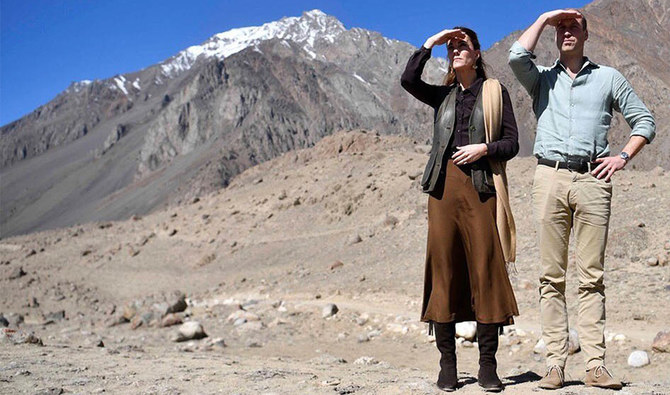


British royal couple during the visit of Bombaret village in Kalash valley Pakistan on Oct 16, 2019. (Photo by PTI Twitter)

The founder of Wild Frontiers told Forbes: “Pakistan is perhaps the ultimate adventure travel destination. It offers ancient Indus civilizations stretching back 4,000 years, and exciting cities like Lahore with its forts, mosques, and palaces. But most of all, it offers incredible scenery, particularly in the north where the three greatest mountain ranges collide. Pakistan is great for trekking, mountain biking, rafting or just cultural tourism. The infrastructure has also improved, with resurfaced roads and new tunnels cutting down travel time, new luxury hotels are opening up in the region.”

Forbes joins Conde Nast Traveler and the British Backpacker Society in naming Pakistan a top holiday destination for 2020.

Since the sitting prime minister, Imran Khan, assumed the country’s top political office, there has been an effort to project Pakistan’s soft image to revive tourism in the country. The government has had a number of royal visits, including the aforementioned British Royals as well as Saudi Crown Prince Mohammed bin Salman, and has announced plans to refurbish and preserve a number of religious sites.

Pakistan most recently opened the Kartarpur Corridor with India, allowing Sikh pilgrims from the neighboring country to visit their most important religious shrine with limited restriction. Pakistan also announced late last year that Hindu temples in Peshawar would be renovated next. It also said that Buddhist sites of worship would be tended to as the country intends to host a Buddhist summit in April.

Pakistan PM orders accelerated privatization of power sector to tackle losses

Updated 15 December 2025
Follow

Pakistan PM orders accelerated privatization of power sector to tackle losses

  • Tenders to be issued for privatization of three major electricity distribution firms, PMO says
  • Sharif says Pakistan to develop battery energy storage through public-private partnerships

ISLAMABAD: Pakistan’s prime minister on Monday directed the government to speed up privatization of state-owned power companies and improve electricity infrastructure nationwide, as authorities try to address deep-rooted losses and inefficiencies in the energy sector that have weighed on the economy and public finances.

Pakistan’s electricity system has long struggled with financial distress caused by a combination of factors including theft of power, inefficient collection of bills, high costs of generating electricity and a large burden of unpaid obligations known as “circular debt.” In the first quarter of the current financial year, government-owned distribution companies recorded losses of about Rs171 billion ($611 million) due to poor bill recovery and operational inefficiencies, official documents show. Circular debt in the broader power sector stood at around Rs1.66 trillion ($5.9 billion) in mid-2025, a sharp decline from past peaks but still a major fiscal drain. 

Efforts to contain these losses have been a focus of Pakistan’s economic reform program with the International Monetary Fund, which has urged structural changes in the energy sector as part of financing conditions. Previous government initiatives have included signing a $4.5 billion financing facility with local banks to ease power sector debt and reducing retail electricity tariffs to support economic recovery. 

“Electricity sector privatization and market-based competition is the sustainable solution to the country’s energy problems,” Prime Minister Shehbaz Sharif said at a meeting reviewing the roadmap for power sector reforms, according to a statement from the prime minister’s office.

The meeting reviewed progress on privatization and infrastructure projects. Officials said tenders for modernizing one of Pakistan’s oldest operational hubs, Rohri Railway Station, will be issued soon and that the Ghazi Barotha to Faisalabad transmission line, designed to improve long-distance transmission of electricity, is in the initial approval stages. While not all power-sector decisions were detailed publicly, the government emphasized expanding private sector participation and completing priority projects to strengthen the electricity grid.

In another key development, the prime minister endorsed plans to begin work on a battery energy storage system with participation from private investors to help manage fluctuations in supply and demand, particularly as renewable energy sources such as solar and wind take a growing role in generation. Officials said the concept clearance for the storage system has been approved and feasibility studies are underway.

Government briefing documents also outlined steps toward shifting some electricity plants from imported coal to locally mined Thar coal, where a railway line expansion is underway to support transport of fuel, potentially lowering costs and import dependence in the long term.

State authorities also pledged to address safety by converting unmanned railway crossings to staffed ones and to strengthen food safety inspections at stations, underscoring broader infrastructure and service improvements connected to energy and transport priorities.