


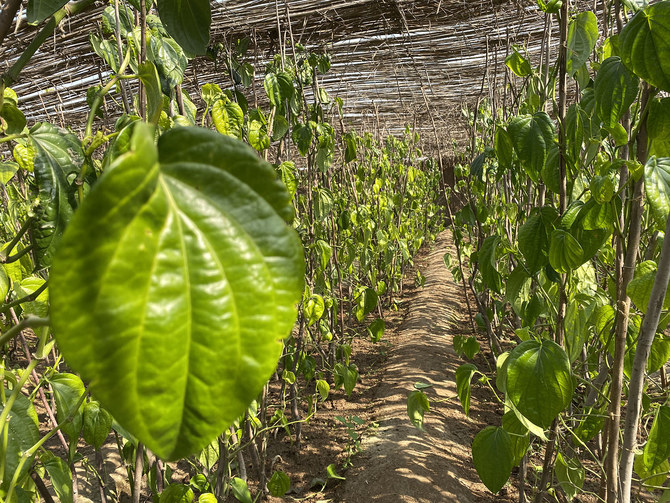

GHARO, Sindh: Betel leaf cultivation in Pakistan is poised for a boom as imports of this important ingredient of paan have recently plunged, while demand is ever-increasing.
The leaves, which are used to wrap the traditional confection of spices, tobacco paste and other flavorings, used to be grown domestically only in very small quantities in Karachi’s Malir area. Now they are produced on thousands of acres in the country’s coastal districts.
Paan has been chewed for thousands of years in South Asia. Upon his visit to the subcontinent in the mid-14th century, Muslim explorer Ibn Battuta described the practice as special to the region. Today, paan is also chewed in Southeast Asia.
Since 2004, when local production contributed only 5 percent to Pakistan’s betel consumption, reliance on imports from India, Sri Lanka, Thailand, Bangladesh has been decreasing.
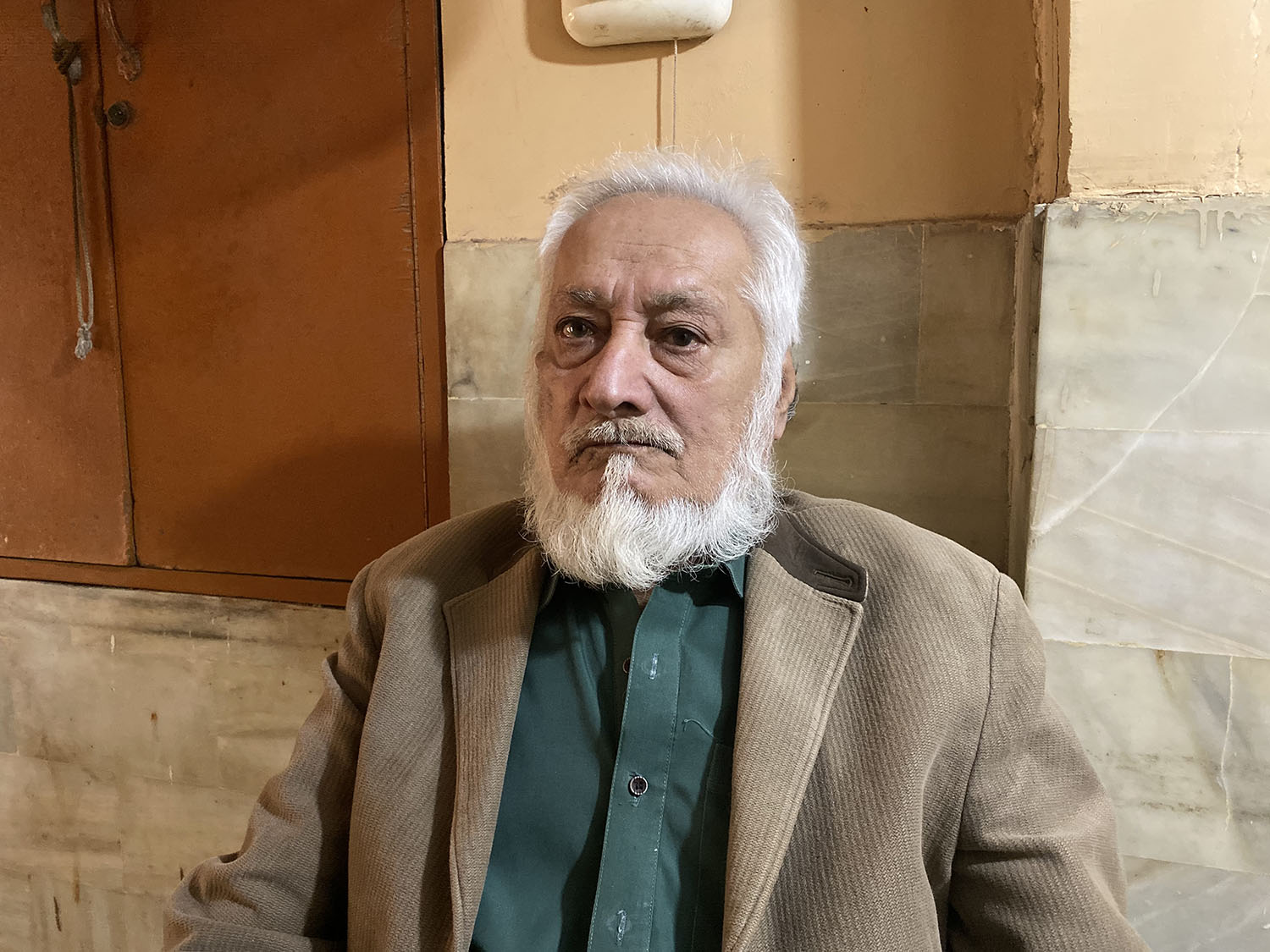
Haji Saleem Chikna, former chairman of the Nanakwara Paan Mandi is talking to Arab News in Karachi on Jan. 2, 2020. (AN photo)
“The import has decreased to a ton daily in off season, while it’s up to just 500 kilograms in full season,” Haji Saleem Chikna, former chairman of the Nanakwara Paan Mandi, told Arab News. The low season lasts only two months.
As Pakistan-India ties have been severed since last year, betel imports from the neighbor have stopped, further increasing demand for local produce.
“My father, Haji Muhammad Khan Baloch, took the seeds from Malir and cultivated it on a small piece of land. With the passage of time, it reached 80 acres,” Shahnawaz Baloch, a grower in Udasi village of Thatta district, told Arab News, adding that since the cash crop was doing very well, other farmers followed suit and now it is cultivated on thousands of acres.
“We are trying hard and want to take the produce to a level on which it will be exported,” Baloch said.
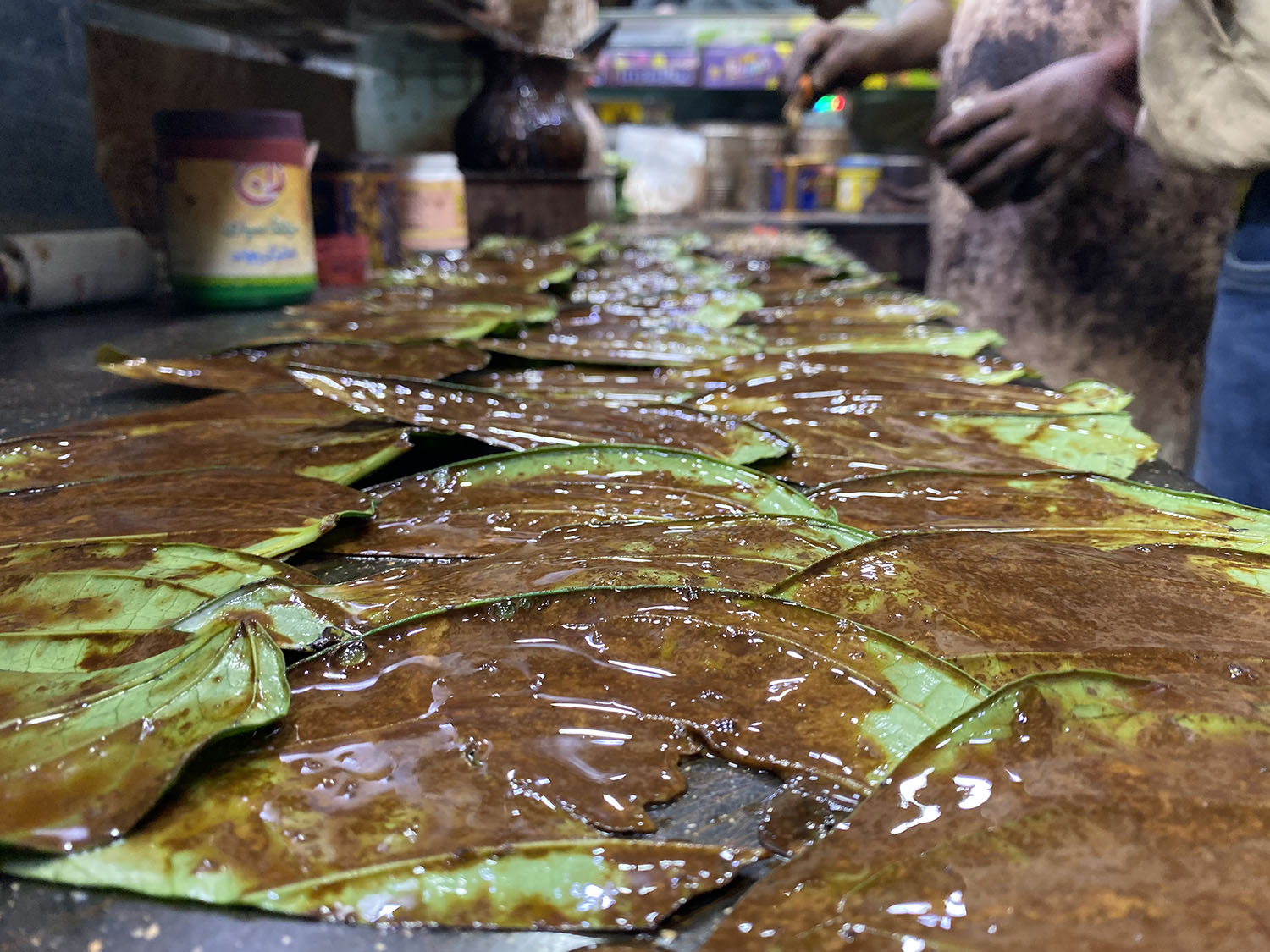
Paan is on display at a shop in the KECHS area of Karachi on Jan. 1, 2020. (AN photo)
In Sujawal and Thatta coastal districts, which are the largest producers of betel, millions of rupees in paan are consumed daily. “We, a population of 700,000, consume paan of Rs15 million daily, which is sold at around 3,000 stalls,” local resident Saifullah Junejo said. “When the fishermen go to sea, they take more paan and less food,” he added.
Meetha Paan, Saunf Khushboo, Saada Khushboo, Mix Patti, Raja Jani, Raja Sahab and Tambaku Paan are just a few of paan mix varieties available in stalls across Karachi. In the old days, the after-dinner treat would be prepared by grandmothers for family members.
Saatchi, Salon, and Bangkok are the types of betel produced domestically. While their cultivation is profitable, it requires hard work, time and money.
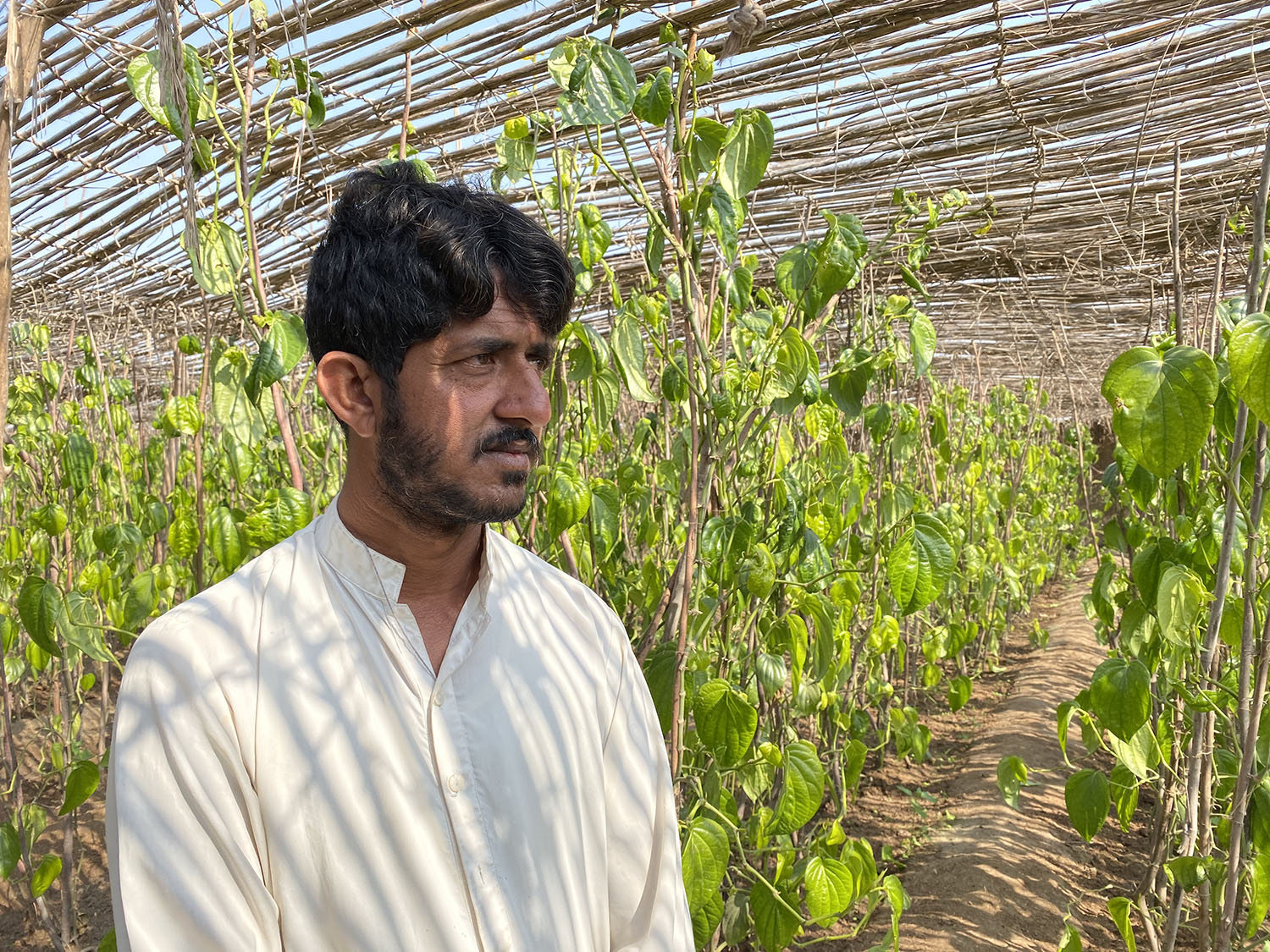
Abdul Rasheed, a betel grower, is talking to Arab News at his field in Udasi village, Sindh province, on Jan. 1, 2020. (AN photo)
It takes six months from preparing land to having the leaves, said Abdul Rasheed, another farmer in Udasi. “Once the first produce is ready, the farm continues to give us the leaves for around two years.” To prepare half an acre for farming costs about Rs800,000.
“We produce it with utmost care, then we keep it protected from thieves. If someone takes three to four kilograms of leaves, it means he steels Rs8,000,” Rasheed said as he carefully locked the door to his farm.


