Former Nissan boss Carlos Ghosn jumped bail, fled Japan ‘fearing for his life’ say sources

Ousted Nissan Motor Co boss, Carlos Ghosn claims he ‘feared for his life.’ (File/AFP)
Short Url
Updated 01 January 2020
Follow

Former Nissan boss Carlos Ghosn jumped bail, fled Japan ‘fearing for his life’ say sources

  • Airport security say Ghosn arrived in Lebanon in a private plane
  • Family sources say he was depressed and wanted to return to normal life

DUBAI/BEIRUT/TOKYO: Ousted Nissan Motor Co boss, Carlos Ghosn, fled Japan because he “feared for his life and was depressed,” exclusive sources have told Arab News Japan.

Sources confirmed Ghosn was smuggled out of Japan on a non-commercial flight – probably a cargo plane to Lebanon via Turkey.

Japanese immigration officials also confirmed they had no official record of him leaving the country through any of Japan’s official exit points.

And Japanese government officials have said they intend to ask Lebanon to return Ghosn who continues to deny the allegations laid against him.

Ghosn arrived at Rafic Hariri Airport in Beirut, on a private plane, using his French passport and a Lebanese ID, which made him eligible for an immediate visa on arrival, contrary to earlier reports suggesting he used a fake passport.

His name was not flagged in the system as he is not on any Interpol list, and the Lebanese General Security only realized it was him after he had left the private terminal.

Close family members told Arab News Japan he was with them in Lebanon, claiming Ghosn “feared for his life.”

They said he was “depressed after this ordeal” and wanted to return to “normal life.”

They also denied he met with the president of Lebanon as was reported in some media and confirmed neither the Lebanese Foreign Ministry nor the Japanese Embassy in Lebanon were aware of his plan to leave Japan.

Earlier Tuesday Ghosn’s lawyers told reporters they were holding his three passports, adding that he could not have used any of them to escape Japan, adding that his client’s actions were “inexcusable.”

The lawyer’s comments came as Ghosn confirmed he had fled to Lebanon, saying he would not be “held hostage” by a “rigged” justice system.

Ghosn said in a statement on Monday that he had left Japan for Lebanon to escape “political persecution,” adding: “I am now in Lebanon.”

He said he “will no longer be held hostage by a rigged Japanese justice system where guilt is presumed, discrimination is rampant, and basic human rights are denied.”
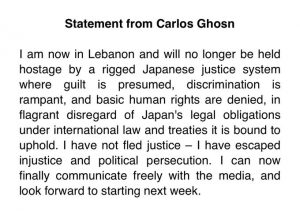
The system is “in flagrant disregard of Japan’s legal obligations under international law and treaties it is bound to uphold,” according to the statement.

“I have not fled justice,” he continued. “I have escaped injustice and political persecution.”

“I can now finally communicate freely with the media and look forward to starting next week,” the statement added.

News about Ghosn, who faces house arrest in Japan amid ongoing legal action over alleged corruption during his tenure, broke on Monday at 11 pm [Beirut time]. 

An aide of Ghosn told Lebanese media that Ghosn was no longer under house arrest in Japan and has arrived in his native country. 

The overthrown boss of the Renault-Nissan had been awaiting trial in Japan in April amid house arrest following several months in detention.
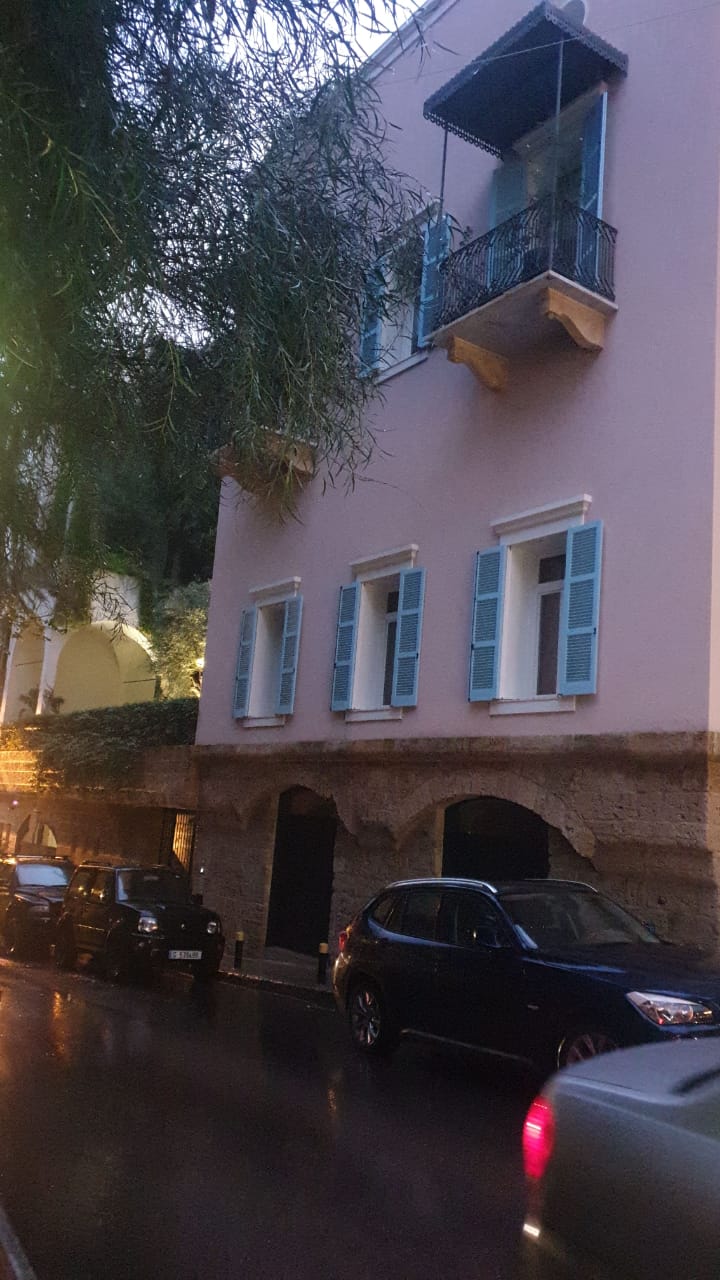


The home of former Nissan Chairman Carlos Ghosn in Beirut. (Leila Hattoum)

No official confirmation could be obtained from the Lebanese Internal Security Forces on Ghosn’s arrival at Beirut International Airport at midnight.

Requesting anonymity, an airport source told Arab News Japan that Ghosn arrived on a private jet that is believed to have flown in from Turkey. “He did arrive, but I cannot say when,” the source said without divulging further details. 

The Lebanese foreign ministry said it was not aware of the circumstances surrounding Ghosn's entry into the country. However, the General Security Directorate said the tycoon entered Lebanon legally and than no legal measures will be taken against him.

French junior economy minister Agnes Pannier-Runacher said on Tuesday she was “very surprised” by news that Carlos Ghosn had left Japan and flown to Lebanon, adding she had heard of it via the media.

Pannier-Runacher also told France Inter radio that, regarding Ghosn, no-one was above the law but Ghosn would be able to get French consular support as a French citizen.

Ghosn, once celebrated for his turnaround of the ailing car companies, has suffered one of the decade’s most dramatic corporate falls from grace. He was arrested in Japan in November 2018 under four charges of financial misconduct, which he denies.

After the news of his arrival in Beirut, social media users tweeted that Ghosn could be named a minister in the new cabinet that is currently being formed by Dr Hassan Diab following the resignation of Prime Minister Saad Hariri.

Hariri resigned amid ongoing protests over political corruption and deteriorating economic situation. 


World copper rush promises new riches for Zambia

Updated 3 sec ago
Follow

World copper rush promises new riches for Zambia

CAPE TOWN: Five years after becoming Africa’s first Covid-era debt defaulter, Zambia is seeing a dramatic turnaround in fortunes as major powers vie for access to its vast reserves of copper.
Surging demand from the artificial intelligence, green energy and defense sectors has exponentially boosted demand for the workhorse metal that underpins power grids, data centers and electric vehicles.
The scramble for copper exposes geopolitical rivalries as industrial heavyweights — including China, the United States, Canada, Europe, India and Gulf states — compete to secure supplies.
“We have the investors back,” President Hakainde Hichilema told delegates at the African Mining Indaba conference on Monday, saying that more than $12 billion had flowed into the sector since 2022.
The politically stable country is Africa’s second-largest copper producer, after the conflict-ridden Democratic Republic of Congo, and the world’s eighth, according to the US Geological Survey.
The metal, needed for solar panels and wind turbines, generates about 15 percent of Zambia’s GDP and more than 70 percent of export earnings.
Output rose eight percent last year to more than 890,000 metric tons and the government aims to triple production within a decade.
Mining is driving growth that is forecast by the International Monetary Fund to reach 5.2 percent in 2025 and 5.8 percent this year, which places Zambia among the continent’s faster-growing economies.
“The seeds are sprouting and the harvest is coming,” Hichilema said, touting a planned nationwide geological survey to map untapped deposits.
But the rapid expansion of the heavily polluting industry has also led to warnings about risks to local communities and concerns of “pit-to-port” extraction, in which raw copper is shipped directly abroad with little domestic refining.

’Dramatic new chapter’

“We need to be aware of the potential for history to repeat itself,” said Daniel Litvin, founder of the Resource Resolutions group that promotes sustainable development, referring to the colonial-era scramble for Africa’s resources.
There is a risk that elites will be enriched at the expense of the broader population, while “narratives of partnership” offered by major powers can mask underlying self-interest, he said.
Chinese firms have long dominated the sector in Zambia and control major stakes in key mines and smelters, cementing Beijing’s early-mover advantage.
Another major player is Canada’s First Quantum Minerals, Zambia’s largest corporate taxpayer.
Investors from India and the Gulf are expanding their footprint, and the United States is returning to the market after largely pulling out decades ago.
Washington, which has been stockpiling copper, this month launched a $12 billion “Project Vault” public-private initiative to secure critical minerals, part of an effort to reduce reliance on China.
In September, the US Trade and Development Agency announced a $1.4 million grant to a Metalex Commodities subsidiary, Metalex Africa, to expand operations in Zambia.
“We are at the beginning of what is going to unfold to be a dramatic new chapter in the way that the free world sources and trades in critical minerals,” US energy secretary adviser Mike Kopp said at Mining Indaba.
Sweeping US tariffs introduced last year helped send copper prices soaring to record highs, as companies rushed to buy both semi-finished and refined stocks.

Cost of rush

“The risk is that this great power competition becomes a race to secure supply on terms that serve markets and not the people in producer countries,” said Deprose Muchena, a program director at the Open Society Foundation.
Despite its mineral wealth, more than 70 percent of Zambia’s 21 million people live in poverty, according to the World Bank.
“The world is waking up to Zambia’s copper. But Zambia has been living with copper and its consequences for a century,” Muchena told AFP.
Environmental damage caused by mining has long plagued Zambia’s copper belt.
In February 2025, a burst tailings dam at a Chinese-owned mine near Kitwe, about 285 kilometers (180 miles) north of Lusaka, spilled millions of liters of acidic waste.
Toxins entered a tributary feeding the Kafue, Zambia’s longest river and a major source of drinking water. Zambian farmers have filed an $80 billion lawsuit.
“Whether this boom is different depends on whether governance, rights, and community agency are at the center, not just supply chain security,” Muchena said.