

Central bank makes digital tax payment free in Pakistan

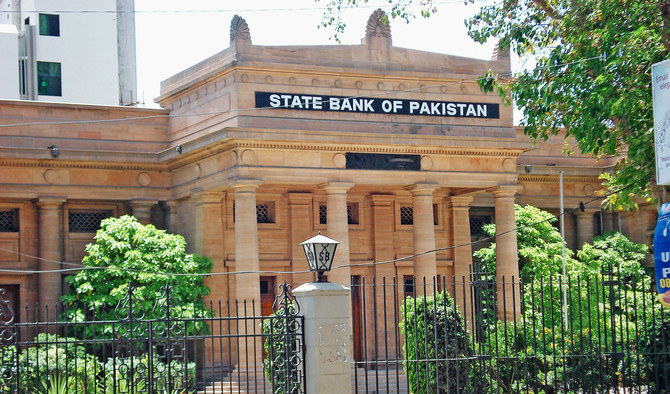
From January, online tax payments will be free of charge, the State Bank of Pakistan announced on Dec. 26, 2019. (Shutterstock)
Short Url
Updated 27 December 2019
Follow

Central bank makes digital tax payment free in Pakistan

  • The online system facilitates payment of federal taxes, duty and excise through ADCs
  • National Single Window will reduce corruption, costs of doing business, customs officials say

KARACHI: Pakistan is quickly progressing in the digitalization of its tax collection and of the National Single Window for foreign trade, customs and central bank officials said on Thursday.

“From January 2020, the State Bank of Pakistan will bear the digital payment fee or transaction charges which were being charged from the customers. There will be no deduction made from customers account”, Qader Bakhsh, director of finance at the State Bank of Pakistan (SBP), told Arab News and added that the government will get the revenue directly in its treasury account.

Currently, the transaction fee for tax payment is Rs10 for up to Rs100,000, Rs20 for Rs100,000 to Rs1 million and Rs50 for above Rs1 million.

Pakistan is towing two tax payment systems, focusing on digital payments to achieve full automation of tax collection through Alternative Delivery Channels (ADCs) and Over The Counter (OTC) options.

The online system launched in 2018 by the Federal Board of Revenue (FBR) in collaboration with the SBP and 1Link, facilitates payment of federal taxes, customs duty and federal excise through ADCs.

“Online banking is now a universal banking concept. Now you can go to any bank, any branch and ADCs are also provided that include Internet banking, ATMs, corporate banking portal and OTCs,” Bakhsh said after a seminar organized by the State Bank of Pakistan in Karachi on Thursday. 

“(Tax) payment has increased 62 times. In the first 10 months only Rs40 billion were collected and during the next 10 months Rs300 billion were collected (through the online payment system),” he said.
Earlier, Pakistanis had to pay their taxes at the central bank and National Bank of Pakistan (NBP) branches manually. Now, they can pay at 15,000 bank offices, around 14,000 ATMs, and online.

Meanwhile, works on the National Single Window are progressing swiftly.

“Pakistan Customs is playing a leading role for the National Single Window project. Progress on the project has been rapid,” Customs Collector Wajid Ali said during the seminar.

The project is a quantum leap from the current silo and paper based management of Pakistan’s foreign trade that involves 44 different government departments regulating imports, exports and transit trade.

“All stakeholders, importers, and exporters and transit trade will be linked with an electronic portal for submission of trade documents through the single window,” Ali noted, adding that payment will be electronic too. He did not disclose when the single window will be launched.

The project will not only reduce the costs of doing business, but also corruption as they will minimize human interference. The measures already introduced by the customs “led the country to jump by 17 positions in the World Bank’s ease of doing business ranking in trading across borders,” Ali added.


Over 200 security forces personnel killed in Balochistan militant attacks in 2025— chief minister

Updated 7 sec ago
Follow

Over 200 security forces personnel killed in Balochistan militant attacks in 2025— chief minister

  • Pakistani security forces launched thousands of operations, killed 760 militants, says Sarfraz Bugti
  • Pakistan’s military media wing says 12 “Indian-sponsored militants” killed in Balochistan’s Kalat district

ISLAMABAD: Over 200 security forces personnel were killed in several militant attacks in Pakistan’s southwestern Balochistan province this year, Chief Minister Sarfraz Bugti said on Sunday. 

Balochistan, Pakistan’s largest province by since yet its most backward by almost all social and economic indicators, has suffered from a bloody separatist insurgency for decades launched by ethnic Baloch militant groups. The most prominent among them is the Balochistan Liberation Army.

These militant outfits accuse the military and federal government of denying the local Baloch population a share in the province’s mineral wealth, charges Islamabad denies. 

“We have lost [in one year] 205 security forces personnel, including paramilitary, uniformed, police, levies, and along with that, there are six officers,” Bugti told reporters during a press conference. 

The chief minister said Balochistan had witnessed 900 militant attacks throughout the year, adding that the number of civilian casualties was recorded at 280. 

Bugti said security forces had also launched thousands of intelligence-based operations in 2025 against militants. 

“Out of those, the terrorists who have been killed so far, that is 760,” he said. 

TWELVE MILITANTS KILLED IN KALAT 

Separately, the Pakistani military’s media wing said on Sunday that security forces had killed 12 “Indian-sponsored militants” in Balochistan’s Kalat district on Dec. 6. 

It said the militants belonged to Indian proxy “Fitna al Hindustan,” a term the military uses frequently to describe ethnic Baloch militant groups who demand independence from Pakistan. Islamabad accuses New Delhi of arming and funding these separatist groups, charges India has always denied.

“Weapons, ammunition and explosives were also recovered from the terrorists, who remained actively involved in numerous terrorist activities in the area,” the ISPR said. 

Balochistan, which borders Afghanistan, has seen a surge in militant attacks in recent months. Pakistan’s military said on Saturday that security forces had killed five militants in the Dera Bugti area of the province.