

Central bank makes digital tax payment free in Pakistan

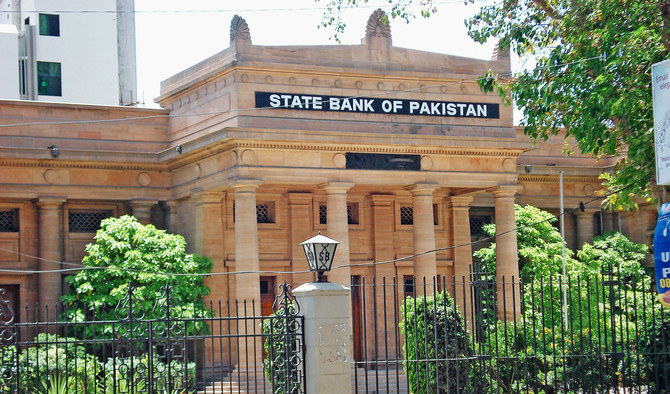
From January, online tax payments will be free of charge, the State Bank of Pakistan announced on Dec. 26, 2019. (Shutterstock)
Short Url
Updated 27 December 2019
Follow

Central bank makes digital tax payment free in Pakistan

  • The online system facilitates payment of federal taxes, duty and excise through ADCs
  • National Single Window will reduce corruption, costs of doing business, customs officials say

KARACHI: Pakistan is quickly progressing in the digitalization of its tax collection and of the National Single Window for foreign trade, customs and central bank officials said on Thursday.

“From January 2020, the State Bank of Pakistan will bear the digital payment fee or transaction charges which were being charged from the customers. There will be no deduction made from customers account”, Qader Bakhsh, director of finance at the State Bank of Pakistan (SBP), told Arab News and added that the government will get the revenue directly in its treasury account.

Currently, the transaction fee for tax payment is Rs10 for up to Rs100,000, Rs20 for Rs100,000 to Rs1 million and Rs50 for above Rs1 million.

Pakistan is towing two tax payment systems, focusing on digital payments to achieve full automation of tax collection through Alternative Delivery Channels (ADCs) and Over The Counter (OTC) options.

The online system launched in 2018 by the Federal Board of Revenue (FBR) in collaboration with the SBP and 1Link, facilitates payment of federal taxes, customs duty and federal excise through ADCs.

“Online banking is now a universal banking concept. Now you can go to any bank, any branch and ADCs are also provided that include Internet banking, ATMs, corporate banking portal and OTCs,” Bakhsh said after a seminar organized by the State Bank of Pakistan in Karachi on Thursday. 

“(Tax) payment has increased 62 times. In the first 10 months only Rs40 billion were collected and during the next 10 months Rs300 billion were collected (through the online payment system),” he said.
Earlier, Pakistanis had to pay their taxes at the central bank and National Bank of Pakistan (NBP) branches manually. Now, they can pay at 15,000 bank offices, around 14,000 ATMs, and online.

Meanwhile, works on the National Single Window are progressing swiftly.

“Pakistan Customs is playing a leading role for the National Single Window project. Progress on the project has been rapid,” Customs Collector Wajid Ali said during the seminar.

The project is a quantum leap from the current silo and paper based management of Pakistan’s foreign trade that involves 44 different government departments regulating imports, exports and transit trade.

“All stakeholders, importers, and exporters and transit trade will be linked with an electronic portal for submission of trade documents through the single window,” Ali noted, adding that payment will be electronic too. He did not disclose when the single window will be launched.

The project will not only reduce the costs of doing business, but also corruption as they will minimize human interference. The measures already introduced by the customs “led the country to jump by 17 positions in the World Bank’s ease of doing business ranking in trading across borders,” Ali added.


Pakistan, global crypto exchange discuss modernizing digital payments, creating job prospects 

Updated 05 December 2025
Follow

Pakistan, global crypto exchange discuss modernizing digital payments, creating job prospects 

  • Pakistani officials, Binance team discuss coordination between Islamabad, local banks and global exchanges
  • Pakistan has attempted to tap into growing crypto market to curb illicit transactions, improve oversight

ISLAMABAD: Pakistan’s finance officials and the team of a global cryptocurrency exchange on Friday held discussions aimed at modernizing the country’s digital payments system and building local talent pipelines to meet rising demand for blockchain and Web3 skills, the finance ministry said.

The development took place during a high-level meeting between Finance Minister Muhammad Aurangzeb, Pakistan Virtual Assets Regulatory Authority (PVARA) Chairman Bilal bin Saqib, domestic bank presidents and a Binance team led by Global CEO Richard Teng. The meeting was held to advance work on Pakistan’s National Digital Asset Framework, a regulatory setup to govern Pakistan’s digital assets.

Pakistan has been moving to regulate its fast-growing crypto and digital assets market by bringing virtual asset service providers (VASPs) under a formal licensing regime. Officials say the push is aimed at curbing illicit transactions, improving oversight, and encouraging innovation in blockchain-based financial services.

“Participants reviewed opportunities to modernize Pakistan’s digital payments landscape, noting that blockchain-based systems could significantly reduce costs from the country’s $38 billion annual remittance flows,” the finance ministry said in a statement. 

“Discussions also emphasized building local talent pipelines to meet rising global demand for blockchain and Web3 skills, creating high-value employment prospects for Pakistani youth.”

Blockchain is a type of digital database that is shared, transparent and tamper-resistant. Instead of being stored on one computer, the data is kept on a distributed network of computers, making it very hard to alter or hack.

Web3 refers to the next generation of the Internet built using blockchain, focusing on giving users more control over their data, identity and digital assets rather than big tech companies controlling it.

Participants of the meeting also discussed sovereign debt tokenization, which is the process of converting a country’s debt such as government bonds, into digital tokens on a blockchain, the ministry said. 

Aurangzeb called for close coordination between the government, domestic banks and global exchanges to modernize Pakistan’s payment landscape.

Participants of the meeting also discussed considering a “time-bound amnesty” to encourage users to move assets onto regulated platforms, stressing the need for stronger verifications and a risk-mitigation system.

Pakistan has attempted in recent months to tap into the country’s growing crypto market, crack down on money laundering and terror financing, and promote responsible innovation — a move analysts say could bring an estimated $25 billion in virtual assets into the tax net.

In September, Islamabad invited international crypto exchanges and other VASPs to apply for licenses to operate in the country, a step aimed at formalizing and regulating its fast-growing digital market.