Saudi finance ministry boosts Kingdom’s business environment with new law

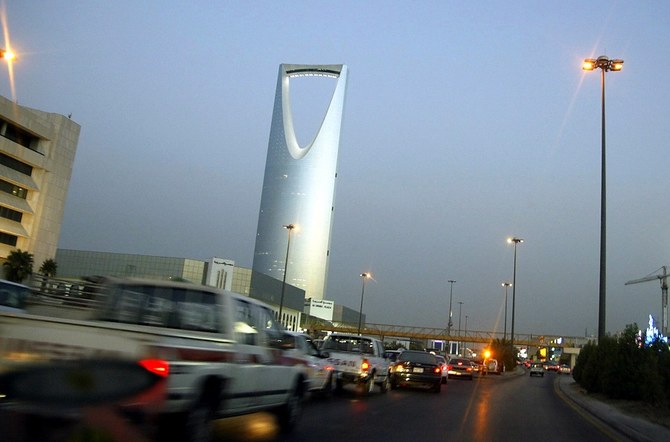
The legislation comes as the Kingdom continues to work towards its Vision 2030. (File/AFP)
Short Url
Updated 25 December 2019
Follow

Saudi finance ministry boosts Kingdom’s business environment with new law

  • New government tender and procurement law
  • Legislation focuses on local businesses, small-to medium-enterprises and publicly listed companies

DUBAI: Saudi Arabia’s Ministry of Finance (MoF) has implemented a new government tender and procurement law that promotes the local business environment, as well as improve efficiencies in government spending and financial planning.

The legislation, which comes as the Kingdom continues to work towards its Vision 2030, puts focus on local businesses, small-to medium-enterprises (SMEs), and publicly listed companies – granting them preference in public tenders.

The law also appoints the Center of Spending Efficiency (CSE) with functions including finalizing framework agreements on procurements, reviewing feasibility studies, and developing training programs for government employees.

Among the highlights of the new law is the additional requirement government agencies to publish their plans and procurements into an online platform called “Etimad” to ensure quality in projects and services.

The online system would also “introduce mechanisms and committees to consider complaints, grievances, violations and solving disputes throughout all stages of tendering and contracting,” according to a release by the MoF.

“The new law aims to regulate and facilitate government procurement, prevent exploitation of influence and impact of personal interests, achieving the best value of public funds.”

It was implemented to promote “integrity, transparency, achieving equality, providing fair treatment to bidders and promoting economic development.”


Middle East war economic impact to depend on duration, damage, energy costs, IMF official says

Updated 05 March 2026
Follow

Middle East war economic impact to depend on duration, damage, energy costs, IMF official says

  • Katz: Prolonged increase in energy prices could unanchor inflation expectations
  • IMF: 2026 global GDP outlook was solid, too early to judge war’s impact on growth

WASHINGTON: The Middle East war’s impact on the global economy will depend on its duration and damage to infrastructure and industries in the region, particularly whether energy price increases are short-lived or persistent, the International Monetary Fund’s number two official said on Tuesday.

IMF First Deputy Managing Director Dan Katz told the Milken Institute Future of Finance conference in Washington that if there is prolonged uncertainty from the conflict and a prolonged impact on energy prices, “I would expect central banks to be cautious and ‌respond to the ‌situation as it materializes.”
He said the conflict could ​be “very ‌impactful ⁠on ​the global economy ⁠across a range of across a range of metrics, whether it’s inflation, growth and so on” but it was still early to have a firm conviction.
Prior to the US and Israeli air strikes on Iran and counterattacks across the region, the IMF had forecast solid global GDP growth of 3.3 percent in 2026, powering through tariff disruptions due in part to the continued AI investment boom and expectations of productivity gains.
Katz said ⁠that the economic impact from the Middle East conflict would ‌be influenced by its duration and further geopolitical ‌developments.
Earlier, the IMF said it was monitoring the ​conflict’s disruptions to trade and economic activity, ‌surging energy prices and increased financial market volatility.
“The situation remains highly fluid and ‌adds to an already uncertain global economic environment,” the Fund said in a statement issued from Washington. Katz said the IMF will look at the conflict’s direct impacts on the region, including damage to infrastructure, and disruptions to key sectors.
“Tourism is an important one. Air travel. Is ‌there physical damage to infrastructure, production facilities, and the big industry in particular that everyone will be focused on is, ⁠of course, the energy ⁠industry,” he said.
Oil rose further on Tuesday as Iran vowed to attack ships passing through the Strait of Hormuz. Brent crude oil , the global benchmark, surged to $83 per barrel, up 15 percent from its level on Friday.
Katz said he expected central banks to “look through” a temporary rise in energy prices, given their focus on core inflation. But central banks could respond if a more persistent energy shock results in “a destabilizing of inflation expectations.”
He said the post-COVID inflation spike of 2022 was influenced by energy impacts from Russia’s invasion of Ukraine, with more pass-through from headline inflation to core inflation.
“And so I’m sure central banks, as they are thinking about how the ​geopolitical situation is translating into ​energy markets, will be looking at the lessons of the pandemic and seeing if they can apply any of those lessons in setting monetary policy,” Katz said.