

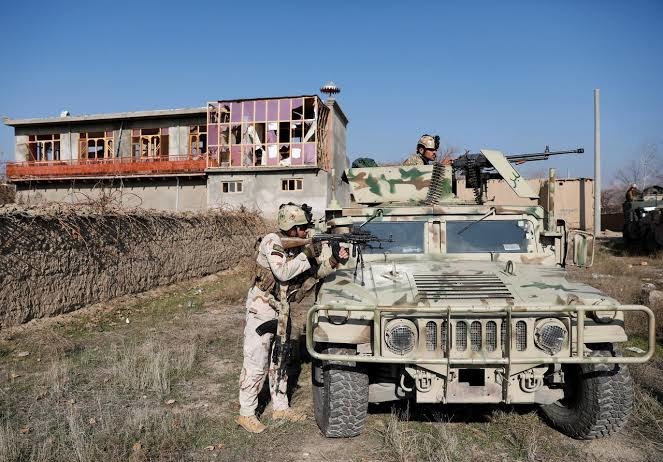

KABUL: The US Special Envoy for Afghanistan Reconciliation, Zalmay Khalilzad, announced on Friday a pause from talks with the Taliban, after an abortive attack US-run military airfield Bagram, north of Kabul.
Khalilzad last week resumed the peace dialogue with the Taliban in Qatar, following President Donald Trump’s surprise visit to the Bagram base two weeks ago, during which he announced the restart of negotiations. He earlier called them off in September, after a Taliban attack in Kabul killed an American serviceman.
Like Afghan President Ashraf Ghani, Trump also said a cease-fire was a must for relaunching the talks, while some US diplomats, including Khalilzad, viewed a reduction of violence as essential for the process to continue.
Wednesday’s pre-dawn attack on Bagram lasted more than 10 hours and forced the US military to use a jet fighter and helicopter gunships against Taliban fighters.
At least two Afghan civilians were killed and over 80 others, including five Georgian soldiers, were wounded in the fighting.
Khalilzad expressed his outrage over the attack during a meeting with Taliban delegates in Qatar, where the political headquarters of the Taliban are located, and at least 10 rounds of secret talks between the militant group and US diplomats have already taken place.
The Taliban “must show they are willing and able to respond to Afghan desire for peace,” Khalilzad said in a tweet early on Friday.
“We are taking a brief pause for them to consult their leadership on this essential topic.”
A Taliban spokesman based in Qatar, Suhail Shaheen, also in a tweet termed the meeting with Khalilzad as “very good and friendly,” adding both sides had decided to have a few days of break “for consultation.”
Ghani’s chief spokesman, Sediq Sediqqi, said the government stance vis-a-vis the talks was the same as what the Afghan president and Trump discussed during the latter’s recent visit to Bagram.
“Our position has been very clear. The Taliban must cease violence,” he told Arab News when asked to comment on the announcement of another pause in the talks.
There has been no pledge from the Taliban side or Afghan and US-led troops to halt attacks, neither when the talks were held in the past, nor during last week’s discussions.
Analyst Akbar Polad said the pause following the Bagram assault was a blow to the peace process and “means a continuation of fighting and more pressure on the Taliban in the future.”
“Either the Taliban do not know or are given false advice for launching attacks like (the one on) Bagram and claiming responsibility,” he told Arab News.
“The Taliban are given the illusion that they are the victors of the war, (that) they will replace the current government. When they conduct attacks, they will further face isolation in society as Afghans suffer the most, and because the Taliban refuse to talk with the government,” Polad said.
The resumption of talks last week, in the middle of a deepening political crisis over September’s presidential vote in Afghanistan, raised hopes of a possible breakthrough in the latest chapter of the war, which began with the Taliban’s ouster in a US-led campaign in late 2001.
A few weeks earlier, the Taliban and US exchanged prisoners – an American and Australian – both professors at American University of Afghanistan – for three militants jailed by the Afghan government.
The government has not been part to the talks because of objections by the Taliban.
President Ghani has been pushing for a truce before any talks – either between the Taliban and Americans, or between the Taliban and the government – take place.
The Taliban say they will announce a truce only after the US has agreed on a timetable for the withdrawal of its troops from Afghanistan.
According to the Afghan government, however, the militant group’s political leaders based in Qatar do not have much clout over Taliban military commanders in the field.


