

Proceeds from 32 govt properties to go for affordable housing

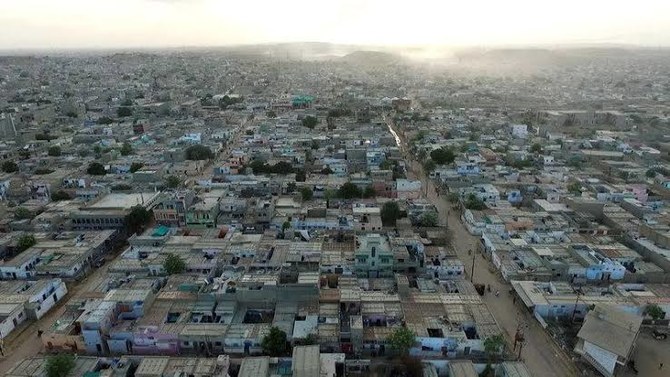
An aerial view of informal settlements in Orangi Town, Karachi, Pakistan August 26, 2016. (Reuters)
Updated 13 December 2019
Follow

Proceeds from 32 govt properties to go for affordable housing

  • Abandoned properties to be sold, proceeds will be allocated for low-cost housing, schools, hospitals
  • Advertisement campaign for the properties to be launched in early January

ISLAMABAD: Thirty-two abandoned government-owned properties worth billions of rupees in Islamabad, Lahore and Karachi will be auctioned and the additional revenue will be spent on public welfare, the Prime Minister’s Office announced on Thursday.

Out of the 32 identified real estates, 27 are already available. The remaining five are still either illegally occupied or facing ownership documentation issues, APP reported, citing the PM’s Office.

According to the report, investors and overseas Pakistanis had already shown interest in acquiring the estates during a recent expo in Dubai.

An advertisement campaign for the properties is planned to be launched in early January.

According to the APP report, Prime Minister Imran Khan seeks to have proceeds from the real estate allocated for affordable housing, schools and hospitals. Residents of slum areas are going to be prioritized in the government’s projects financed from the property sale.

The prime minister requested all relevant ministries to amend their regulation to make the allocation process possible.

Pakistan launches final nationwide polio drive for 2025 amid rise in global cases

Updated 11 sec ago
Follow

Pakistan launches final nationwide polio drive for 2025 amid rise in global cases

  • Global polio tracking data shows Pakistan accounted for 30 of the world’s 39 cases in 2025, with remainder in Afghanistan
  • Health authorities urge parents to cooperate with vaccination teams and ensure all children under five receive polio drops

ISLAMABAD: Pakistan will launch its final nationwide polio vaccination campaign for 2025 from tomorrow, aiming to immunize more than 45 million children under the age of five, health authorities said on Sunday, as the country remains at the center of global efforts to eradicate the disease.

Global polio tracking data shows that 30 of the 39 confirmed wild poliovirus type 1 (WPV1) cases worldwide 2025 were reported in Pakistan, with the remainder in neighboring Afghanistan.

Pakistan recorded 74 polio cases in 2024, a sharp increase from six cases in 2023 and just one case in 2021, highlighting the volatility of eradication efforts in a country where misinformation, vaccine hesitancy and security issues have repeatedly disrupted progress.

“The final national polio campaign of 2025 will formally begin across the country from tomorrow,” Pakistan’s National Emergency Operations Center (NEOC) said in a statement.

“During the campaign, polio drops will be administered to more than 45 million children nationwide,” it said, adding that the seven-day drive would run from Dec. 15 to Dec. 21.

The NEOC said more than 400,000 male and female polio workers would take part in the campaign, with vaccination targets including over 23 million children in Punjab, 10.6 million in Sindh, 7.2 million in Khyber Pakhtunkhwa, 2.6 million in Balochistan and smaller numbers in Islamabad, Gilgit-Baltistan and Azad Jammu and Kashmir.

“Protecting children from polio is a shared national responsibility,” the NEOC said. “Parents must fully cooperate with polio workers to secure the future of the nation.”

It urged families to ensure that all children under five years of age receive the required two drops of the vaccine during the campaign.

Pakistan has drastically reduced polio prevalence since the 1990s, when annual cases exceeded 20,000.

By 2018, the number had fallen to eight. But health authorities warn that without consistent access to children — particularly in high-risk and underserved regions — eradication will remain out of reach.

Violence has also hampered the program. Polio teams and their security escorts have frequently come under attack from militants in parts of northwestern Khyber Pakhtunkhwa and southwestern Balochistan.

Officials say continued security threats, along with natural disasters such as recent flooding, remain major obstacles to reaching every child.