KHARTOUM: Sudan’s former president Omar Al-Bashir appeared on Tuesday before a prosecutors’ committee over the 1989 coup that brought him to power, his lawyer said.
Bashir was “brought to be investigated in the case of the alleged 1989 coup,” said his lawyer, Mohamed Al-Hassan, who did not attend the hearing.
The lawyer also told reporters that in his view the hearing was “not a judicial matter, it’s a political matter.”
In 1989, Bashir, a brigadier at the time, seized power in an Islamist-backed coup that toppled the elected government of prime minister Sadiq Al-Mahdi.
The former president was himself ousted by the army in April of this year after months of nationwide protests against his iron-fisted rule of three decades.
On November 12, Sudanese authorities filed charges against Bashir and some of his aides for “plotting” the 1989 coup. The prosecution established a special committee for the case.
If found guilty, he could face the death penalty or life imprisonment under Sudanese law.
Sudan is now ruled by a joint civilian and military sovereign council, which is tasked with overseeing a transition to civilian rule as demanded by the protest movement.
Bashir is being held in Kober prison in a separate case, for which he has been on trial since August, on charges of illegally acquiring and using foreign funds.
A verdict is due in that case on Saturday.
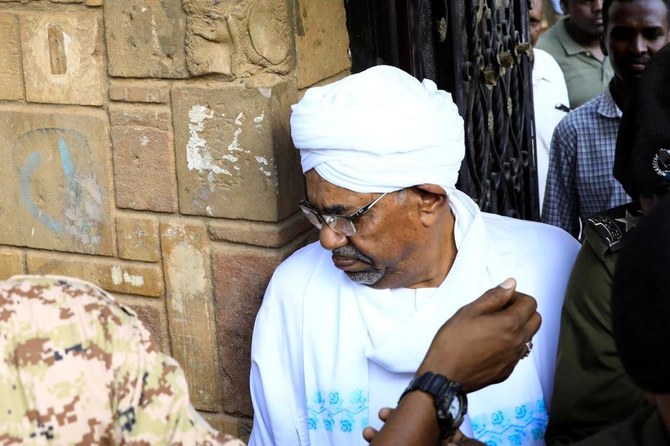
On Tuesday, Bashir was taken from Kober prison to the prosecutor’s office in a convoy under strong armed protection.
After the hearing, which lasted about an hour, a crowd gathered in front of the prosecutor’s office, chanting “Kober prison — the best place for you!” and “you killed people!“
Wearing the traditional white Sudanese jalabiya and turban, Bashir raised his hands to the crowd, before he set off back toward Kober in the convoy.
The veteran leader is also wanted by The Hague-based International Criminal Court on charges of genocide, war crimes and crimes against humanity over his role in the war in Sudan’s western Darfur region.
To date, Sudanese transitional authorities do not want to extradite the former leader to The Hague.


![]()

Sudan’s deposed Bashir questioned over 1989 coup: lawyer
Sudan’s deposed Bashir questioned over 1989 coup: lawyer

Latest updates


Recommended


© 2026 SAUDI RESEARCH & PUBLISHING COMPANY, All Rights Reserved And subject to Terms of Use Agreement.