

Umerkot: A fort in Pakistan where beauty was caged

1 / 3
Bricks are kept outside the main gate of Umerkot fort where restoration work began in December 2016 after years of neglect. Picture taken on November 27, 2019. (AN Photo by S.A. Babar)
2 / 3
This photograph shows one of the seven cannons that were used to protect the fort in Umerkot. Picture taken on November 27, 2019. (AN Photo by S.A. Babar)
3 / 3
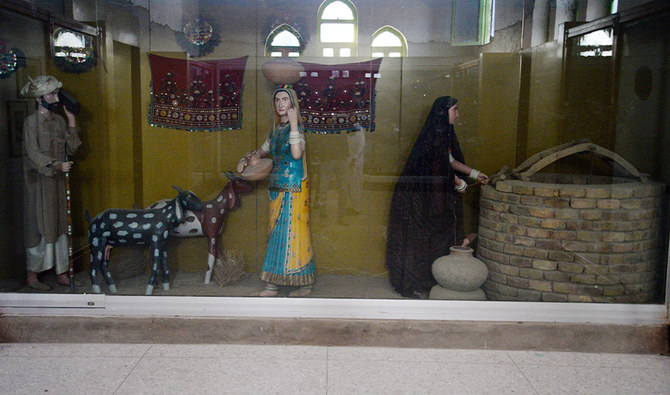
Marvi, a folklore character standing in the middle of this composition, declined King Umar Soomro’s marriage proposal and was caged by the ruler as a consequence. This portrait is displayed in the fort’s museum. Picture taken on November 27, 2019. (AN Photo by S.A. Babar)
Updated 09 December 2019
Follow

Umerkot: A fort in Pakistan where beauty was caged

  • The 11th century citadel is home to ancient manuscripts, coins, paintings and royal documents
  • Marvi, one of the seven heroines in Bhittai's poetry, was imprisoned for refusing the king's hand

UMERKOT, Sindh: Caged in a painting inside the museum, Marvi, a beautiful woman from Tharparkar who resisted the king’s marriage proposal, was imprisoned by the ruler of Sumra dynasty in the Umerkot fort in Pakistan’s Sindh province that is currently undergoing restoration work after years of neglect.
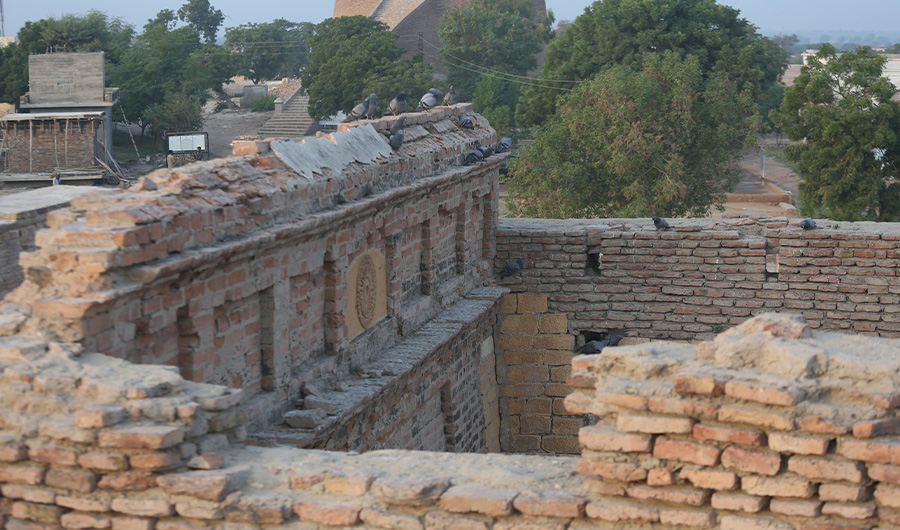


The authorities in Sindh decided to restore this historic fort as part of the government’s initiative to promote tourism in the southern Sindh province. Picture taken on November 27, 2019. (AN Photo by S.A. Babar)

Situated inside the Umerkot city, there are conflicting claims about the history of this 11th-century citadel, much like the different accounts of the city’s name which is also known as Amarkot.

According to one account, supported by the local Rana family, the city and the fort were constructed by Maharaja Amar Singh.
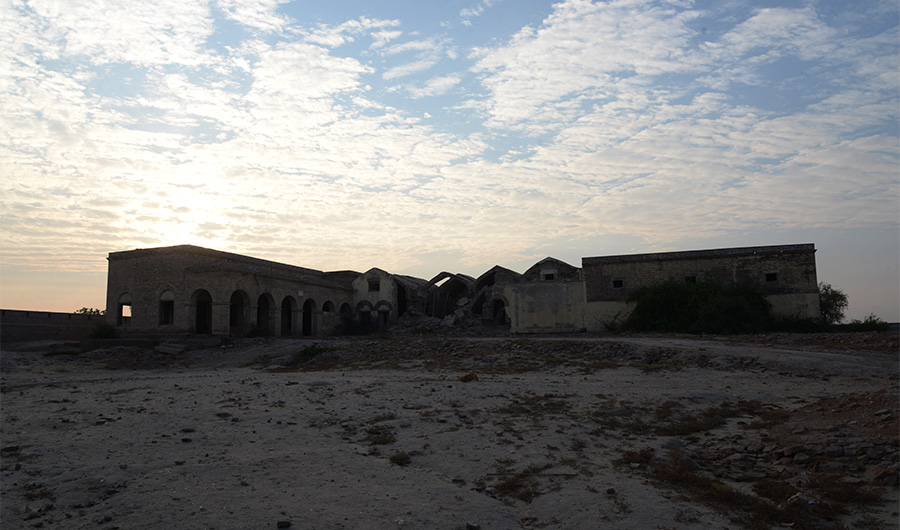


The British established a prison inside the fort that lies in ruins now. “The restoration team will rebuild the British-era prison without touching the old structure beneath it,” curator Ghulam Hussain Burdi told Arab news on November 27, 2019. (AN Photo by S.A. Babar)

Arbab Naik Muhammad, a local scholar of history, however, says that Singh’s family had come to power toward the end of the 13th century after the Sumra dynasty had ruled the place. Therefore, in his opinion, the city and the fort were constructed by King Umar Soomro.
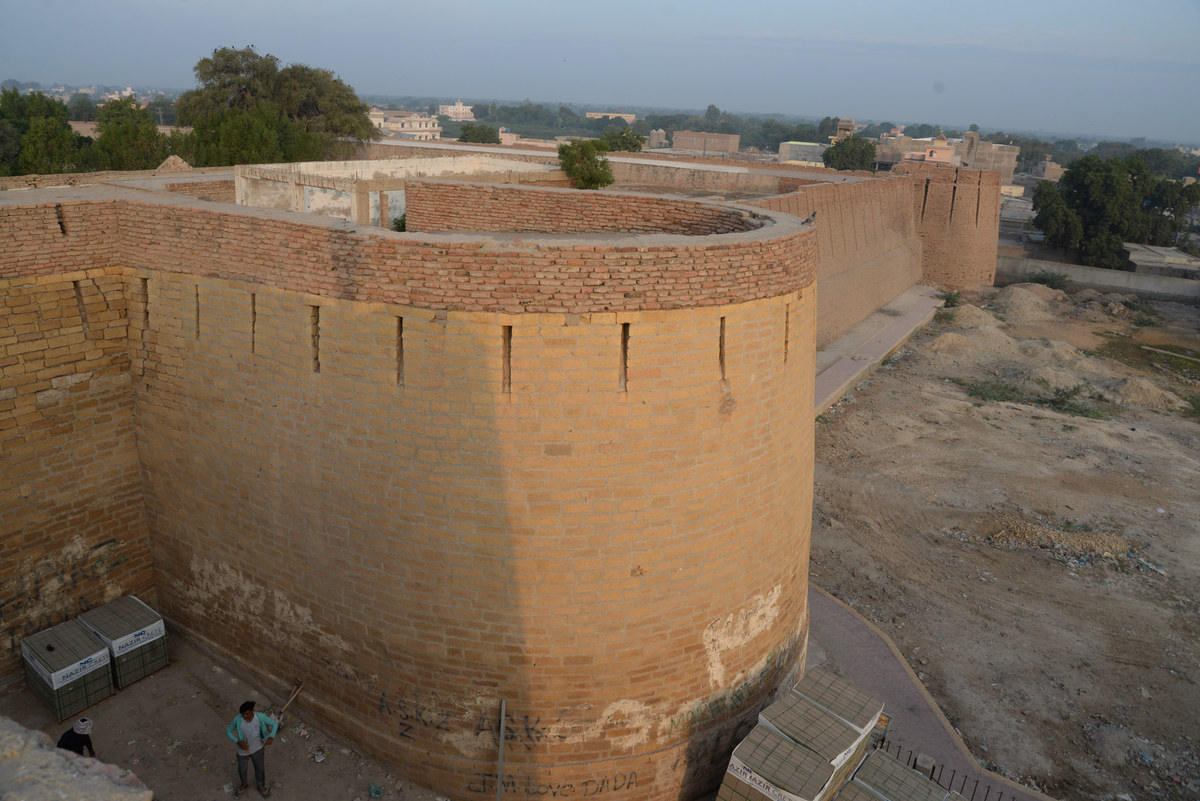


Bricks are kept outside the main gate of Umerkot fort where restoration work began in December 2016 after years of neglect. Picture taken on November 27, 2019. (AN Photo by S.A. Babar)

“The town was founded by Umar, the first king of Sumra dynasty that ruled between 1050 and 1350. In the latter half of the 13th century, it was occupied by Parmar Sodha, a Rajput ruler. The fort was later surrendered to the Kalhora dynasty. However, its members sold the place to the Raja of Jodhpur. The Talpurs regained the fort in 1813 and held it until the British occupied Sindh in 1843,” an information board sharing the history of the fort reads.
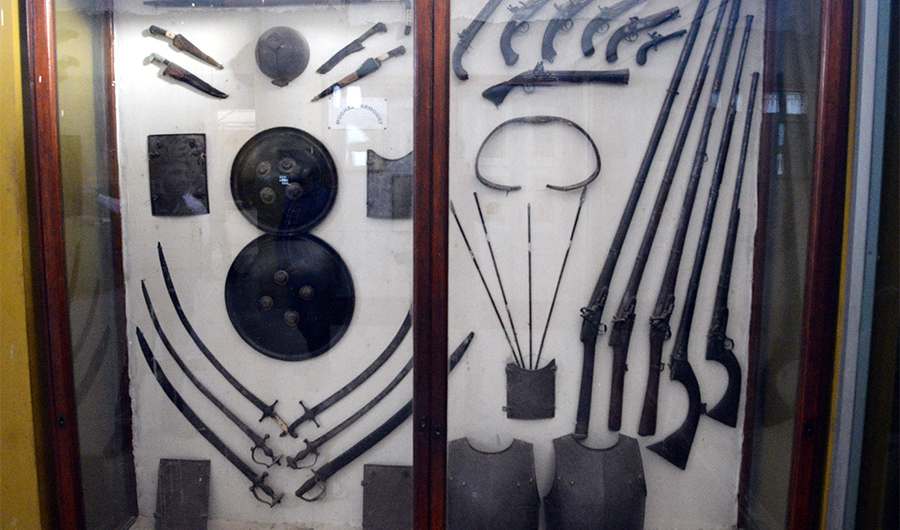


The Mughal-era arms are displayed in the museum of the fort. Picture taken on November 27, 2019. (AN Photo by S.A. Babar)

Irrespective of who built the fort, people usually recall the story of Marvi while visiting the museum at the fort.

Home to ancient manuscripts, coins, paintings, specimens of calligraphy, royal documents, jewelry of Tharparkar, photographs of monuments and recently discovered Jain and Hindu sculptures that throw light on the Mughal period in general and Akbar’s reign in particular, the museum has images in which Marvi is pitching water from a well.
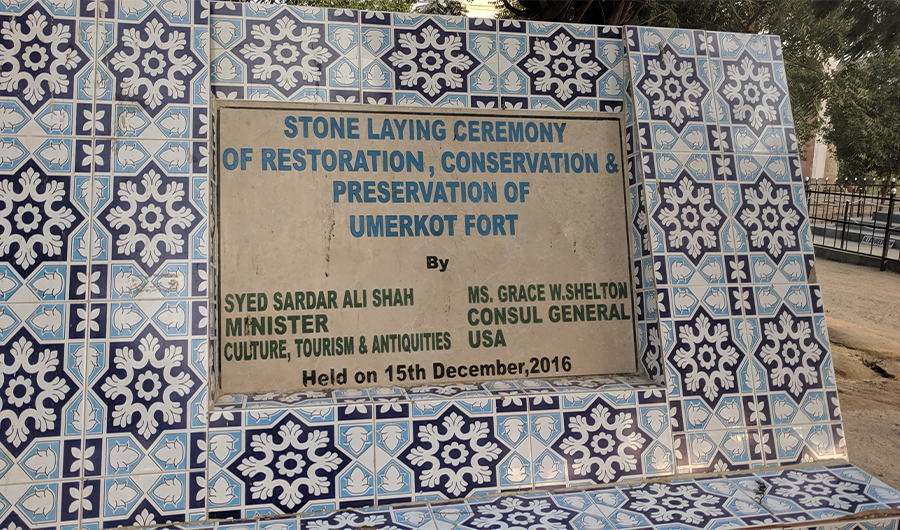


A board inside the fort says the restoration, conservation and preservation of the place began in December 2016. Picture taken on November 27, 2019. (AN Photo by S.A. Babar)

“Marvi was pitching water with other women when someone saw her and informed King Umar. She refused to marry the king and finally returned to her home untouched,” Ghulam Hussain Burdi, the fort’s curator, said.

Marvi is also one of the seven heroines of Shah Abdul Latif Bhittai, a mystic, saint, and poet, who preserved her memory in his verse.
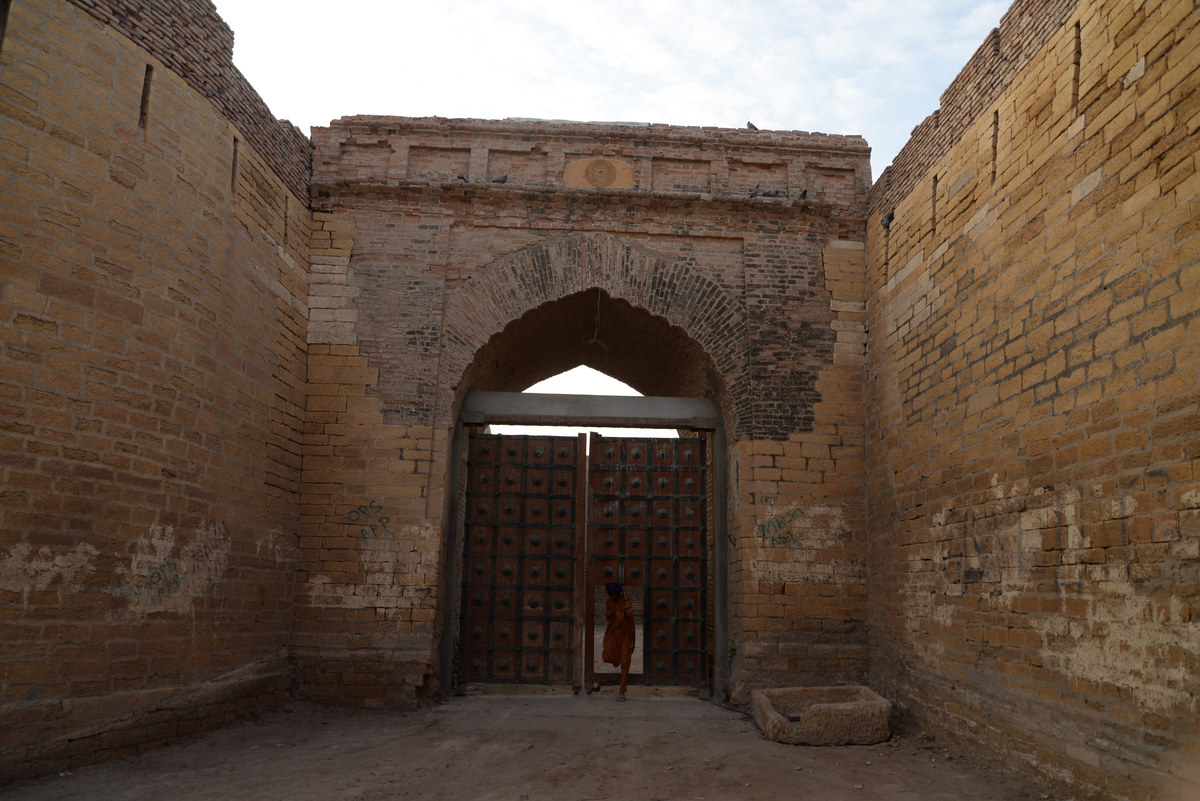


The authorities in Sindh decided to restore this historic fort as part of the government’s initiative to promote tourism in the southern Sindh province. Picture taken on November 27, 2019. (AN Photo by S.A. Babar)

“O Umar, You have forcibly kept me in your captivity. Longing and craving for my dear country and people, if I die here in your palace, let not my dead body remain in prison.”


Pakistan army chief tells Kabul to choose Islamabad or Taliban militants amid strained ties

Updated 9 sec ago
Follow

Pakistan army chief tells Kabul to choose Islamabad or Taliban militants amid strained ties

  • Pakistan blames Afghanistan for facilitating cross-border attacks in its territory, allegations that Kabul denies 
  • Ties remain strained since October, when deadly border clashes left dozens dead on both sides of the border

ISLAMABAD: Pakistan’s Chief of Defense Forces Field Marshal Syed Asim Munir has told Afghanistan to choose between Islamabad and the outlawed Tehreek-e-Taliban Pakistan (TTP) militants, state media reported on Sunday as ties between both neighbors remain strained. 

Pakistan’s army and civilian government have both blamed the Afghan Taliban recently for facilitating cross-border attacks in Pakistan, a charge Kabul denies. Afghanistan says it does not allow its territory to be used for attacks against Pakistan and cannot be held responsible for Islamabad’s security challenges. 

Both countries were involved in deadly border clashes in October that saw dozens of soldiers killed and wounded on both sides. Officials from Afghanistan and Pakistan have held peace talks in Qatar, Türkiye and Saudi Arabia over the past few months but failed to reach an agreement. 

“Chief of Army Staff and Chief of Defense Forces Field Marshal Syed Asim Munir has said Afghanistan will have to choose between Fitna Al-Khawarij and Pakistan,” state broadcaster Radio Pakistan reported. 

Munir was addressing the National Ulema and Mashaikh Conference held in Islamabad earlier this month, the state media said.

“Fitna Al-Khawarij” is a term the Pakistan military frequently uses for the TTP. 

Munir highlighted that 70 percent of the TTP’s formations that enter Pakistan from Afghanistan comprise Afghan nationals. 

“He said innocent citizens, including children, are being targeted through terrorism with the backing of the Afghan Taliban,” Radio Pakistan reported. 

While Pakistan and Afghanistan have agreed to a temporary ceasefire, tensions persist between the two nations as militant attacks persist in Pakistan. 

Pakistan summoned Afghanistan’s deputy head of mission on Friday and demanded “decisive action” against TTP militants after four Pakistani soldiers were killed in an attack on a military camp in northwest Pakistan. 

The foreign office said the Afghan government had been informed that Pakistan “reserves the right to defend its sovereignty and protect its citizens” and would take all necessary measures to respond to attacks originating from Afghan territory.

Afghanistan has warned Pakistan in the past against attacking its territory, saying it reserves the right to respond to such provocations.