

US, Taliban to continue peace talks on Sunday

1 / 2
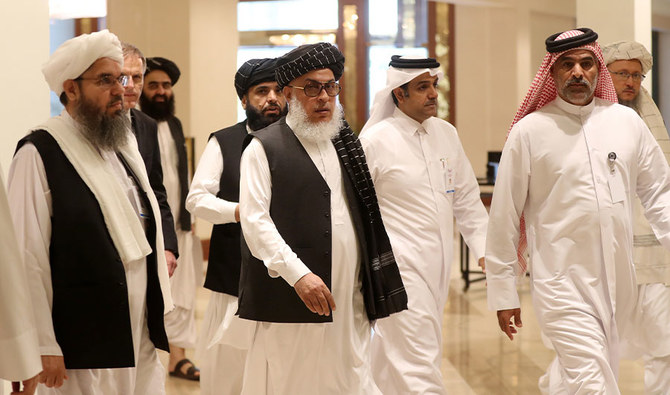
The Taliban's former envoy to Saudi Arabia Shahabuddin Delawar (L) arrives with Taliban Qatar spokesman Suhail Shaheen (C, behind) and Taliban negotiator Abbas Stanikzai (C, front) to attend the Intra Afghan Dialogue talks in the Qatari capital Doha on July 7, 2019. (AFP)
2 / 2
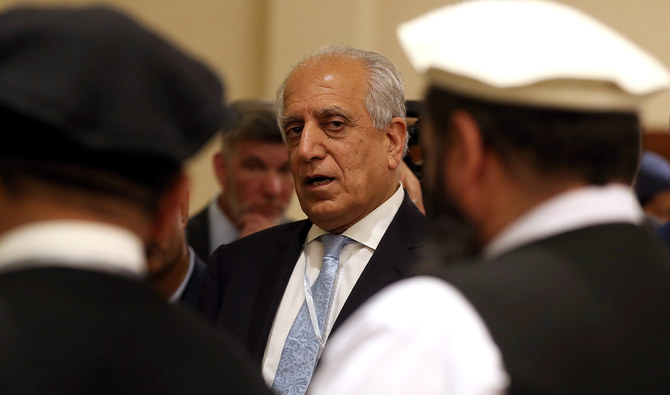
US Special Representative for Afghanistan Reconciliation Zalmay Khalilzad attends the Intra Afghan Dialogue talks in the Qatari capital Doha on July 8, 2019. (AFP)
Updated 08 December 2019
Follow

US, Taliban to continue peace talks on Sunday

  • Focus of resurrected talks to be intra-Afghan dialogue and a cease-fire – US official
  • Anas Haqqani who was just freed in a prisoner swap has joined Taliban negotiating team, spokesman tweeted

ISLAMABAD: The Taliban and the United States will continue their peace talks in Qatar on Sunday, as they try to resolve the protracted conflict in Afghanistan through a negotiated settlement.

The two sides restarted formal peace negotiations on Saturday, the first such initiative after President Donald Trump’s decision to call off talks in early September, an American official privy to the developments, told Arab News.
Trump’s earlier decision to halt talks came in reaction to the deaths of 12 people, including a US soldier, in a Taliban-induced bomb attack in Kabul.
“The US rejoined talks today in Doha. The focus of the discussions will be reduction of violence that leads to intra-Afghan negotiations and a cease-fire,” the official said.
In a Twitter post, Taliban spokesman Suhail Shaheen also confirmed the resumption of talks and said they would continue on Sunday.
"The talks started from where they were stopped. We discussed signing of the agreement. Talks will continue tomorrow (Sunday),” Shaheen tweeted.
Shaheen also said Mullah Abdul Ghani Baradar, head of the Taliban political office, led the Taliban side during negotiations.
In a separate tweet, Shaheen said Anas Haqqani, who was among the three Taliban leaders freed in a high profile prisoner swap earlier this month, had also joined talks as a member of the Taliban negotiating team. 
The peace talks, which began last year, aimed at striking a deal with the Taliban to allow the 18 year war in Afghanistan to end. This would involve the withdrawal of US and foreign troops from Afghanistan in exchange for the insurgents’ guarantee of a cease-fire and that they would not use Afghanistan to launch attacks on other countries.
Earlier on Wednesday, the State Department had said that US Special Representative for Afghanistan Reconciliation, Ambassador Zalmay Khalilzad, would be discussing next steps with the Taliban for intra-Afghan negotiations and “a peaceful settlement of the war, specifically a reduction in violence that leads to a cease-fire.”
A day later, Taliban spokesman Suhail Shaheen told Arab News that formal peace negotiations would resume with the US in a few days.
This followed Khalilzad’s meetings with Afghan leaders, including President Ashraf Ghani, Chief Executive Dr. Abdullah Abdullah and several political leaders in Kabul on Thursday.
On Wednesday, the presidential palace issued a statement saying that the meeting would focus on “the cease-fire and Taliban hideouts outside the 
President Ghani told Khalilzad that both issues should be taken seriously in order to take the peace process forward.
The Taliban and the US had finalized the peace agreement in August – at the conclusion of the ninth round of talks –but the signing of the deal was blocked after Trump’s abrupt decision to call off negotiations.


Fears of fuel shortage in Pakistan as tankers wait to fill up

Updated 5 sec ago
Follow

Fears of fuel shortage in Pakistan as tankers wait to fill up

  • US-Israeli war with Iran has disrupted shipping, damaged oil and gas facilities in Middle East
  • Pakistan, which depends on oil and gas from the Gulf, raised fuel prices by 20 percent last week

Sheikhupura, Pakistan: Tanker drivers in Pakistan said they were facing long waits at depots due to a shortage of fuel, as the government played down fears of another rise in prices.

The US-Israeli war with Iran has disrupted shipping and damaged oil and gas facilities in the Middle East, raising global oil prices as countries scramble to deal with concerns over supply.

Dozens of tankers, which supply fuel across Pakistan, were seen parked at the side of the road on Tuesday at depots near Lahore, the capital of Punjab, the country’s most populous province.

“There is no petrol at the depot for the past four days,” said one tanker driver, Abdul Shakoor.

“Iran has closed the border from their side. The depot is lying empty,” he told AFP.

Pakistan depends on oil and gas from the Gulf, and vessels transporting fuel were given naval escorts this week to ensure continuity of supplies during the Middle East crisis.

Last week, the government in Islamabad hiked prices by about 20 percent, triggering long lines and panic buying at filling stations across the country.

Petroleum Minister Ali Pervaiz Malik said in an interview broadcast late on Tuesday that there will be “no immediate significant changes” in the cost of fuel.

Prime Minister Shehbaz Sharif on Monday announced an austerity plan designed to save fuel, including slashing the working week for government employees to four days and shutting schools.

But Mazhar Mahmood, a tanker driver’s assistant, said: “The drivers went to the depot today as well, but the depot staff said there is no fuel available.”

He said he was told that fuel will be available in the next five to six days.

“The situation in the country is not good. There is no petrol in the country, which is why the vehicles are parked here.”