
VIENNA: The remaining signatories to the faltering 2015 Iran nuclear deal will meet in Vienna on Friday with the survival of the landmark agreement at stake after Tehran vowed to continue to breach the deal’s limits on its nuclear program.
Envoys from Britain, France, Germany, China, Russia and Iran will take part in the meeting, which is the first time the six parties will have gathered in this format since July.
Since May, Iran has taken a series of measures, including stepping up uranium enrichment, in breach of the 2015 deal, with another such move likely in early January.
Iran insists that under the agreement it has the right to take these measures in retaliation for the US’s withdrawal from the deal in 2018 and reimposition of crippling sanctions.
Since last month, European members have in turn begun raising the possibility of triggering the so-called “dispute resolution mechanism” foreseen in the accord, which could lead to the resumption of UN sanctions on Iran.
On the eve of what was already likely to be a strained meeting, Britain, France and Germany accused Iran of developing nuclear-capable ballistic missiles, in a letter to the UN on Thursday.
Iranian Foreign Minister Javad Zarif dismissed the allegation as “desperate falsehood.”
However, despite the mounting tension observers say Britain, France and Germany are unlikely to trigger the dispute resolution mechanism on Friday when their diplomats attend the joint commission meeting chaired by senior EU official Helga-Maria Schmid.
Analysts say if UN sanctions are re-imposed and the deal falls apart, Iran could also withdraw from the Treaty on the Non-Proliferation of Nuclear Weapons (NPT).
“It’s not clear whether that’s worth the benefit,” Ali Vaez from the International Crisis Group told AFP.
But he warned the risk of the deal collapsing was increasing as Iran was “running out of measures that are easy to reverse and non-controversial.”
“Both sides are locked into an escalatory cycle that is just very hard to imagine that they would step away from,” he said.
Francois Nicoullaud, former French ambassador to Iran, also says tensions were expected to continue to rise.
“Maybe it won’t be this time, but (the deal falling apart) will certainly be in the background of the discussions,” Nicoullaud told AFP.
Iranian parliament speaker Ali Larijani warned Sunday that if European partners triggered the dispute mechanism, Tehran may “seriously reconsider” its commitments to the UN nuclear watchdog, the International Atomic Energy Agency (IAEA), which monitors the deal’s implementation.
European efforts to shield Iran from the effects of US sanctions by creating a mechanism to carry on legitimate trade with the Islamic republic have borne little fruit, much to Tehran’s frustration.
The EU is growing increasingly concerned by Tehran rowing back from its commitments.
The dispute resolution mechanism in the deal has numerous stages, but it can eventually culminate in the UN Security Council voting on whether Iran should still have relief from sanctions lifted under the deal.
In such a scenario, says Vaez, “we will have a major non-proliferation crisis on our hands in the sense that the Russians and the Chinese have already declared they would not recognize the return of (sanctions).”
Vaez said in the end the path to a diplomatic solution would depend on Washington’s next moves and whether it would at least be willing to relax its attempts to prevent sales of Iranian oil, a vital source of income for the country.
“The remaining parties to the deal have proved incapable of providing Iran with any kind of breathing space,” Vaez said.
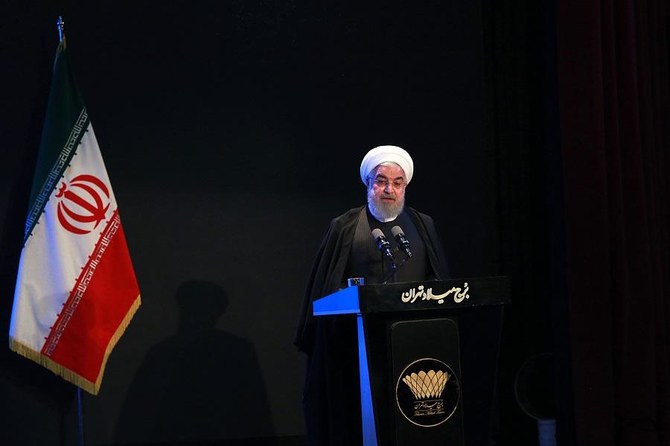
Iranian President Hassan Rouhani said Wednesday that Tehran is willing to return to the negotiating table if the United States first drops sanctions.