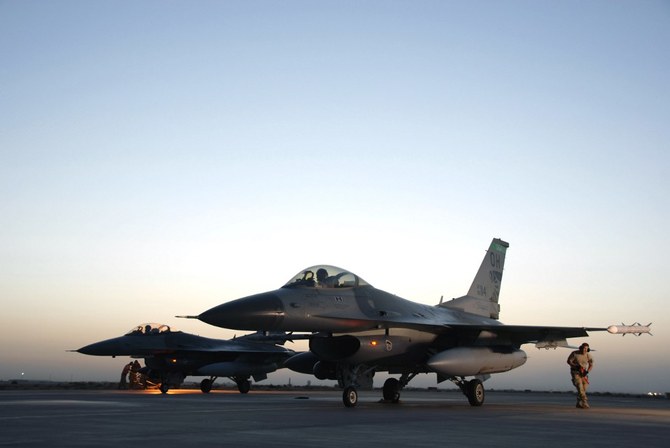
BAGHDAD: Two mortars landed inside Iraq's Balad air base on Thursday, two Iraqi military sources said.
No casualties have been reported in the mortar attack against the air base, said the sources.
Balad base hosts US forces and contractors and is located about 80 kilometres (50 miles) north of Baghdad.
On Tuesday, five rockets landed on Ain Al-Asad air base, which hosts US forces in Anbar province in western Iraq without causing any casualties.

Mortars hit Iraq’s Balad air base
- Balad base hosts US forces and contractors and is located about 80 kilometres (50 miles) north of Baghdad
- No casualties have been reported in the mortar attack against the air base
Israeli forces set up checkpoint, arrest residents inside southern Syria
- An Israeli force comprising 7 military vehicles entered Wadi Al-Raqad and established a checkpoint on the Al-Raqad bridge
- The Syrian government has repeatedly condemned Israeli incursions into its territory, including raids, arrests, and land razing in the south
LONDON: Israeli forces conducted an incursion into the Wadi Al-Raqad area in the Daraa countryside and arrested six residents from villages in Quneitra, southern Syrian Arab Republic.
On Wednesday, an Israeli force comprising seven military vehicles entered Wadi Al-Raqad and set up a checkpoint on the Al-Raqad bridge. Additionally, six other vehicles were stationed at the Tell Abu Al-Ghithar gate, as reported by the Syrian Arab News Agency.
Israeli forces arrested six individuals from the villages of Ain Al-Abd, Kodna, and Al-Asbah in the southern Quneitra countryside, and conducted another incursion into the village of Saida Al-Golan in the area.
The Syrian government has repeatedly condemned Israeli incursions into its territory, including raids, arrests, and land razing in the south, saying that they violate the 1974 Disengagement Agreement.
Syria stresses that the presence of Israeli forces on its territory is “illegitimate” and that all Israeli measures in the region are “null and void and have no legal effect” under international law, the SANA added.