

Iran using protest chaos to stockpile ballistic missiles in Iraq

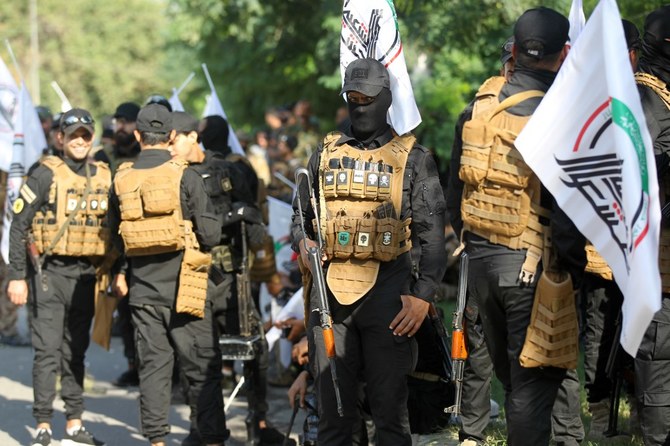
US security officials believe Iran-backed militias in Iraq are helping move the Iranian missiles into the country. (AFP/File photo)
Updated 05 December 2019
Follow

Iran using protest chaos to stockpile ballistic missiles in Iraq

  • New York Times says Iran is using Shiite militias to help transport and store the missiles

LONDON: Iran is stockpiling short-range ballistic missiles in Iraq amid the chaos of vast anti-government protests there, US media reported.

The move is part of Tehran’s strategy to spread its attack capabilities into different parts of the Middle East and threaten rivals such as Saudi Arabia and US forces based in the region.

Iran is using Iraqi Shiite militias that it funds and trains to help transport and store the missiles, American security officials told the New York Times.

The militias have seized control of several roads and bridges amid the protests that erupted last month, making it easier for Iran to move the weapons into the country, the officials said.

The report did not say how many missiles had been moved or what type they are, but Iran’s short-range usually refers to missiles that have a maximum range of more than 900 kilometers.

This would put cities like Riyadh and Jerusalem within range of areas near Baghdad.

The report comes after Iran was blamed for a complex cruise missile and drone attack against major Saudi oil facilities in September. The Kingdom is still investigating the raid but said the weapons hit Abqaiq oil processing plant and an oil field from a northerly direction. 

However, Washington ruled out that they could have been launched from Iraq after the government in Baghdad denied its territory had been used to stage the attacks.

Reports emerged last year that Iran had started deploying missiles into Iraq and Israel carried out airstrikes over the summer against the systems.

The deployment of more weapons to Iraq will deeply concern the US and its Arab allies. The tactic fits with Iran’s recent operations in which it is accused of attempting to create enough doubt over who and where they were launched from to avoid retaliation while still trying to cause maximum disruption. 

Iran was blamed for attacks on tankers earlier in the year both off the UAE coast and in the Strait of Hormuz that caused global concern over the security of major shipping routes in the region. 

Elissa Slotkin, a member of the House Armed Services Committee, told the New York Times that Iran was taking advantage of the widespread protests in southern Iraq.

“People are not paying enough attention to the fact that ballistic missiles in the last year have been placed in Iraq by Iran with the ability to project violence on the region,” she said.

On Wednesday, a senior Pentagon official said there were indications that Iran could potentially carry out "aggressive" actions in the future, without giving more details.

The US has deployed 14,000 additional troops to the Gulf since the spring to confront the threat from Iran.


Libya says UK to analyze black box from crash that killed general

Updated 9 sec ago
Follow

Libya says UK to analyze black box from crash that killed general

TRIPOLI: Libya said on Thursday that Britain had agreed to analyze the black box from a plane crash in Turkiye on December 23 that killed a Libyan military delegation, including the head of its army.
General Mohammed Al-Haddad and four aides died after a visit to Ankara, with Turkish officials saying an electrical failure caused their Falcon 50 jet to crash shortly after takeoff.
Three crew members, two of them French, were also killed.
The aircraft’s black box flight recorder was found on farmland near the crash site.
“We coordinated directly with Britain for the analysis” of the black box, Mohamed Al-Chahoubi, transport minister in the Government of National Unity (GNU), said at a press conference in Tripoli.
General Haddad was very popular in Libya despite deep divisions between west and east.
The North African country has been split since a NATO-backed revolt toppled and killed longtime leader Muammar Qaddafi in 2011.
Haddad was chief of staff for the internationally recognized GNU, which controls the west. The east is run by military ruler Khalifa Haftar.
Chahoubi told AFP a request for the analysis was “made to Germany, which demanded France’s assistance” to examine the aircraft’s flight recorders.
“However, the Chicago Convention stipulates that the country analizing the black box must be neutral,” he said.
“Since France is a manufacturer of the aircraft and the crew was French, it is not qualified to participate. The United Kingdom, on the other hand, was accepted by Libya and Turkiye.”
After meeting the British ambassador to Tripoli on Tuesday, Foreign Minister Taher Al-Baour said a joint request had been submitted by Libya and Turkiye to Britain “to obtain technical and legal support for the analysis of the black box.”
Chahoubi told Thursday’s press briefing that Britain “announced its agreement, in coordination with the Libyan Ministry of Transport and the Turkish authorities.”
He said it was not yet possible to say how long it would take to retrieve the flight data, as this depended on the state of the black box.
“The findings will be made public once they are known,” Chahoubi said, warning against “false information” and urging the public not to pay attention to rumors.