

Pakistan expects 30 percent growth in foreign tourists by 2030

1 / 2
This picture taken on March 20, 2011 shows locals skiing on a mountain during a four-day skiing competition at the Malam Jabba resort, 300 kilometres (190 miles) northwest of the capital Islamabad in the Swat Valley. (AFP)
2 / 2
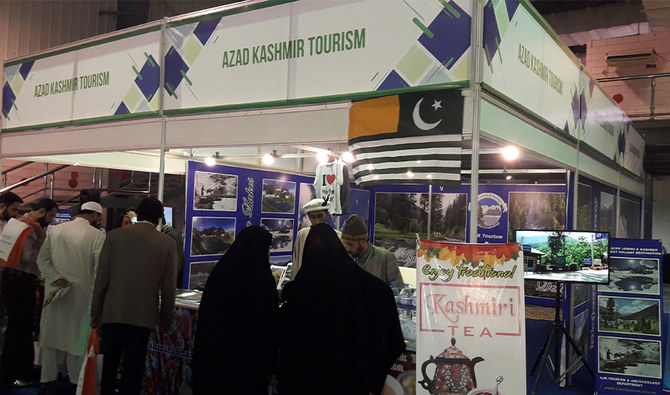
Visitors inspect the artifacts displayed at the Azad Jammu and Kashmir stall during the Pakistan Hospitality Show that concluded at the Karachi Expo Center on December 5, 2019. (AN Photo by Khurshid Ahmed)
Updated 06 December 2019
Follow

Pakistan expects 30 percent growth in foreign tourists by 2030

  • Last year, 3.2 million foreigners visited Pakistan out of which 17,000 were on tourist visas, says PTDC official
  • In a first, Pakistan promoted the products and services of 72 local and international businesses belonging to the hospitality sector

KARACHI: Pakistan is likely to see about 30 percent growth in the number of foreign tourists over a period of 10 years, officials said on Thursday.
“Last year 3.2 million foreign nationals visited Pakistan out of which 17,000 arrived on tourist visas. Following the policies of the current government and measures taken to promote domestic and international tourism, we expect that the number of visitors will increase by 30 percent until 2030,” Deputy Media Manager of Pakistan Tourism Development Corporation (PTDC) Mukhtar Ali told Arab News on the conclusion of a three-day hospitality show in Karachi on Thursday.
The exhibition was arranged at the Karachi Expo Center where around 72 local and international exhibitors promoted their products and services.
“Hotel, food and cultural designing sectors have showcased their products and services to attract local and foreign tourists,” Director Marketing of Badar Expo Solutions, Ehtesham Bari, told Arab News. “During the three-day event, tourism summit and food and safety seminars were held which were attended by over 30,000 local and foreign visitors.”
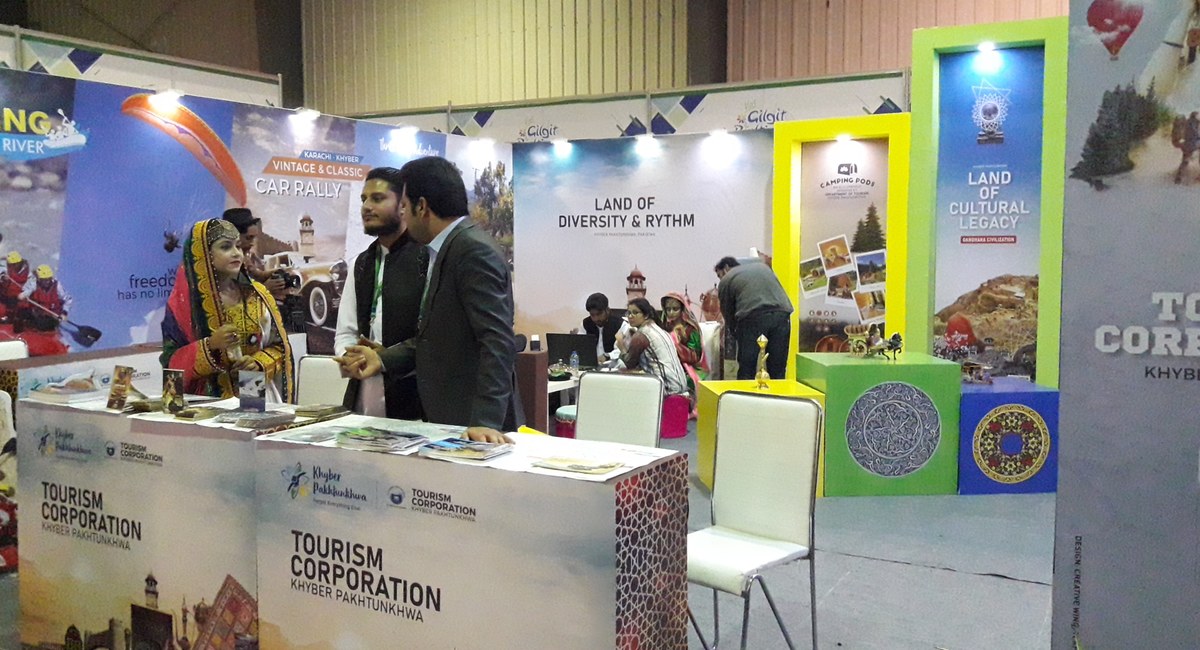


Exhibitors at the Khyber Pakhtunkhwa stall introduce visitors to their services and various destinations in their province at the Pakistan Hospitality Show that concluded at the Karachi Expo Center on Dec. 5, 2019. (AN photo by Khurshid Ahmed)

The show aimed at projecting Pakistan’s hospitality sector to attract investment, especially from foreign lands where tourism and related sectors have matured.
“Global investors at places like Turkey, Malaysia, UAE and other countries are exploring international markets where they can utilize their expertise since tourism has already matured in their respective countries,” Bari said, adding: “The next exhibition will be exclusively held for investors from Turkey, Sri Lanka, UAE, Malaysia, Qatar and Saudi Arabia.”
The exhibitors were optimistic that the event would be instrumental in bringing international investors and expertise to the hospitality sector of the country. “Indonesian and Malaysian visitors have shown special interest in our products and the area as they were introduced,” Zubair Ahmad Khawaja, an exhibitor from Azad Jammu and Kashmir who displayed specially designed shawls, told Arab News.
According to government functionaries, the country’s tourism sector is growing with the improvement of law and order situation in the country. “Last year 1.4 million tourists visited different destination located across the country. This number has increased from 1.2 million in the previous year,” PTDC’s Mukhtar Ali noted.
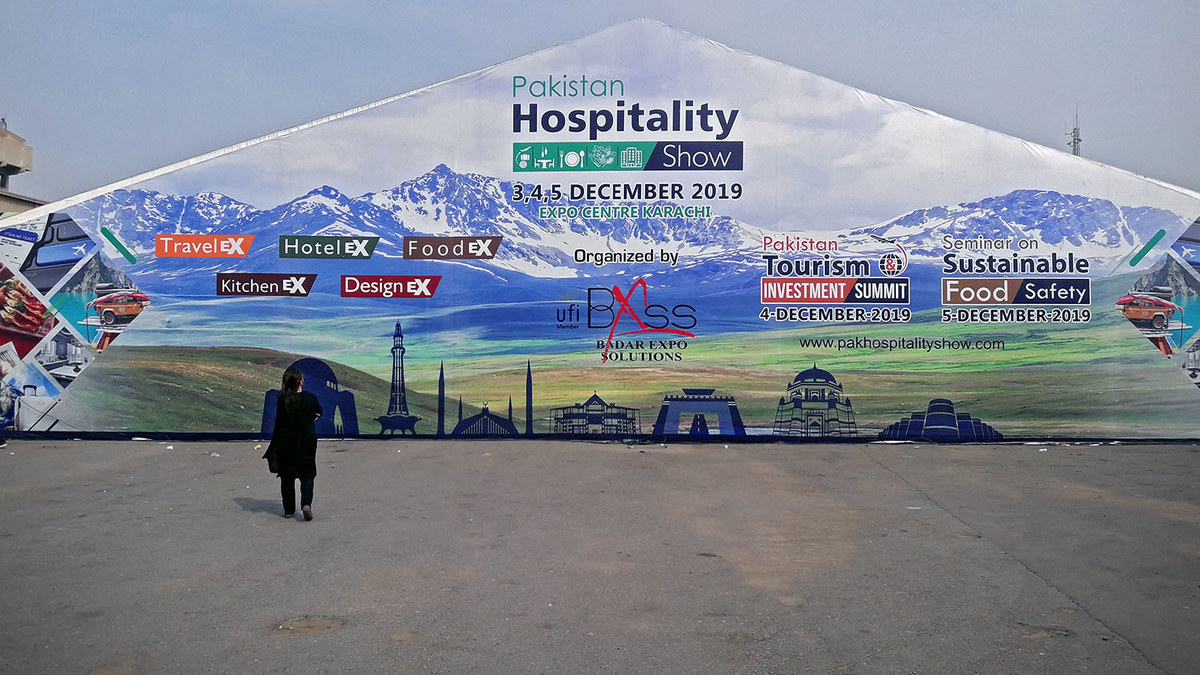


The three-day Pakistan Hospitality Show concluded at the Karachi Expo Center on Dec. 5, 2019. Exhibitors belonging to the local and international hospitality industry promoted their products and services at the event to attract local and foreign tourists. (AN photo by Khurshid Ahmed)

Under the new tourism promotion strategy, the country is focusing on adventure and religious tourism.
“The National Tourism Coordination Board is in the process of finalizing a comprehensive policy based on the recommendations of consultative groups and stakeholders that will give us a road map and inventive packages to attract tourists from the Gulf countries. It will also try to bring more Sikhs, Hindus, Buddhists to the archaeological sites of the country,” Ali added.
Pakistani officials expect that the extension in the visa-on-arrival facility from 24 to 155 countries will attract investors and tourists in large numbers in the coming years.


Pakistan PM orders accelerated privatization of power sector to tackle losses

Updated 15 December 2025
Follow

Pakistan PM orders accelerated privatization of power sector to tackle losses

  • Tenders to be issued for privatization of three major electricity distribution firms, PMO says
  • Sharif says Pakistan to develop battery energy storage through public-private partnerships

ISLAMABAD: Pakistan’s prime minister on Monday directed the government to speed up privatization of state-owned power companies and improve electricity infrastructure nationwide, as authorities try to address deep-rooted losses and inefficiencies in the energy sector that have weighed on the economy and public finances.

Pakistan’s electricity system has long struggled with financial distress caused by a combination of factors including theft of power, inefficient collection of bills, high costs of generating electricity and a large burden of unpaid obligations known as “circular debt.” In the first quarter of the current financial year, government-owned distribution companies recorded losses of about Rs171 billion ($611 million) due to poor bill recovery and operational inefficiencies, official documents show. Circular debt in the broader power sector stood at around Rs1.66 trillion ($5.9 billion) in mid-2025, a sharp decline from past peaks but still a major fiscal drain. 

Efforts to contain these losses have been a focus of Pakistan’s economic reform program with the International Monetary Fund, which has urged structural changes in the energy sector as part of financing conditions. Previous government initiatives have included signing a $4.5 billion financing facility with local banks to ease power sector debt and reducing retail electricity tariffs to support economic recovery. 

“Electricity sector privatization and market-based competition is the sustainable solution to the country’s energy problems,” Prime Minister Shehbaz Sharif said at a meeting reviewing the roadmap for power sector reforms, according to a statement from the prime minister’s office.

The meeting reviewed progress on privatization and infrastructure projects. Officials said tenders for modernizing one of Pakistan’s oldest operational hubs, Rohri Railway Station, will be issued soon and that the Ghazi Barotha to Faisalabad transmission line, designed to improve long-distance transmission of electricity, is in the initial approval stages. While not all power-sector decisions were detailed publicly, the government emphasized expanding private sector participation and completing priority projects to strengthen the electricity grid.

In another key development, the prime minister endorsed plans to begin work on a battery energy storage system with participation from private investors to help manage fluctuations in supply and demand, particularly as renewable energy sources such as solar and wind take a growing role in generation. Officials said the concept clearance for the storage system has been approved and feasibility studies are underway.

Government briefing documents also outlined steps toward shifting some electricity plants from imported coal to locally mined Thar coal, where a railway line expansion is underway to support transport of fuel, potentially lowering costs and import dependence in the long term.

State authorities also pledged to address safety by converting unmanned railway crossings to staffed ones and to strengthen food safety inspections at stations, underscoring broader infrastructure and service improvements connected to energy and transport priorities.