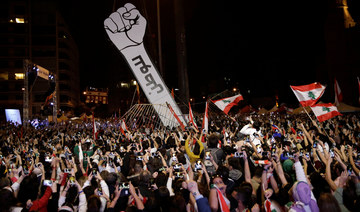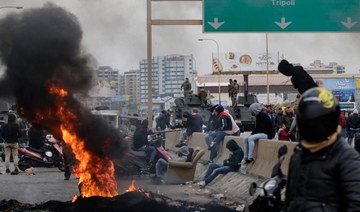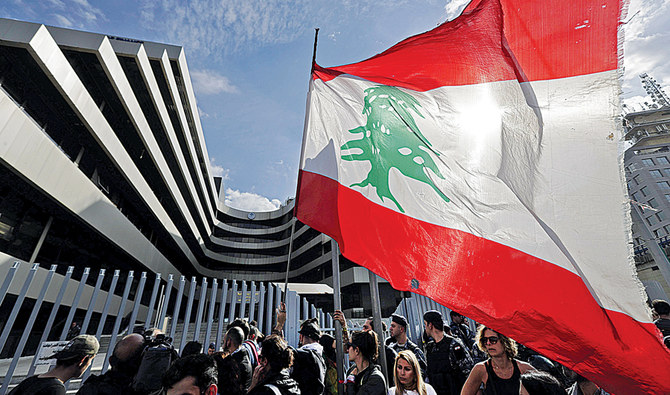
BEIRUT: Weeks into a protest movement partly driven by a collapsing economy, Lebanese interior architect Laeticia Nicolas was called in by her boss and told she was fired.
“There had been fewer and fewer projects for a year,” said the 28-year-old, who since Oct. 17 has taken part in anti-government protests sweeping the country.
“Before the revolution began, they warned us they would be paying just half our salaries in exchange for reducing working hours,” she said.
But as the protests gained momentum, he downsized his team. Nicolas was informed of the bad news at the end of the month when she received her salary.
“It’s not because of the revolution, but it may well have accelerated things,” she said.
After years of political turmoil, the Lebanese economy is in a sharp downturn, banks have restricted access to dollars while prices have risen.
Amid the crisis, thousands of Lebanese say their jobs are at risk.
Activists have denounced what they call illegal lay-offs and urged the labour ministry to intervene.
Some people, like Nicolas, have lost their jobs altogether, while others have been told to work part-time for a fraction of their original salary.
Economic growth in Lebanon has been battered by repeated political deadlock in recent years, compounded by the eight-year war in neighbouring Syria.
Successive cabinets have failed to implement desperately needed reforms to redress a floundering economy heavily reliant on tourism and services.
The World Bank projected negative growth of 0.2 percent in Lebanon for 2019, but now warns the recession could be even worse.
It has urged that a new cabinet be swiftly formed, after the government stepped down less than two weeks into the protests, to avoid more Lebanese becoming poor.
Around a third of Lebanese live in poverty, and that figure could soon rise to half, according to the World Bank.
Unemployment, already above 30 percent for young people, would also go up, it said.
A group of Lebanese banks and private businesses also warned of bleak times ahead.
“Thousands of companies are threatened with closure, and tens of thousands of employees and workers risk losing their jobs,” they said.
The union of restaurant and bar owners has said 265 establishments have closed already, and that figure could reach 465 by the end of the year.
In the month before the protests, banks began restricting access to dollars, sparking a greenback liquidity crisis.
Bilal Dandashli, who heads a small road safety equipment company he founded in the 1990s, said he was struggling. “We can no longer import supplies from abroad,” he said.
The Lebanese pound is pegged at around 1,500 pounds to the dollar, and both are used interchangeably in everyday transactions. But caps on dollar withdrawals have forced people to resort to moneychangers, sending the unofficial exchange rate soaring to more than 2,200.
To make matters worse, Dandashli said customers were also not paying their debts. “It’s like begging for our own money,” he said.