ISLAMABAD: Every evening, farmer Muhammad Ali climbs up the mountains in Pakistan’s northern Diamer district through a narrow unpaved road to bring down at least two sacks of pine nuts, called chilgozas locally, collected by workers hard at work during the day.
Around 20 percent of Pakistan’s forests comprise of chilgoza trees, with the country producing 15 percent of the world’s total pine nuts at between 3,500 to 4,000 metric tons annually. However, most of these are exported to the Middle East, China, the US, UK and Europe, leaving behind a short supply of exceedingly high priced nuts for local consumption selling in the capital, Islamabad, for approximately Rs. 8,500 ($55) per kilogram this season, according to traders.
In Diamer- one of the country’s main production regions for pine nuts- the price is lower at Rs. 3,200 ($21) per kilogram, but remains prohibitively expensive for most locals.
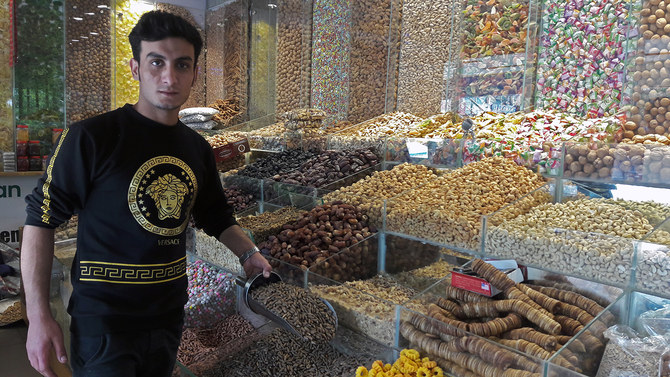
“The chilgoza has been in high demand since winter began,” Sheraz Khan, a dry fruit trader in one of Islamabad’s most upscale markets, told Arab News.
“We are selling it at Rs. 8,500 ($55) per kilogram, and customers are buying it without even haggling,” he said.
Khan, however, said that the majority of his chilgoza customers were foreigners including Chinese people.
“It is quite a difficult and hectic process to pick chilgozas from pine trees up in the mountains, but it is worth the labor,” farmer Ali told Arab News.
“This year, the yield and rates [of chilgoza] are very good,” he said. “I hope to earn enough to pay the school fees of my three kids and fund other routine expenses during the year.”
Laborers and other people connected to the pine nut industry are also reaping the monetary benefits of the highly priced nuts, he said.
The high demand and price of chilgozas in the market has additionally increased awareness of the nuts’ value, and kickstarted a conversation about the preservation of the trees in order to safeguard their environment for the future.
“The pine trees are a source of livelihood for the locals,” Ali said. “Therefore they have formed local committees to protect them from illegal loggers and the timber mafia.”
Pine nut trees are found in Pakistan’s north and southwestern provinces of Khyber Pakhtunkhwa and Balochistan, including in the northern areas of Gilgit-Baltistan and Kashmir. The tree is hard and tall, and can endure excessive drought, high winds, and severe cold in the winter.
Pine-nut harvesting begins in September. Locals collect the green cones from trees and spread them under the open sky to let them dry in the sun for more than two weeks. Each cone contains between 15 to 20 pine nuts depending on its size. It is then processed through a machine for quality grading before being sold in the market, with the nuts usually eaten raw or roasted.


![]()

Chilgoza prices in Pakistan go nuts as exports soar
Chilgoza prices in Pakistan go nuts as exports soar
- Pine nuts are selling for as high as Rs. 8,500 ($55) per kilogram in the capital, Islamabad
- Around 20 percent of Pakistan’s forests comprise of pine nut trees, with most of the dry fruit exported to the Middle East, China and US
Latest updates


© 2026 SAUDI RESEARCH & PUBLISHING COMPANY, All Rights Reserved And subject to Terms of Use Agreement.