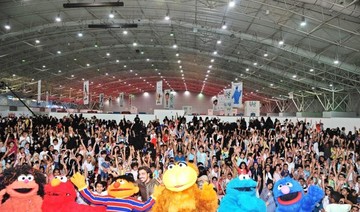
RIYADH: The Initiatives Center at the Mohammed bin Salman Charitable Foundation (Misk), represented by the Hakaya Misk initiative, has announced its support for the young talents and creative minds of the Kingdom.
The center urges people with inspiring ad ideas to submit them so they can receive support and direction. The events of Hakaya Misk initiative will end on Monday after having provided more than 350 workshops.
The center’s announcement about supporting inspiring ideas in ads came during a dialogue session on the Hakaya Misk platform.
The session, “TV Ads … Values and Ambition,” discussed the ad industry at the local and international level, within the framework of preserving and respecting values, and the appropriateness of ad content with the traditions and values of the society where they are broadcast.
Mohammed Al-Hamad, one of the pioneers who established the ad market in Saudi Arabia, talked about the art of producing TV ads and their phases, from coming up with the idea to production and direction.
Al-Hamad said ad ideas should be creative and at the same time “respectful of the values of our Islamic society.”
“There are some genius ideas worldwide but they contravene our culture and customs, and therefore cannot be applied here,” he said.
Hakaya Misk was launched on Tuesday within the Riyadh Season events. It includes several sections that cover preparations for pre-production, production, post-production, young producers, the Hakaya market, platforms, Hakaya media, food trucks, discussion sessions and movie shows.
More than 70 workshops were held on Saturday, along with dialogue sessions and other segments, during which visitors listened to the story of the Great Gatsby, which was made into the popular movie.
In the Arab segment, Dr. Eid Al-Yehya talked about his experience in Retracing Arab Footsteps, the “Ala Khota Al-Arab” documentary show, while Peter Kober talked about Manga animation experiences.
Saudi director Amer Al-Hamood spoke about the direction process, from script to the screen. The events on Saturday concluded with a dialogue session presented by Bruce Logan in which he talked about the advertising journey of cinema movies.
FASTFACTS
• The center urges people with inspiring ad ideas to submit them so they can receive support and direction.
• Hakaya Misk includes several sections that cover preparations for pre-production, production, post-production, young producers, the Hakaya market, platforms, Hakaya media, food trucks, discussion sessions and movie shows.
• The events of Hakaya Misk initiative will end on Monday after having provided more than 350 workshops.
Hakaya Misk provides a unique experience, allowing visitors to explore one of the most vital post-production arts in the region, VFX Visual Effects, through a workshop presented by Dukkan Media. Lecturer Abdul-Hadi Abdul-Fattah talked about VFX techniques in cinema and ads and revealed some of its secrets.
The Hakaya Misk platform has featured many sessions in the past days, with creative young people such as director Mansour Al-Badran talking about the film industry.
Al-Badran described his experience in directing the movie Samel with the help of ambitious young Saudis.
Several workshops were also held, offering fans of photography the opportunity to interact with professional photographers and international experts.
Film program
Speaking about his experience at the Al Arabiya Channel through the “Retracing Arab Footsteps” program, Dr. Eid Al-Yahya said: “The ‘Retracing Arab Foosteps’ program faced a lot of difficulties and challenges such as living and working in the desert for three months.”
He said the program was considered the first to document the Mouallaqat historically. “Fieldwork is a religious duty in order to watch the effects of the previous nations.”
He confirmed that the first human and geographical field research was for Ibn Khaldoun 700 years ago. He said that this work was neglected, however: “After 400 years, the West rose due to resorting to Ibn Khaldoun’s theory, caring for geography and its relationship with humans and their belonging to a place, which was a reason in civilization, industrial development and inventions.”
Sharing his views about the Godfather movie, Mohammed Hazazi from “Nady Ketaby” said the film created the wrong stereotype for many, as it gave the impression that all Italians were in the mafia.
Through “Steps,” the director Lamia Al-Showaier, who works as a cinematic content observer at the General Commission for Audiovisual Media (GCAM), said: “The most important factor of filmmaking is the presence of a special crew, and a beautiful scenario and story that reaches the audience.”
In a dialogue session called “The movie: from production to cinema screens,” she spoke about the most important areas that are lacking in the filmmaking market in the Kingdom.
She noted that many focus on areas such as directing and production whereas the market lacks people specialized in lighting, sound engineering and sound effects.
As for the artistic creative areas in filmmaking that have not been focused on, she reiterated the importance of content writing and developing talents through specialized institutes. She said that the Kingdom contains many inspiring stories for writing content.