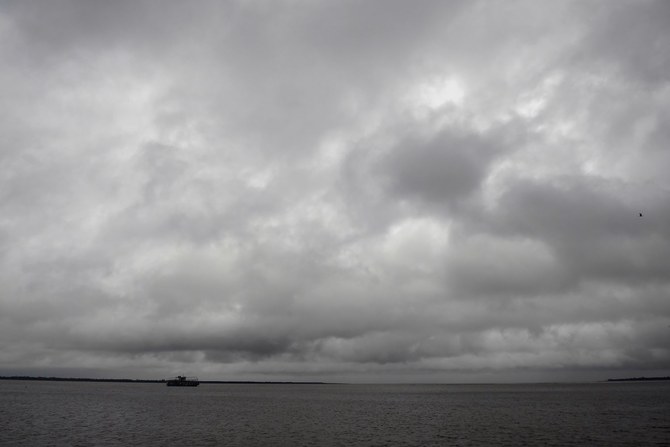
MOUSOUNI ISLAND, India: Cyclone Bulbul hit India and southern Bangladesh on Saturday, leaving two dead as authorities in the countries ordered more than two million people to get out of the path of the storm.
The cyclone, packing winds of up to 120 kilometres (75 miles) per hour, has "weakened" and "started crossing" India's West Bengal and Bangladesh's Khulna coast at about 9:00 pm (1500 GMT), Dhaka's Meteorological Department said in a special bulletin.
"It is likely to move in a northeasterly direction" and "weaken gradually, and may complete crossing West Bengal-Khulna coast by midnight tonight," the department said.
Airports and ports were shut down and the deaths were reported before the full force of the cyclone had hit.
One person was killed by an uprooted tree in Kolkata and another by a wall that collapsed under the force of the winds in Odisha state, authorities said.
More than 60,000 people were moved away from the coast on the Indian side of the border.
Bangladesh disaster management secretary Shah Kamal told AFP that "2.028 million" have been evacuated and moved to more than 5,500 cyclone shelters.
He said there was no reports of casualties and rejected reports in local media that dozens of local fishermen were missing on the southern coast.
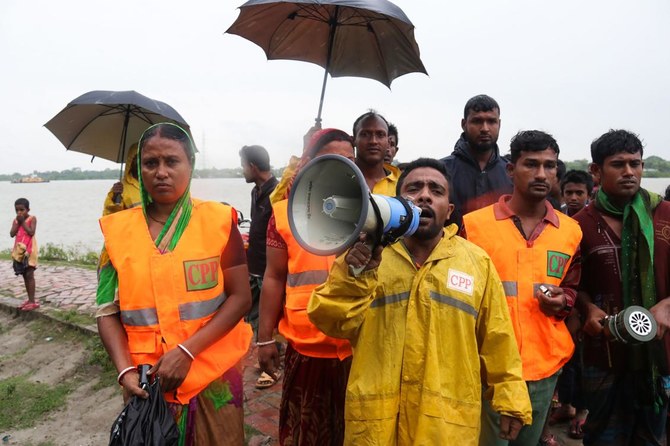
Bangladeshi troops were sent to some villages, while about 55,000 volunteers went door-to-door and making loudspeaker announcements in the streets to get people away from the danger zone in villages, many of which were below sea level.
A storm surge up to two metres (seven feet) was predicted along the coast, Bangladesh's Meteorological Department said.
About 1,500 tourists were stranded on the southern island of Saint Martin after boat services were suspended due to bad weather.
Bangladesh's two biggest ports, Mongla and Chittagong, were closed because of the storm, and flights into Chittagong airport were halted.
In India, flights in and out of Kolkata airport were suspended for 12 hours because of the storm.
On the West Bengal island of Mousouni, which lies in the path of the storm, frightened residents took shelter in schools and government buildings because they had not been able to escape.
Military planes and ships have been put on standby to help in emergencies, Indian authorities said.
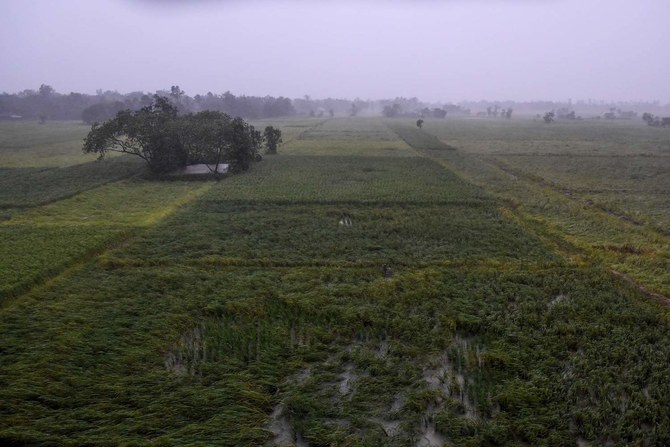
Bulbul hit the coast at the Sundarbans, the world's largest mangrove forest, which straddles Bangladesh and part of eastern India, and is home to endangered species including the Bengal tiger and the Irrawaddy dolphins.
Bangladesh's low-lying coast, home to 30 million people, is regularly battered by cyclones that leave a trail of destruction.
Hundreds of thousands of people have been killed in cyclones in recent decades.
While the frequency and intensity have increased, partly due to climate change, the death tolls have come down because of faster evacuations and the building of 4,000 cyclone shelters along the coast.
In November 2007, Cyclone Sidr killed more than 3,000 people. In May this year, Fani became the most powerful storm to hit the country in five years, but the death toll was about 12.


Cyclone kills two as Bangladesh, India evacuate two million

Cyclone kills two as Bangladesh, India evacuate two million

- Bulbul, packing a maximum wind speed of 120 kilometers per hour, is on course to make landfall near the Sundarbans, the world’s largest mangrove forest
- Some 55,000 volunteers have been mobilized to go door to door and alert people about the storm


Hungary says it will block a key EU loan to Ukraine until Russian oil shipments resume
- Szijjártó said: “As long as Ukraine blocks the resumption of oil supplies to Hungary, Hungary will block European Union decisions that are important and favorable for Ukraine”
- Hungary’s decision to block the key funding came two days after it suspended diesel shipments
BUDAPEST: Hungary will block a planned 90-billion-euro ($106-billion) European Union loan to Ukraine until the flow of Russian oil through the Druzhba pipeline resumes, Hungary’s foreign minister said.
Russian oil shipments to Hungary and Slovakia have been interrupted since Jan. 27 after what Ukrainian officials said was a Russian drone attack damaged the Druzhba pipeline, which carries Russian crude across Ukrainian territory and into Central Europe.
Hungary and Slovakia, which have both received a temporary exemption from an EU policy prohibiting imports of Russian oil, have accused Ukraine — without providing evidence — of deliberately holding up supplies. Both countries ceased shipping diesel to Ukraine this week over the interruption in oil flows .
In a video posted on social media Friday evening, Foreign Minister Péter Szijjártó accused Ukraine of “blackmailing” Hungary by failing to restart shipments. He said his government would block a massive interest-free loan the EU approved in December to help Kyiv to meet its military and economic needs for the next two years.
“We will not give in to this blackmail. We do not support Ukraine’s war, we will not pay for it,” Szijjártó said. “As long as Ukraine blocks the resumption of oil supplies to Hungary, Hungary will block European Union decisions that are important and favorable for Ukraine.”
Hungary’s decision to block the key funding came two days after it suspended diesel shipments to its embattled neighbor and only days before the fourth anniversary of Russia’s full-scale invasion.
Nearly every country in Europe has significantly reduced or entirely ceased Russian energy imports since Moscow launched its war in Ukraine on Feb. 24, 2022. Yet Hungary and Slovakia — both EU and NATO members — have maintained and even increased supplies of Russian oil and gas.
Hungary’s nationalist Prime Minister Viktor Orbán has long argued Russian fossil fuels are indispensable for its economy and that switching to energy sourced from elsewhere would cause an immediate economic collapse — an argument some experts dispute.
Widely seen as the Kremlin’s biggest advocate in the EU, Orbán has vigorously opposed the bloc’s efforts to sanction Moscow over its invasion, and blasted attempts to hit Russia’s energy revenues that help finance the war. His government has frequently threatened to veto EU efforts to assist Ukraine.
On Saturday, Slovakia’s populist Prime minister Robert Fico said his country will stop providing emergency electricity supplies to Ukraine if oil is not flowing through the Druzhba by Monday. Orbán’s chief of staff, Gergely Gulyás, said earlier this week that Hungary, too, was exploring the possibility of cutting off its electricity supplies to Ukraine.
Not all of the EU’s 27 countries agreed to take part in the 90-billion-euro loan package for Kyiv. Hungary, Slovakia and the Czech Republic opposed the plan, but a deal was reached in which they did not block the loan and were promised protection from any financial fallout.


