

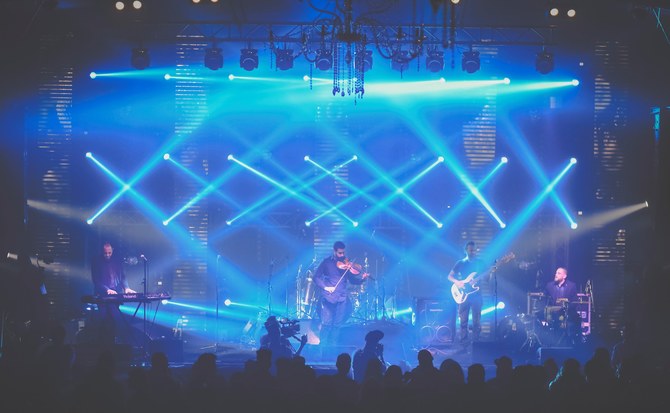
Samer Rashed takes ‘Arabic gypsy jazz’ to the UK

The Palestinian viola player tours England this month to promote new album. (Supplied)
Updated 08 November 2019
Follow

Samer Rashed takes ‘Arabic gypsy jazz’ to the UK

CAIRO: “Think of a viola soloist presenting a fusion of gypsy jazz and Arabic music, then think of the viola — itself an underrated musical instrument in the Arab world — as the leading instrument of this blend,” Palestinian violist and composer Samer Rashed says of his singular musical project, ahead of his UK tour this month.

Between November 16 and 29, the Jerusalem-based musician and his trio will perform in London, Coventry, and Birmingham as part of a double-bill featuring British-Bahraini trumpet player Yazz Ahmed, before concluding their tour in Sheffield on the UN International Day of Solidarity with the Palestinian People.

The tour will bring Rashed’s second album, “Tales of the Gypsy Jazz,” to an international audience following its launch concert at Ramallah Municipality Theatre in May, which began his tour across Palestine. Now available on several streaming platforms, the album has created considerable buzz since its May release, with “April in Jerusalem” and “Wedding, for Zeina” in particular gaining acclaim.

In August, the magazine This Week in Palestine named Rashed “Artist of the month,” praising his new album for its “diverse range of upbeat and slow music that takes listeners on a variety of journeys and presents yet again an unprecedented employment of the viola as the key instrument in this genre.”
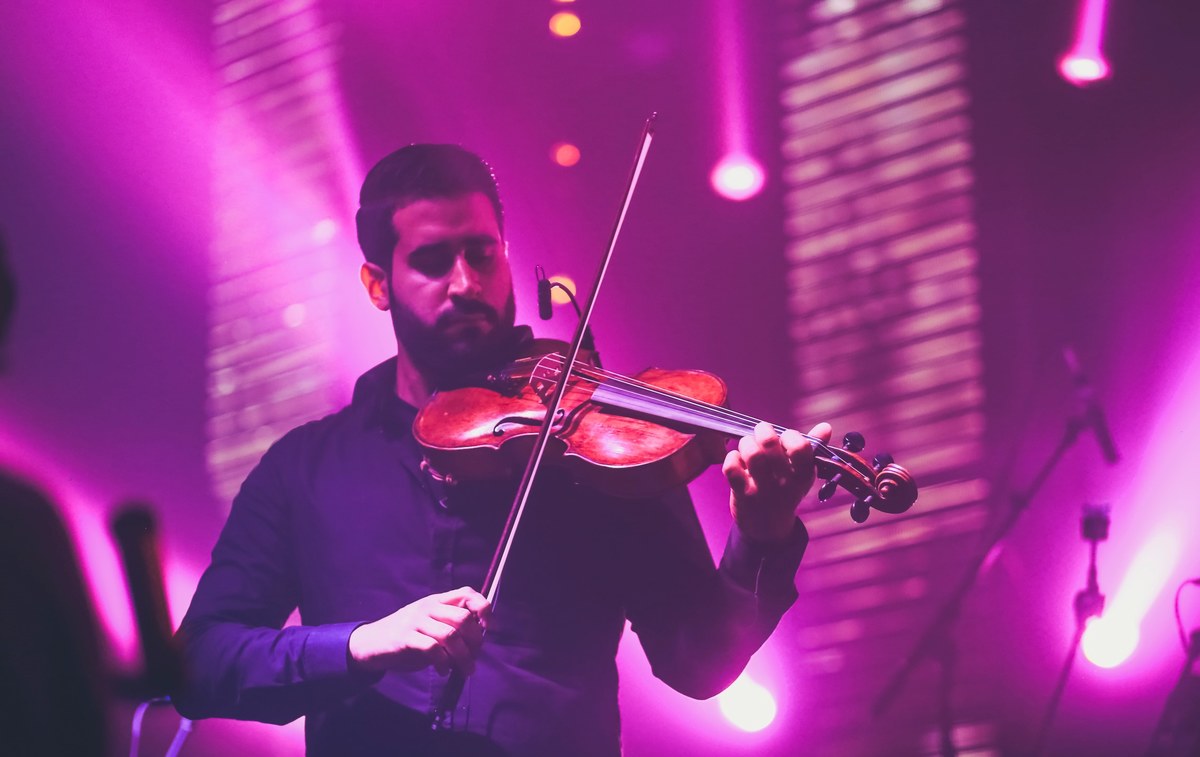


The Jerusalem-based musician and his trio will perform in London between Nov. 16-29. (Supplied)

Rashed’s success, the review continued, “sets a great example for young Palestinian musicians, showing them what can be accomplished with minimal resources and maximum ambition.”

Featuring seven original compositions all written by Rashed, the album was sponsored by the Swiss Agency for Development and Cooperation and the Palestinian Performing Arts Network.

While Rashed’s signature sound certainly employs the “joyful and upbeat rhythms” typical of gypsy jazz, he says he is not interested in  “imitation of the genre’s features or the simple creation of musical replicas.”

“It’s not like listening to the music of Romani guitarist Jean Django Reinhardt or French jazz guitarist Biréli Lagrène,” Rashed says of his musical style. “I try to bring in my own interpretation of the genre.”
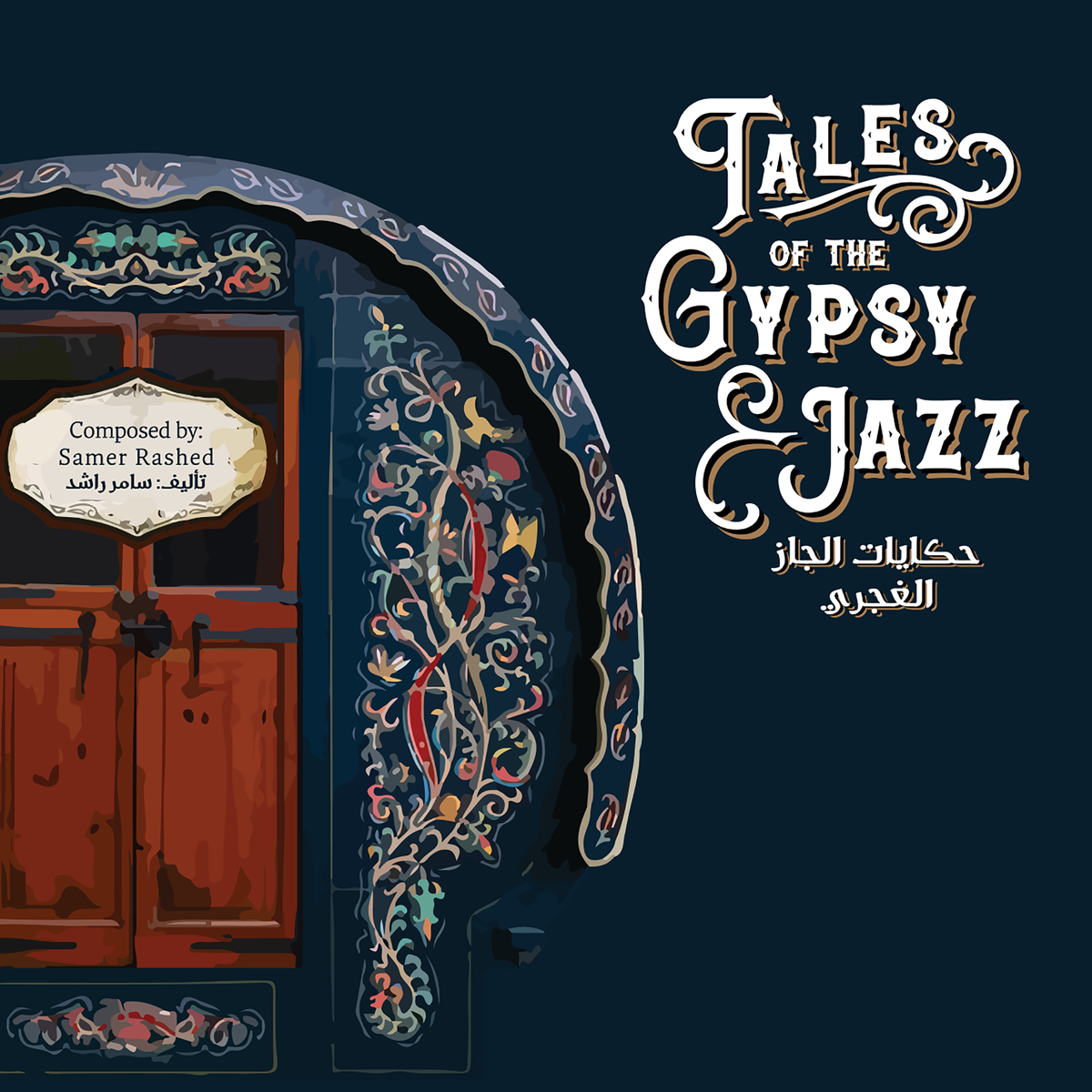


“Tales of the Gypsy Jazz” is Rashed’s second album. (Supplied)

In “Tales of the Gypsy Jazz,” that “interpretation” means the viola takes center stage, explains Rashed, and is apparent in the “musical experimentation” that underpins the compositions, particularly the inclusion of the accordion and buzuq.

Two years in the making, “Tales of the Gypsy Jazz,” builds on the success of Rashed’s first album, “Gypsy Rhapsodies,”” albeit in a “more experimental manner.”

Released in 2016, Rashed’s debut album also consisted of seven tracks; five original compositions in addition to “innovative rearrangements” of two traditional Arabic songs: “’Ala Moj al-Bahr” by Syrian singer Mayada Bsilis, and “Bint e-Shalabiyah” by Lebanese legend Fayrouz.

A 2012 graduate of the National Conservatory of Music in Jerusalem where he would later teach, Rashed chose to specialize in the viola (“a very challenging instrument,” he says) early on.
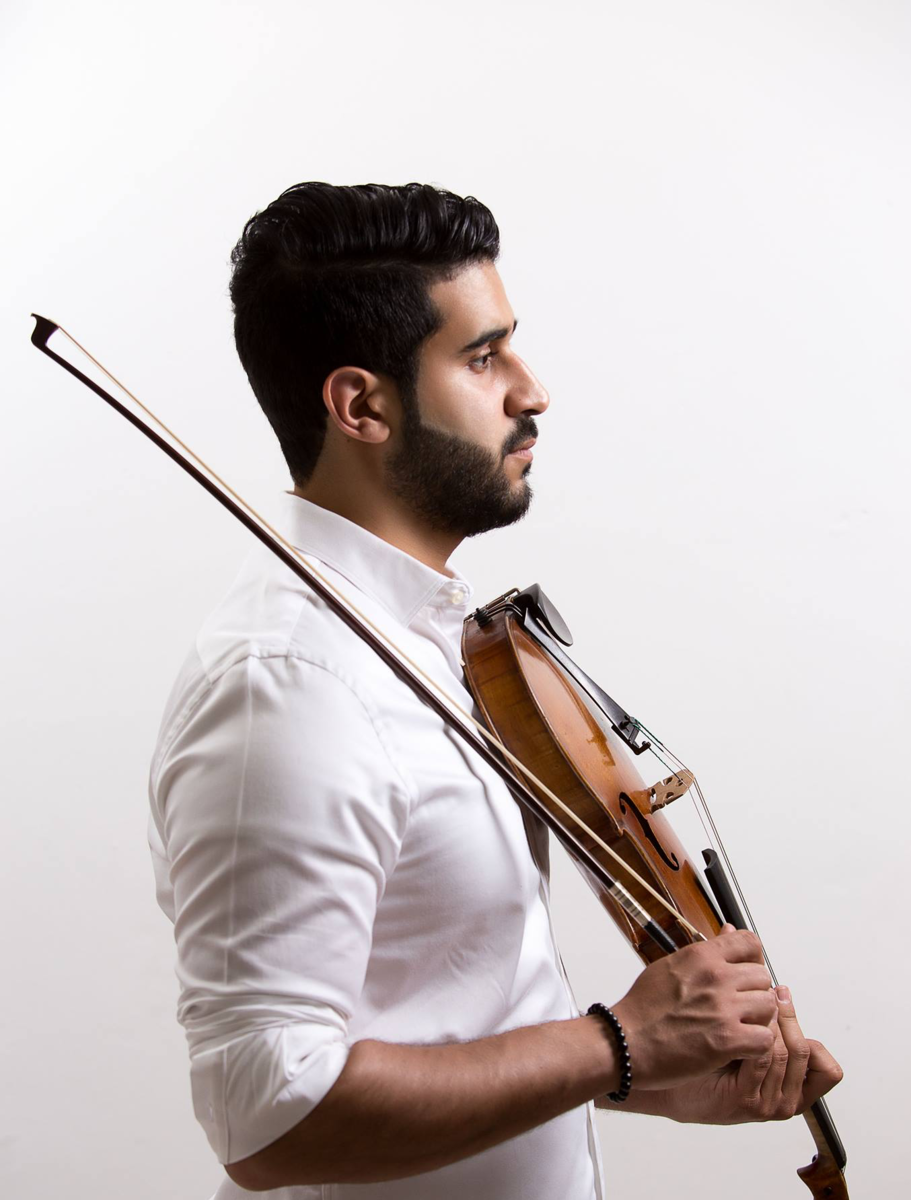


Rashed’s signature sound certainly employs the “joyful and upbeat rhythms” typical of gypsy jazz. (Supplied)

“It’s unusual to see instruments like the viola or violin become leading instruments or main solos in a music project, with other instruments like the piano, buzuq or accordion as only accompanying instruments,” Rashed says.

Determined to create his own viola-inspired sound, Rashed traveled to Istanbul in 2013 where he studied Turkish gypsy and jazz music with renowned Turkish violinist Nedim Nalbantoglu, before returning to Jerusalem and specializing in music composition.

He has since performed in music festivals across the Arab world and in Europe. He has played alongside established musicians including Lebanon’s Marcel Khalife at Beiteddine Art Festival and British violinist Nigel Kennedy at the The Proms in London.

Being invited to play at major festivals, is, Rashed says, a major boost for instrumental music, which remains underappreciated in the Arab world.

“People still believe that an instrumental performance is not worthy of their time,” he says. “But things are changing, and we are discovering that people are thirsty for change and are starting to like this music more.”


Global gems go under the hammer 

Updated 16 January 2026
Follow

Global gems go under the hammer 

  • International highlights from Sotheby’s ‘Origins II’ auction, which takes place Jan. 31 in Diriyah 

Andy Warhol 

‘Muhammad Ali’ 

Arguably the most famous name in pop art meets arguably the most famous sportsman of the 20th century in this set of four screen prints from 1978, created at the behest of US investment banker Richard Weisman. “I felt putting the series together was natural, in that two of the most popular leisure activities at the time were sports and art, yet to my knowledge they had no direct connection,” Weisman said in 2007. “Therefore I thought that having Andy do the series would inspire people who loved sport to come into galleries, maybe for the first time, and people who liked art would take their first look at a sports superstar.” Warhol travelled to Ali’s training camp to take Polaroids for his research, and was “arrested by the serene focus underlying Ali’s power — his contemplative stillness, his inward discipline,” the auction catalogue states. 

Jean-Michel Basquiat 

‘Untitled’ 

Basquiat “emerged from New York’s downtown scene to become one of the most influential artists of the late 20th century,” Sotheby’s says. The largely self-taught artist’s 1985 work, seen here, “stands as a vivid testament to (his) singular ability to transform drawing into a site of intellectual inquiry, cultural memory, and visceral self-expression.” Basquiat, who was of Caribbean and Puerto Rican heritage, “developed a visual language of extraordinary immediacy and intelligence, in which image and text collide with raw urgency,” the catalogue continues. 

Camille Pissarro 

‘Vue de Zevekote, Knokke’ 

The “Knokke” of the title is Knokke-sur-Mer, a Belgian seaside village, where the hugely influential French-Danish Impressionist stayed in the summer of 1894 and produced 14 paintings, including this one. The village, Sotheby’s says, appealed to Pissarro’s “enduring interest in provincial life.” In this work, “staccato brushstrokes, reminiscent of Pissarro’s paintings of the 1880s, coalesce with the earthy color palette of his later work. The resulting landscape, bathed in a sunlit glow, celebrates the quaint rural environments for which (he) is best known.” 

David Hockney 

‘5 May’ 

This iPad drawing comes from the celebrated English artist’s 2011 series “Arrival of Spring in Woldgate, East Yorkshire in 2011,” which Sotheby’s describes as “one of the artist’s most vibrant and ambitious explorations of landscape, perception, and technological possibility.” Each image in the series documents “subtle shifts in color, light and atmosphere” on the same stretch of the Woldgate, “showing the landscape as something experienced over time rather than frozen in an instant.” The catalogue notes that spring has long been an inspiration for European artists, but says that “no artist has ever observed it so closely, with such fascinated and loving attention, nor recorded it in such detail as an evolving process.” 

Zarina  

‘Morning’ 

Sotheby’s describes Indian artist Zarina Hashmi — known by her first name — as “one of the most compelling figures in post-war international art — an artist whose spare, meditative works distilled the tumult of a peripatetic life into visual form.” She was born in Aligarh, British India, and “the tragedy of the 1947 Partition (shaped) a lifelong meditation on the nature of home as both physical place and spiritual concept.” This piece comes from a series of 36 woodcuts Zarina produced under the title “Home is a Foreign Place.” 

George Condo 

‘Untitled’ 

This 2016 oil-on-linen painting is the perfect example of what the US artist has called “psychological cubism,” which Sotheby’s defines as “a radical reconfiguration of the human figure that fractures identity into simultaneous emotional and perceptual states.” It’s a piece that “distills decades of inquiry into the mechanics of portraiture, drawing upon art-historical precedent while decisively asserting a contemporary idiom that is at once incisive and darkly humorous,” the catalogue notes, adding that the work is “searing with psychological tension and painterly bravura.”