ISLAMABAD: A record-breaking 44,000 people have been infected with mosquito-borne dengue in Pakistan this year, a senior health official said Wednesday, as increased outbreaks linked to rising temperatures and erratic rainfall ravage other parts of Asia.
Dr. Rana Safdar, a senior official at the National Institute of Health (NIH), told AFP the figure is a huge leap from the previous record of 27,000 infections in 2011.
Safdar said 66 people had been killed by the disease so far in 2019, compared to 370 in 2011.
He blamed climate change for the surge, but would not elaborate. The government was “employing all available resources at its disposal to contain the problem,” he said.
Physician Dr. Mahseema Siddique, who treats dengue patients, blamed the government for the rise in cases, saying local authorities in Punjab and Islamabad in particular had failed to take precautions such as covering up water reservoirs or spraying anti-dengue chemicals.
“They woke up only after hundreds of people got infected and that was too late. There are a large number of areas where spray teams could not make it,” he said.
The highest number of patients was recorded in the capital Islamabad and neighboring garrison city of Rawalpindi, where 12,433 people were found infected with the virus.
Dengue is transmitted mainly by the Aedes Aegypti mosquito, which thrives in densely-populated tropical climates and breeds in stagnant pools of water.
Mosquitoes pick up the virus from infected humans — even asymptomatic ones — and pass it along to other people through bites.
Infections have steadily climbed across the globe since the 1970s due to rising temperatures and irregular monsoon rains linked to climate change, which allow for ideal mosquito breeding conditions.
But this year outbreaks have rampaged through Southeast Asia in particular, infecting hundreds of thousands, killing hundreds, and crippling health care systems as governments struggle to contain the untreatable virus.
Dengue is mostly found in crowded areas, and breakneck urbanization across the globe has helped the virus thrive.
Dubbed “breakbone fever,” it inflicts suffers with intense flu-like symptoms: severe headache, pain behind the eyes, full-body aches, high fever, nausea, vomiting, swollen glands or rash.


Dengue cases soar to record high in Pakistan
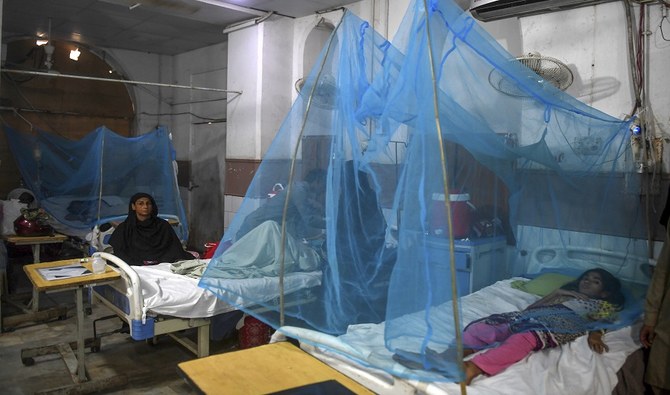
Dengue cases soar to record high in Pakistan

- 44,000 Pakistanis have been infected with mosquito-borne dengue this year
- 66 people had been killed by the disease so far in 2019, says senior official

Pakistan calls for calm after 16 people killed in Khamenei protests
- The violence came hours after Iranian authorities confirmed Supreme Leader Ali Khamenei was killed in coordinated US-Israeli strikes
- Nine people were killed in clashes in Karachi where protesters stormed US consulate, while UN offices were set ablaze in Gilgit, Skardu
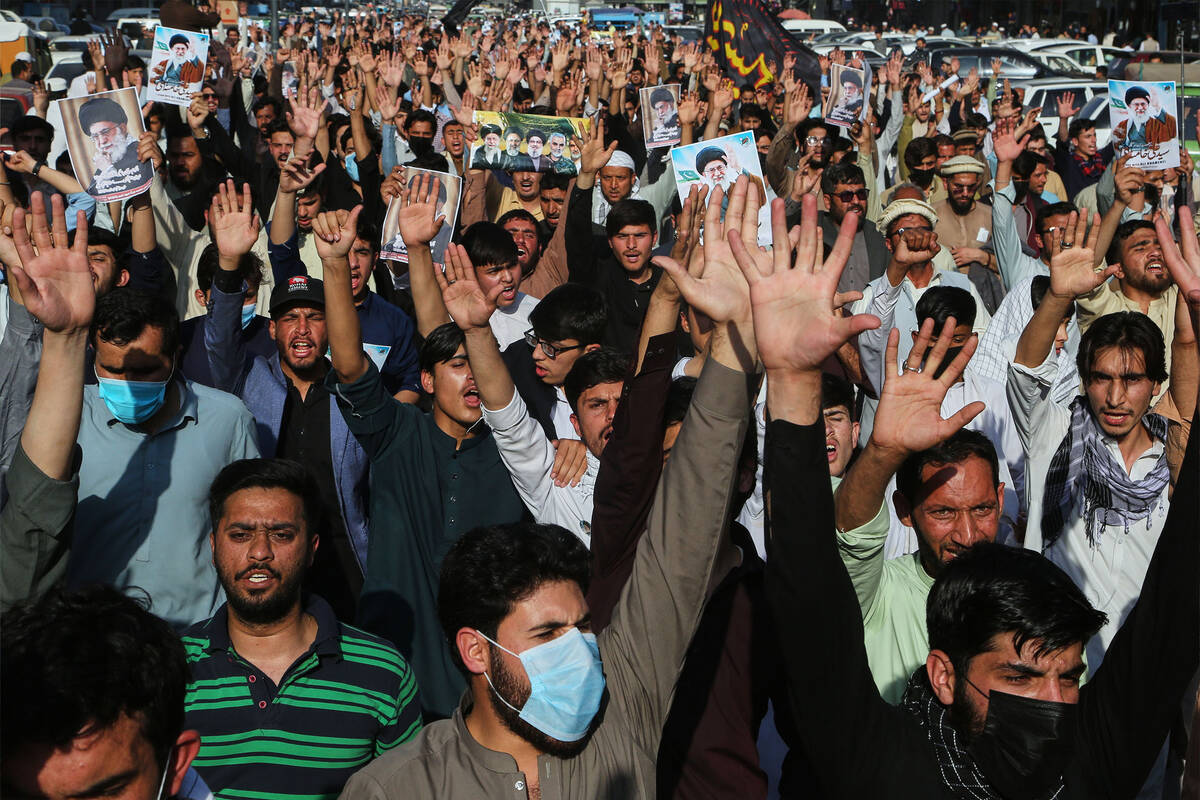
ISLAMABAD/KARACHI/GILGIT/PESHAWAR: Pakistan’s Interior Minister Mohsin Naqvi on Sunday urged calm after at least 16 people were killed in protests linked to the killing of Iran’s Supreme Leader Ayatollah Ali Khamenei in joint US-Israeli strikes.
Hundreds of protesters gathered outside the US consulate in Karachi on Sunday morning. Videos showed protesters armed with sticks smashing doors and windows. Separate footage appeared to show property inside the consulate premises set on fire, prompting police to fire tear gas at them.
In Islamabad, protesters entered the Red Zone which houses key government and diplomatic offices in the capital, prompting authorities to fire tear gas to disperse the demonstrators. Similarly, people gathered outside the press club in the northwestern city of Peshawar, from where they were marching toward the US consulate.
At least nine people were killed and 60 others sustained injuries in clashes with law enforcement outside the US consulate in Karachi, according to authorities. Seven more were killed in the northern Gilgit-Baltistan region, where clashes left 45 people injured.
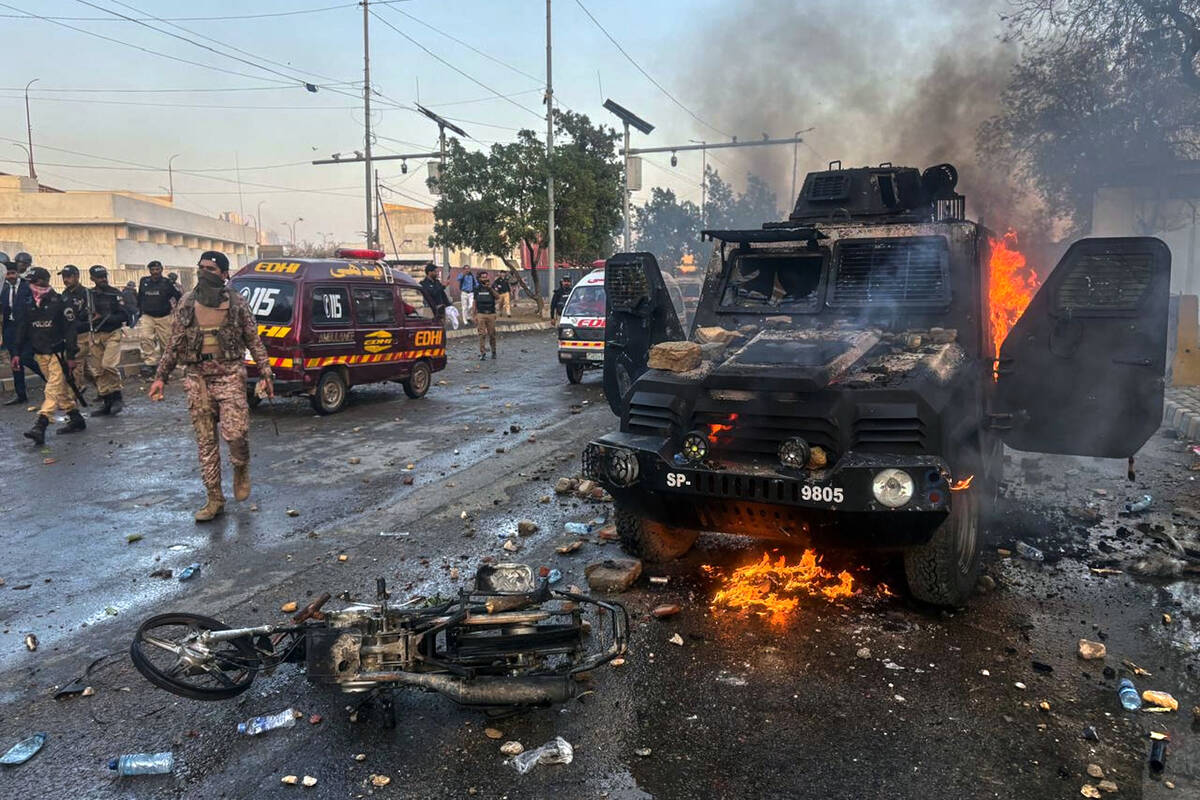
“After the martyrdom of Ayatollah Khamenei, every citizen of Pakistan is saddened in the same way as the citizens of Iran are grieving,” Naqvi was quoted as saying by his ministry.
“We are all with you. We request the citizens not to take the law into their hands, and to record their protest peacefully.”
Naqvi visited different areas of Islamabad and reviewed the law-and-order situation, according to the interior ministry. He ordered foolproof security arrangements at the Diplomatic Enclave, which is home to foreign missions, in Islamabad’s Red Zone.
PROTESTERS STORM US CONSULATE IN KARACHI
Additional Inspector General Karachi Azad Khan told reporters that protesters had managed to enter the US consulate from the outer gate before police dispersed them.
“Nine people are dead while 39 injured are being treated at the Shaheed Mohtarma Benazir Bhutto Institute of Trauma,” Karachi Police surgeon Dr. Summaiya Syed said in a statement.
She said seven others were injured at the Jinnah Postgraduate Medical Center, among them five police personnel, while 14 others were receiving treatment for wounds at private hospitals in the city.
Separately, the Sindh provincial government expressed grief at the loss of lives in the clashes outside the US consulate in Karachi, saying it had constituted a high-level joint investigation committee (JIT) to carry out an impartial investigation into the incident.
“The JIT will determine the circumstances in which the incident occurred and what its causes were,” a statement by the provincial government said, adding that it respects the constitutional right of citizens to protest.
VIOLENCE IN GILGIT-BALTISTAN
In GB, protesters set fire to and vandalized several buildings, including United Nations (UN) regional offices, according to Shabbir Mir, who speaks for the GB chief minister. Religious leaders were trying to quell the protests.
“Seven people were killed and 45 were injured in today’s clashes in Gilgit,” Dr. Wajahat Hussain, a senior health official in Gilgit, told Arab News on Sunday.
Tufail Mir, a deputy inspector-general of police, told Arab News several people were injured in the Skardu district as well.
MIDDLE EAST TENSIONS
The violence came hours after Iranian authorities confirmed Khamenei was killed in coordinated strikes carried out by the US and Israel, dramatically escalating tensions in the Middle East and triggering protests in several countries.
According to US officials, the operation targeted Revolutionary Guard command facilities, air defense systems, missile and drone launch sites, and military airfields. The US military said it suffered no casualties and reported minimal damage to its bases despite what it described as “hundreds of Iranian missile and drone attacks.”
Iran retaliated by launching missiles and drones toward Israel and targeting US military installations in Bahrain, Kuwait, Qatar and the UAE. The Emirati government said its air defense systems intercepted dozens of Iranian missiles and drones, but debris from the interceptions caused material damage in Abu Dhabi and Dubai, and at least one civilian, a Pakistani national, was killed. It issued rare emergency alerts urging residents to seek shelter, underscoring how the conflict has rippled far beyond Iran’s borders.
The Israeli military said dozens of Iranian missiles were fired toward Israeli territory, many of which were intercepted. Israel’s Magen David Adom rescue service said a woman in the Tel Aviv area died after being wounded in a missile strike.


