

Cirque du Soleil promises unforgettable Riyadh Season show

1 / 7
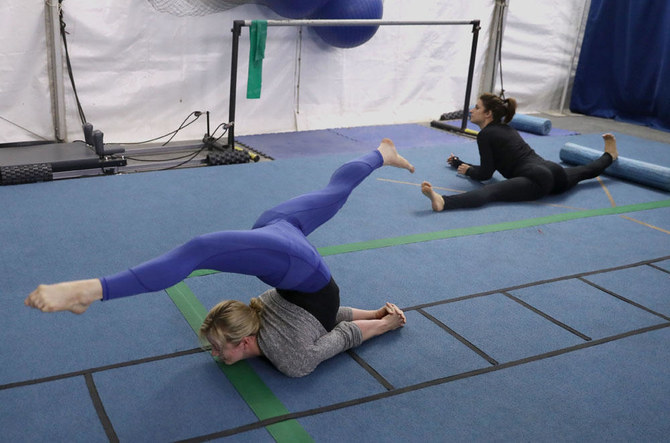
Cirque du Soleil Bazzar set up a white tent out of consideration for visitors, as darker shades would heat up. (AN Photo)
2 / 7
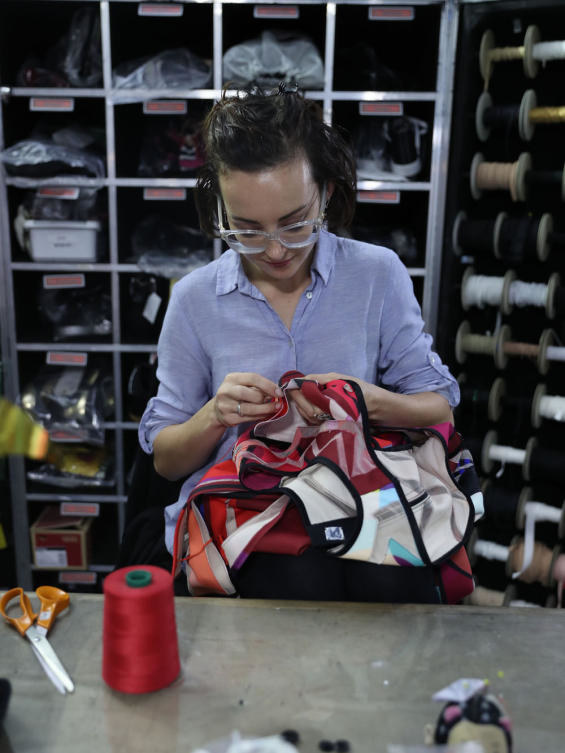
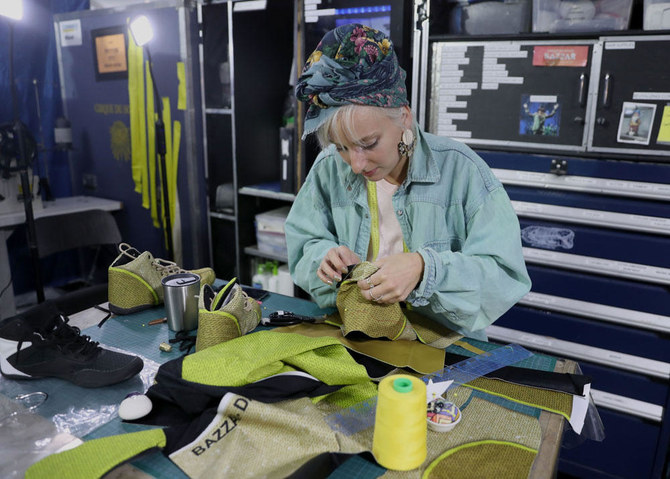
Cirque du Soleil’s wardrobe team worked hard on modifying 15 outfits out of respect for the Saudi culture and traditions. (AN Photo)
3 / 7
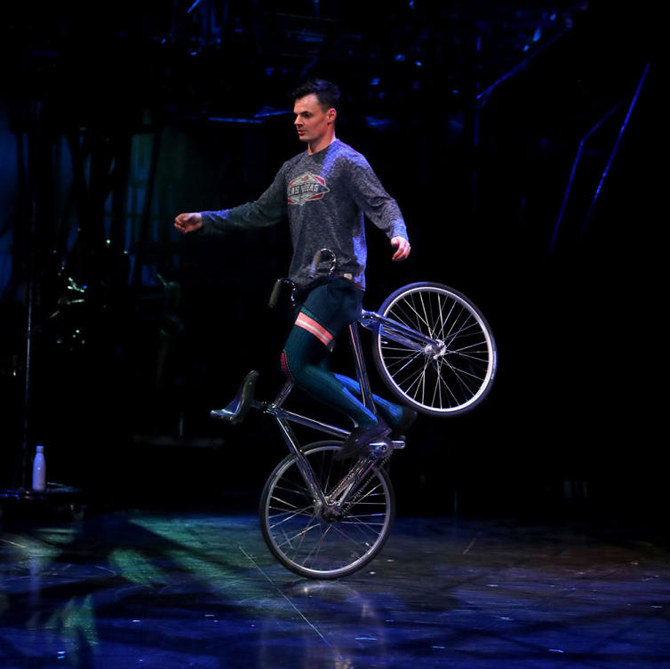
Cirque du Soleil Bazzar will bring in 32 performers of different nationalities to deliver 10 powerful acts for the Riyadh Season. (AN Photo)
4 / 7
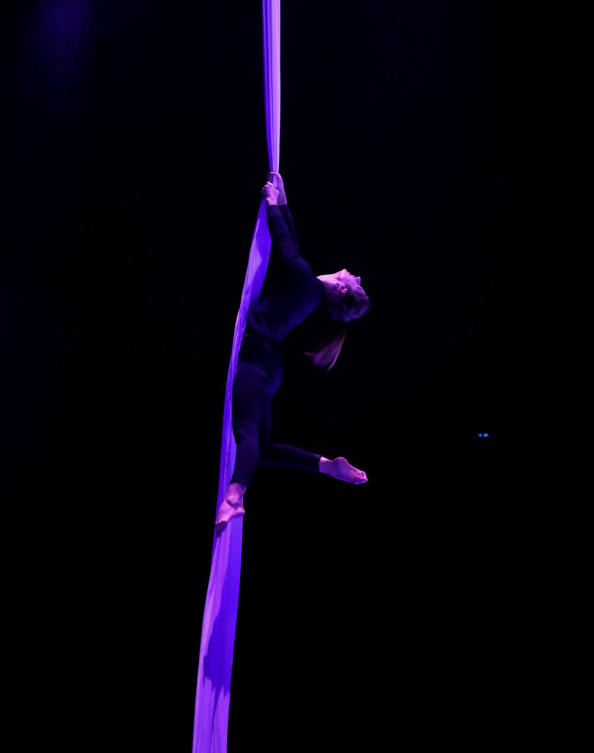
Lauren Joy Herley worked on Cirque du Soleil Sand during Saudi National Day in 2018, and she loved Saudi Arabia’s enthusiastic reactions during the performance, calling them ‘very vocal.’ (AN Photo)
5 / 7
Lauren Joy Herley is loving her character, the Floating Woman, who is rebellious and a trickster, but has good intentions and loves to have fun. (AN Photo)
6 / 7
Cirque du Soleil Bazzar will bring in 32 performers of different nationalities to deliver 10 powerful acts for the Riyadh Season. (AN Photo)
7 / 7
Cirque du Soleil’s wardrobe team worked hard on modifying 15 outfits out of respect for the Saudi culture and traditions. (AN Photo)
Updated 01 November 2019
Follow

Cirque du Soleil promises unforgettable Riyadh Season show

  • Cirque du Soleil Bazzar tells the tale of a maestro and a floating woman who keeps disrupting him and a mini maestro who wants to take his leading role
  • The acrobatic performers on stage will be accompanied by three musicians — one of them can play up to 17 instruments

RIYADH: Set in a white tent at Riyadh Front, the international team of artists and crew behind the sensational Cirque du Soleil gathered to prepare for their opening night on Nov. 1 as part of the Riyadh Season.

The show’s publicist Nicolas Chabot told Arab News about Cirque du Soleil Bazzar, which will tell the tale of a maestro and a floating woman who keeps “disrupting” him and a mini maestro who wants to take his leading role.

“People come to see Cirque du Soleil shows to see acrobatic acts, and Bazzar will hold 10 impressive acts with 32 artists in the choreographed show. We have beautiful costumes and amazing music in what is known as contemporary circus,” he said.

That means there will be no animal tricks during the show. Instead, it will have a mixture of acts, dance, music and theater. “That is what Cirque du Soleil has been doing for 35 years,” added Chabot.

The acrobatic performers on stage will be accompanied by three musicians — one of them can play up to 17 instruments. But unlike operas and plays, the acrobatic performance will lead the music. The songs will vary from pop to folk and classical music, to appeal to all ears.

This is not Lauren Joy Herley’s first visit to Saudi. The performer who plays the floating woman, a rebellious trickster, in Bazzar was part of Cirque du Soleil’s Sand on Saudi National Day last year, and she is excited to be back.

“Last year in Riyadh, the audience was very, very vocal, and I am hoping they are this year too,” she said.

As an intimate show, Herley thinks that “it brings about a raw, energetic atmosphere that does not rely on projections and side effects but the individuals that you see bringing their presence and skill.”

She said she was very proud to present Cirque du Soleil to Saudi Arabia, describing her previous experience as “different but positive.”

In order to show respect for Saudi audiences and to the kingdom’s culture, head of wardrobe Alexandra revealed that they had to modify 15 outfits.

But that did not decrease the performers’ mobility. “We made sure the artists trained in their modified outfits, and everyone is really excited for their upgraded clothes.”

Rania Al-Ghamdi, from Jeddah, has been a huge fan of Cirque du Soleil and she pledged to visit Bazzar during the Riyadh Season. Part of her obsession goes back to the fact that the circus giants refuse to incorporate animals in their performances, and were against it from the start.

“They spread awareness by leading by example, a movement that is led by many nowadays, but they did it first,” she said.

Al-Ghamdi also likes that there is always a tale to their performances; it is not “just an acrobatic show,” the costumes, makeup, the story, the art and the effort they put into their shows are what makes them unrivaled.

“They dig deep and research, learn languages to create songs that tell the tale in a very artistic way,” she added.

Cirque du Soleil Bazzar will open on Nov. 1 until Dec. 7 to dazzle the Riyadh Season, before moving on to the Caribbean.


Lebanese filmmaker turns archival footage into a love letter to Beirut

Updated 28 February 2026
Follow

Lebanese filmmaker turns archival footage into a love letter to Beirut

LONDON: Lebanese filmmaker Lana Daher’s debut feature “Do You Love Me” is a love letter of sorts to Beirut, composed entirely of archival material spanning seven decades across film, television, home videos and photography.

The film premiered at the 82nd Venice International Film Festival in September and has since traveled to several regional and international festivals.

Pink Smoke (2020) by Ben Hubbard. (Supplied)

With minimal dialogue, the film relies heavily on image and sound to reconstruct Lebanon’s fragmented history.

“By resisting voiceover and autobiography, I feel like I had to trust the image and the shared emotional landscape of these archives to carry the meaning,” Daher said.

A Suspended Life (Ghazal el-Banat) (1985) by Jocelyne Saab. (Supplied)

She explained that in a city like Beirut “where trauma is rarely private,” the socio-political context becomes the atmosphere of the film, with personal memory expanding into a collective experience — “a shared terrain of emotional history.”

Daher said: “By using the accumulated visual representations of Beirut, I was, in a way, rewriting my own representation of home through images that already existed."

Whispers (1980) by Maroun Bagdadi. (Supplied)

Daher, with editor Qutaiba Barhamji, steered clear of long sequences, preferring individual shots that allowed them to “reassemble meaning” while maintaining the integrity of their own work and respecting the original material, she explained.

The film does not feature a voice-over, an intentional decision that influenced the use of sound, music, and silence.

The Boombox (1995) by Fouad Elkoury. (Supplied)

“By resisting the urge to fill every space with dialogue or score, we created room for discomfort,” Daher said, adding that silence allows the audience to sit with the image and enter its emotional space rather than being guided too explicitly.

 The film was a labor of love, challenging Daher personally and professionally.

“When you draw from personal memory, you’re not just directing scenes, you’re revisiting parts of yourself and your childhood,” she said. “There’s vulnerability in that.”