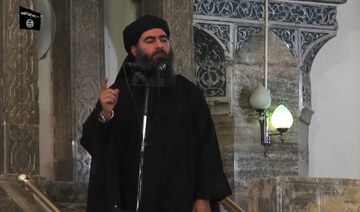

ANAKARA: After Daesh leader Abu Bakr Al-Baghdadi’s death, the terror group still poses a security threat to regional countries, including Turkey.
Turkey’s location on the transit route of foreign fighters on their way to join Daesh poses a serious security risk.
The compound where Al-Baghdadi was killed in a US operation was just a few miles from the Turkish border in a small village called Barisha.
Turkish counterterrorism police detained 20 foreign nationals in Ankara on Monday over suspicions of affiliation with Daesh, as the country fears possible revenge acts by the terror group after US President Donald Trump thanked Turkey for help in killing Al-Baghdadi.
The Daesh-linked suspects, allegedly from Syria, will be referred to the migration office for deportation.
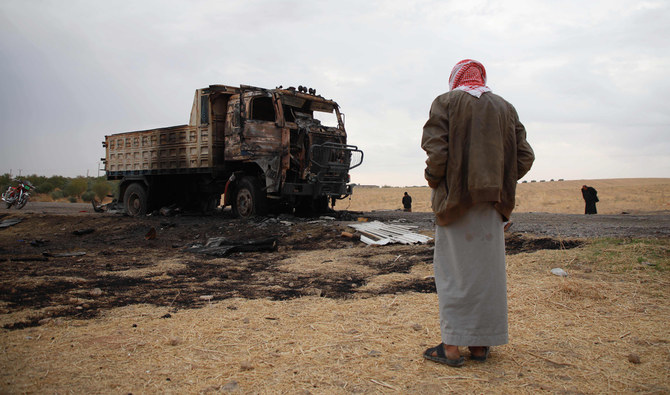
At least 315 people have been killed so far in attacks claimed by Daesh in Turkey, where the terrorist group has targeted civilians, including Arab tourists, in suicide bombings and armed attacks. Some 1,338 others have been wounded in the attacks.
Many metropolitan municipalities, including Ankara — where Daesh carried out a bomb attack, claiming the lives of 107 people — heightened their security measures in public areas ahead of critical dates, such as Oct. 29 for Republic Day celebrations.
Nearly one-third of the 750 Daesh terrorists released by the YPG in Syria have surrendered to Turkey, Defense Minister Hulusi Akar announced on Monday.
For four years, Turkey conducted over 2,000 operations against Daesh and about 1,200 individuals were arrested and convicted over their connections to the terror group.
Michael Horowitz, a Middle East security analyst with the Le Beck consultancy, said Daesh will likely seek to carry out attacks to balance the death of its leader.
“The group did carry out such a wave of ‘revenge attacks’ following the collapse of its ‘caliphate’ in Iraq and Syria,” he told Arab News.
However, Horowitz added that the group will mostly focus on conflict areas including Iraq, Syria, Libya and Afghanistan.
Halid Abdurrahman, a researcher and analyst on the Middle East and North Africa, said that the elimination of Daesh leaders would motivate its fighters for new attacks.
“The fact that Al-Baghdadi was killed in a US operation where Turkey was involved may render Ankara a target and push security forces toward further operations,” he told Arab News.
According to Abdurrahman, Daesh would prefer easy, “soft” targets.
“The fact that Turkey is still present in Syria with its troops would make the country more accessible and a priority for revenge,” he added.
Oubai Shahbandar, a defense analyst, said that intelligence sharing played an important role in providing US special forces a full picture on Al-Baghdadi’s hideout.
“Covert cooperation between the US and regional allies helped make sure that the operation was a success. In particular, the capture of Ismael Al-Ethawi, a key aide and courier for Al-Baghdadi, by Turkish security forces earlier this year played an instrumental role in the operation’s success.
“Daesh terror attacks have afflicted all countries in the region. Continued intelligence sharing and cooperation against this common threat will continue to be crucial,” he added.