


KARACHI: Pakistan is taking practical anti-money laundering measures to discourage the transfer of money through the “Hawala” system by promoting the flow of remittances via official channels, Sahibzada Jahangir, prime minister’s spokesperson for trade and investment, told Arab News.
Hawala system is an informal way of transferring money across borders and the Pakistan government has been working to eliminate this system and encourage the transfer of money through legal banking channels.
“Overseas Pakistanis living anywhere in the world ... from UK Saudi Arabia, UA can remit money and their families can will get the payment on the same day,” Jahangir told from London referring to the launch of new bank deposit services in Pakistan by MoneyGram, a US-based international financial services provider.
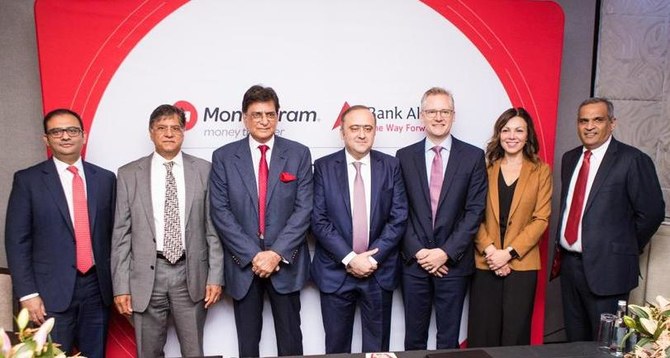
Last week, the agreement to launch services in Pakistan was signed by Alex Holmes, CEO of MoneyGram, and Bilal Asghar, Bank Alfalah’s Group Head for Corporate, Investment Banking & International Business Division in London, enabling overseas Pakistanis to use MoneyGram for a near-instant deposit of home remittance in any bank account in Pakistan.
MoneyGram users across 200 countries can now use this newly launched service to save time and effort for remitting money to their families back home in Pakistan.
“This would help the government to eliminate Hawala and the government would be able to know exactly how much amount has been remitted and from which countries. People face problems as the payment get stuck for 4-5 days,” said Jahangir who presided over the launching ceremony.
Last year, overseas Pakistanis sent home $21.84 billion making the country 7th largest remittance recipient in the world. The new bank deposit service stands to aid this market and provide all bank account holders in Pakistan a fast and easy way to receive money from their loved ones living outside the country.
“We will continue our work with the Pakistan Remittance Initiative (PRI) team to enhance our global coverage as well as offer even more innovative and efficient ways of sending home remittances to Pakistan”, Bilal Asghar commented.
“Pakistan is a key market that is positioned for growth, especially in terms of receiving remittances,” said Grant Lines, Chief Revenue Officer for MoneyGram in a statement.
“It will allow us to make it easier for friends and family to send money and provide greater economic inclusion for Pakistan.”
“On first November this year I am taking a big delegation comprising 100-150 investors for exploring investment opportunities in education, health care, IT, water sector,” Jahangir said while adding that “these investors will stay in the country for a week to explore investment avenues.
Many noted foreign investors including Andrew Forrest, Australian billionaire and the second-largest producer of Iron ore and Christopher Bake, and senior director of VITOL have pledged investment in Pakistan during meetings with PM Khan, Jahangir said.
“Andrew Forrest has promised massive investment in water purification and his teams will very soon visit Pakistan to start a discussion with the government of Pakistan to work the project out while Vitol has made a commitment to invest in oil and gas infrastructure.. in things like oil terminals, storage terminals, and LNG terminals,” he explained.
Tourism is another sector that European investors are eyeing, Jahangir said adding that government is facilitating tourism sectors in Azad Jammu and Kashmir, Punjab and other parts of the country that would attract foreign investment and inflow of remittances.


