Pakistan can be world’s top tourism destination — Eva Zu Beck tells Forbes

Eva Zu Beck's video on why she believes Pakistan can be a top tourist destination has garnered over 700,000 views. August 3rd, 2019. (Eva Zu Beck Instagram)
Updated 13 October 2019
Follow

Pakistan can be world’s top tourism destination — Eva Zu Beck tells Forbes

  • Beck is a recognizable name in Pakistan where she grew in popularity for documenting her travels on social media and YouTube
  • The travel vlogger lived in Pakistan for 13 months

ISLAMABAD: Popular travel vloger Eva Zu Beck confirms her feelings and research to Forbes magazine that Pakistan could be the world's next number 1 tourism destination.
Beck is a known name in Pakistan where her long stint in the country was documented across her various media platforms where she boasts followers and subscribers in the hundreds of thousands. Her videos and photography of Pakistan even caught the eye of the Ministry of Tourism which invited her to meet with Prime Minister Imran Khan and speak about her experience around the country.
She is also a significant name in the travel influencer community having nearly 400,000 followers on Instagram, over 300,000 on Twitter and over 300,000 subscribers to her YouTube channel which feature many videos detailing her life in Pakistan.
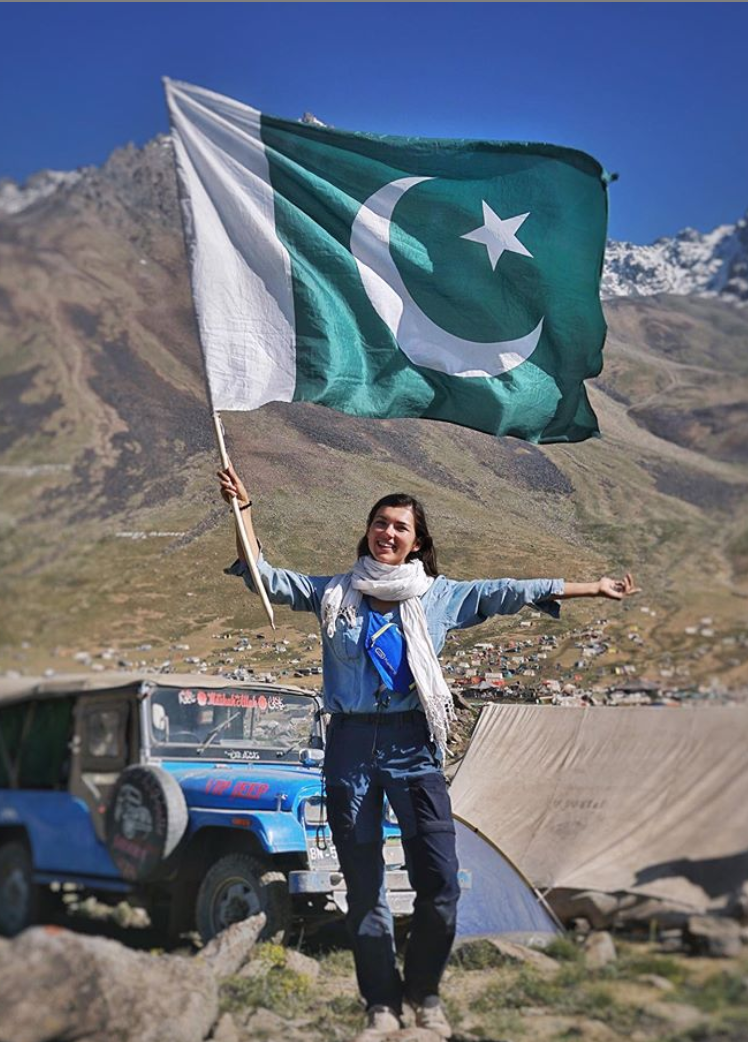


Beck documents her travels the world over taking time to immerse herself in the local cultures. August 3rd, 2019. (Eva Zu Beck Instagram)

It was this documentation of Pakistan that caught the eye and ignited Forbes’ curiosity to learn about a solo female travelers honest and positive experience in a country which is shrouded in doubts and concerns for safety, particularly her video titled ““Why I Believe Pakistan Can Be the World’s #1 Travel Destination.”
“People tend to chuckle when I tell them this, but there’s nothing to laugh about,” Beck told Forbes. In the video Beck breaks down her 13 months in Pakistan and what her travels that took her from the capital to Karachi to the border of China exposed about Pakistan’s potential be it it’s beaches along the Arabian Sea, the energy of the cities, the stunning North and 4500 years of history. Though to be a top tourist destination Beck admits to Forbes, “There is still a very long way to go until any of this could actually happen.”
The interviewer asked Beck about a number of her videos particularly focussing on her time spent at a camp on the China border, Jamalabad, which she dubbed “Taliban territory” and filmed her time spent with a Wakhi family there. Beck described the impact of her time spent with the family, even learning some Wakhi and said, “Ultimately, if I ever have a family, I would like my children to spend their summers in the peaceful village of Jamalabad, learn Wakhi and take in the beautiful culture of my favorite place in the world.”
Beck also gave insight on how she found freedom of mobility around the nation, how safe she felt and what she would tell other female solo travelers from packing, to lodging and expectations who are planning to head to Pakistan.

Pakistan’s space agency says country will witness first supermoon of 2026 on Saturday

Updated 3 sec ago
Follow

Pakistan’s space agency says country will witness first supermoon of 2026 on Saturday

  • The supermoon will coincide with the Quadrantid meteor shower, which peaks in early January
  • The space agency says no further supermoon will occur until a new cycle begins in Nov. 2026

ISLAMABAD: Pakistan will witness the first supermoon of 2026 on Saturday evening, a rare celestial event that will coincide with the Quadrantid meteor shower, which is active in early January, the country’s space agency said Friday.

The Jan. 3 supermoon will be the last in a cycle that began in October 2025, while also marking the first supermoon of the new year. Supermoons occur when a full moon coincides with the Moon’s closest approach to Earth, making it appear larger and brighter than usual.

“The January 3 supermoon, traditionally known as the Wolf Moon, marks the final supermoon of the ongoing cycle began in October 2025,” Pakistan’s national space agency, SUPARCO, said in a statement, adding that it also “simultaneously represents the first supermoon of 2026.”

The agency said the supermoon would rise in Pakistan at 5:51 p.m. local time on Jan. 3 and remain visible through the nights of Jan. 3 and Jan. 4, with illumination reaching 99.8 percent.

According to SUPARCO, the Moon will be at a distance of about 362,312 kilometers (225,130 miles) from Earth during the event, making it appear six to seven percent larger and up to 10 percent brighter than a typical full moon.
The astronomical significance of the event will be enhanced by its timing.

“The supermoon of Jan 3 offers an early highlight among the year’s celestial events such as coinciding with the peak activity of the Quadrantid meteor shower during the same time period,” the statement said.

SUPARCO noted that supermoons usually occur in clusters of three to four consecutive events and said the current cycle would conclude with Friday’s phenomenon.

“The next supermoon cycle starts in November 2026,” the agency said, adding that there would be no further supermoon after this until the end of 2026.