
TOKYO: Japanese Prime Minister Shinzo Abe said on Friday the government was ready to take “all possible steps” if risks to the economy intensified, signaling a fiscal-stimulus boost in the event this month’s sales tax hike triggers a sharp downturn in growth.
Abe’s remark came as the bitter US-China trade war and soft global demand have continued to harm Japanese manufactures, profits and overall economic growth.
Earlier this week, the Bank of Japan’s tankan survey showed business sentiment plummeting to a six-year low in the July-September quarter.
Japan rolled out a twice-delayed increase in the sales tax to 10 percent from 8 percent on Tuesday, a move that is seen as critical for fixing the country’s tattered finances but may hurt the economy by dampening consumer sentiment.
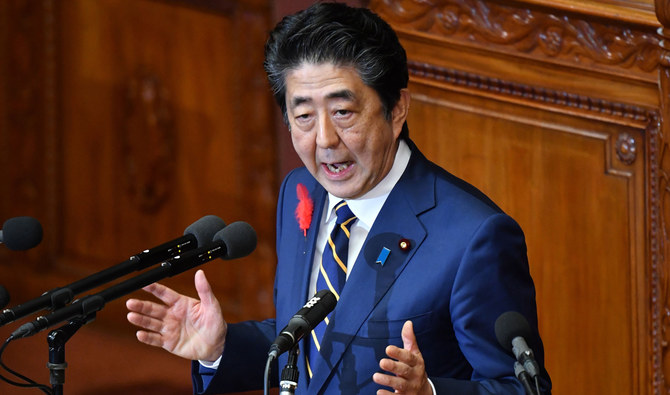
“Achieving economic growth remains my administration’s top priority,” Abe said in a speech delivered to an extraordinary parliament session that convened on Friday.
“If downside risks materialize, we will take all possible steps flexibly and without hesitation to ensure the economy is on a growth path,” he said.
Abe’s pledge to deliver support to the economy echoes that made recently by the Bank of Japan, which kept monetary policy steady last month but signaled its readiness to expand monetary stimulus as early as its Oct. 30-31 meeting.
Japan’s economy has slowed as the trade war crippled exports, though robust capital expenditure and household spending have helped prevent a recession.
Government officials have said the hit to consumption from the sales tax hike would likely be moderate, as households did not front-load purchases ahead of the higher levy as much as they did at the previous hike in 2014.
The government has offered vouchers and tax breaks in an effort to avoid a repeat of 2014, when an increase in the tax rate to 8 percent from 5 percent tipped the economy into recession.
But BOJ Governor Haruhiko Kuroda has warned that the central bank must carefully watch how the tax increase could affect consumer sentiment, adding that it was ready to ease monetary policy further if risks intensify.
A BOJ board member with a casting vote on policy decisions also said on Thursday the bank must consider “preventive steps” against risks, a sign its board may be tilting toward further easing as global pressures intensify.