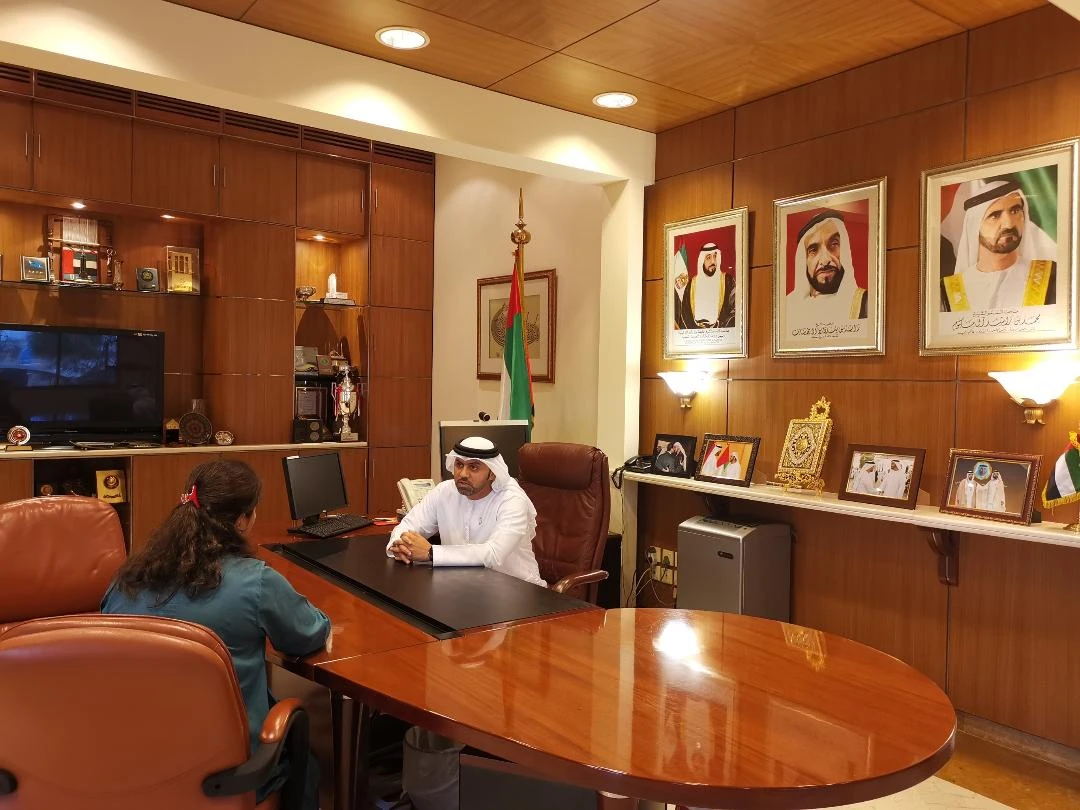
ISLAMABAD: The United Arab Emirates (UAE) plans to invest $5 billion in an oil refinery project in Pakistan by the end of 2019, said UAE’s top diplomat while talking to Arab News on Thursday.
“We are going to launch very soon one of the biggest investments in a refinery project in Hub (a town in Balochistan). It is going to be a $5 billion investment between Mubadala Petroleum Company of Abu Dhabi, Pak Arab Refinery Limited (PARCO) and OMV [OMV Pakistan Exploration Gesellschaft],” UAE Ambassador Hamad Obaid Ibrahim Salem Al-Zaabi said.
PARCO Coastal Refinery is among UAE’s major investments in the country. It was incorporated in Pakistan in May 1974, as a public limited company. Today, PARCO is considered the fulcrum in Pakistan’s strategic oil supply and logistics.
Mubadala Petroleum is an international oil and gas company based in the UAE.
The plan is to set up a deep-conversion, state-of-the-art refinery that would have an output of 250,000-300,000 barrels per day.
Al-Zaabi said the project was the result of extensive discussions between Mubadala Petroleum and Pakistan’s petroleum ministry along with PARCO and OMV.
“This project will show the strength of UAE-Pakistan relations and how the UAE is focusing on investment in and future of Pakistan.”
Pakistan has sought local and foreign investment in oil and gas sector. It is also offering good rates to oil and gas exploration and production companies.
“The two governments are finalizing the minute details of this refinery project. Many meetings have taken place regarding this project,” Al-Zaabi said, adding that a UAE delegation, headed by Musabbeh Al Kaabi, the chief executive officer of Mubadala Petroleum, visited Pakistan a few months ago and met with the board of investment chairman and Pakistan’s petroleum minister.
“They have discussed this project in detail. We are going to launch it very soon,” he added.

UAE to invest $5 billion in Pakistan's oil refinery, says envoy
- PARCO Coastal Refinery is among UAE’s major investments in the country
- The oil refinery project in Hub, Balochistan, will have an output of 250,000-300,000 barrels per day
OIC’s COMSTECH stresses academic collaborations across Muslim world in Islamabad meeting
- COMSTECH holds annual meeting in Islamabad featuring 30 delegates from Iran, Somalia, Palestine, Indonesia and other OIC states
- Limited pool of skilled professionals one of the foremost challenges facing Muslim world, notes COMSTECH secretary general
ISLAMABAD: The OIC Standing Committee on Scientific and Technological Cooperation (COMSTECH) called for stronger academic collaboration across Islamic states to secure the future of higher education in the Muslim world, state-run media reported on Saturday.
COMSTECH’s Coordinator General Prof. Dr. Muhammad Iqbal Choudhary was speaking at the Annual Meeting of the COMSTECH Consortium of Excellence at the organization’s Secretariat in Islamabad. The event brought together vice chancellors, rectors, and senior representatives from leading universities across OIC member and observer states.
Nearly 30 international delegates representing universities from Iran, Somalia, Palestine, Indonesia, Malaysia, Thailand, Uganda, Bangladesh, Benin, Cameroon, Gabon, Côte d’Ivoire, and Senegal joined their counterparts from several Pakistani institutions at the meeting. Participants attempted to chart a collective path forward for tertiary education in OIC countries.
“Collaborations, knowledge sharing, best practices, exchange of scholars, technology transfer and joint academic programs are vital for overcoming the educational challenges faced across the OIC region,” Choudhary said, according to the state-run Associated Press of Pakistan (APP).
The COMSTECH secretary general noted that one of the foremost developmental challenges facing OIC nations remains the limited pool of skilled professionals and workforce.
He said this gap can only be bridged through strengthened tertiary education systems and expanded opportunities for knowledge transfer.
Discussions at the event highlighted the urgent need for competency-driven education, modern pedagogical tools, university–industry partnerships and collaborative training programs designed to equip graduates with the skills necessary to address emerging global challenges.
“The Annual Meeting served as a vital platform for reviewing progress achieved over the past year, identifying future priorities, and deepening academic cooperation to promote scientific excellence and sustainable development across the OIC region,” the APP said.