Pakistani-owned TakeMyJunk collection service turns UAE’s trash into treasure

1 / 2
The company’s double-story, 400,000sq warehouse, Ajman, UAE.( supplied by TakeMyJunk)
2 / 2
A range of furniture to fit all pocket sizes Ajman, UAE ( supplied by TakeMyJunk)
Updated 30 September 2019
Follow

Pakistani-owned TakeMyJunk collection service turns UAE’s trash into treasure

  • Ajman-based TakeMyJunk service has become a major success in the last ten years
  • The company frequently gives away items free of cost

AJMAN: A mug from HardRock café sits right next to a plastic trophy resembling the Oscar statuette at a massive warehouse in Ajman that collects junk from homes and turns it into treasure. One can also see rare paintings, books and other unique items at the depository.
“The UAE is like a massive airport,” said Faisal Khan, the Pakistani owner of TakeMyJunk, a service that picks up stuff free of cost and sells it to middle- and lower-income families.
Launched 10 years ago and based on the waste segregation system in Canada, the idea is now a roaring success in the United Arab Emirates.
“Dubai is a transit city. People come here for a few years and then all that they have made has to be sold or thrown away. Sometimes people don’t have enough time to sell their belongings. That’s where companies like us come in and pick up the stuff,” he added.
All items are transported to the warehouse in Ajman, sorted, refurbished and then sold at nominal prices to customers hunting for a good deal.
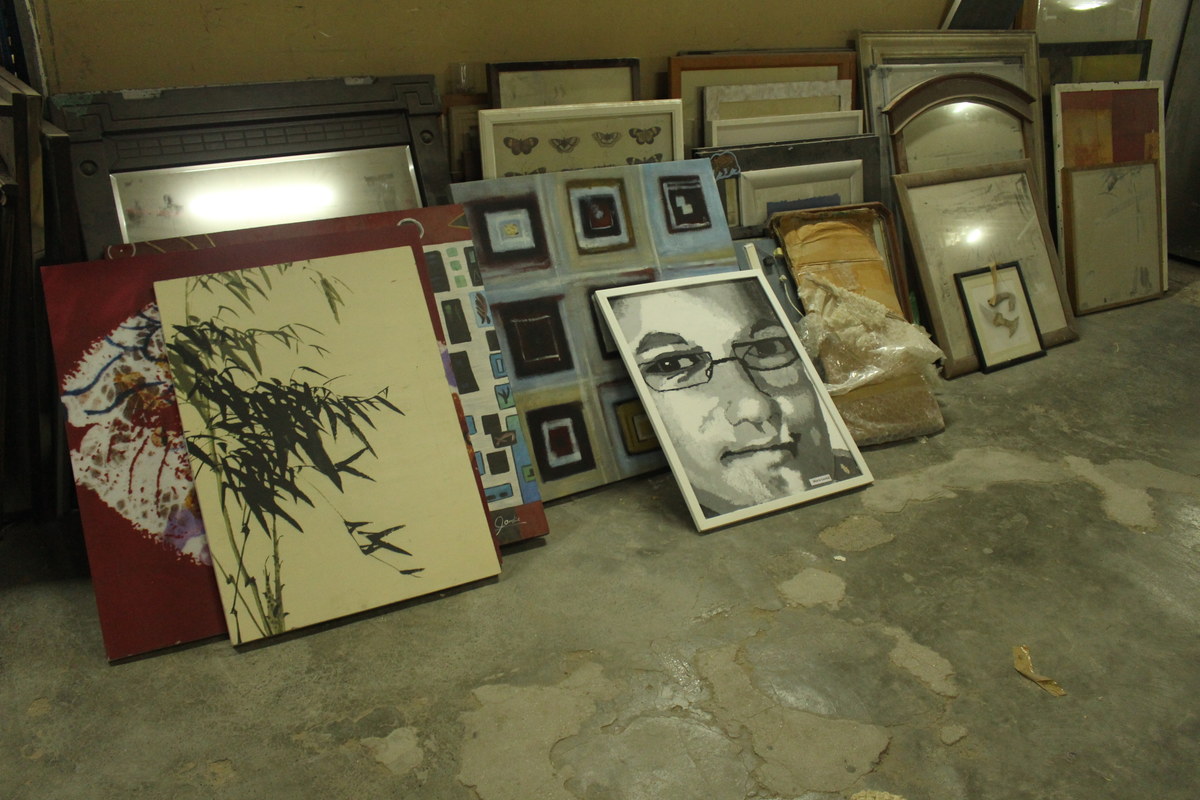


Discarded portraits at warehouse, Ajman, UAE ( ( supplied by TakeMyJunk)

Some items are given away too, if people cannot afford them. Course books, clothes and kitchen items are often a steal.
“I recently started save-a-sofa campaign which triggered hundreds of people to call. We repaired the sofas and tried to sell them, if possible, and then we gave them away to 150,000 workers in a 14 km radius behind the warehouses,” Khan told Arab News.
Every week, the company still delivers items that cannot be sold to workers who find them useful.
The company started operating on 400 square feet of space and has now expanded to a double-story building that covers 100,000 sq ft. It had one truck and now owns 35. The number of employees was two 10 years ago and is now 35.
44-year-old Khan himself drove around Dubai’s high-end residential area when the business began, collecting anything from towels and clothes to furniture from expats who would have thrown them away before returning home.
Today, his hotline hardly stops buzzing. “The people here are educated and don’t want to throw stuff away on the streets. They prefer to call us and, if needed, we buy things in bulk or just pick up their junk,” he said.
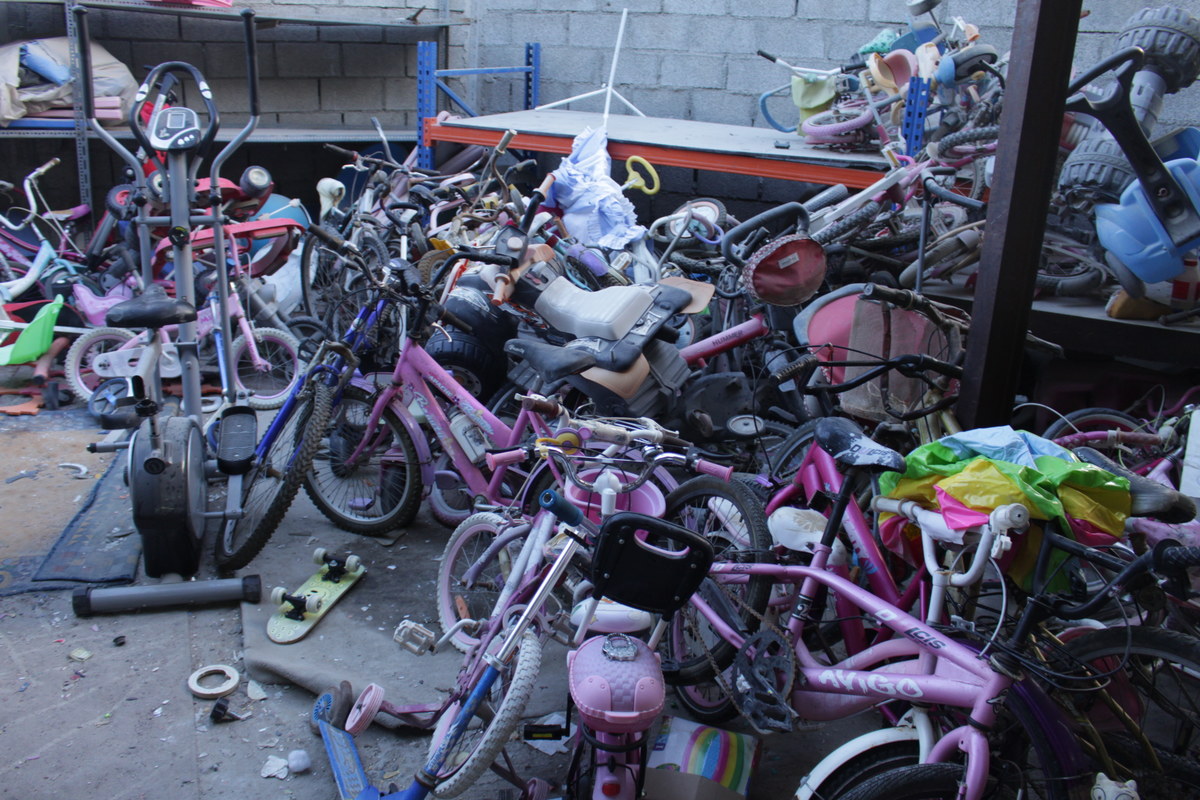


Popular deals: Meeting the needs of kids too Ajman, UAE  ( supplied by TakeMyJunk)

There are no fixed prices, but customers still try to bargain.
“We are not a charity shop but we provide stuff to lower and middle classes,” Shaikh Galib Hussain, sales and marketing manager who was recently hired to manage the expanding business, explained.
“Our target is not to let it go,” he said. “Even if people want to give away books or clothes, we take them and make them useful.”
Hussain said the money from the sales was used to manage the company’s day-to-day operations. “There is a huge cost involved in transportation, staff maintenance, obtaining licenses, restoring furniture etc.”
Prasana Urlal, who has been living in the UAE for nine years, told Arab News he was a frequent visitor of the shop.
“Stuff here is good and if I had to buy from outside, it would have been very expensive,” said the Indian national.
Items such as furniture, books, clothes, kitchen items, electronics are picked up. If they cannot be repaired and sold, they are sent for recycling.
On an average, the company’s workers collect around 5,000 items while 1,000 people walk into the warehouse daily. Since the work is done free of cost, people often tip the workers.
“I don’t think the demand for these items will go down in the near future because the population keeps increasing and is moving,” said Khan. “This will keep our business going and help those in need too.”



Pakistan urges world to treat water insecurity as global risk, flags India treaty suspension

Updated 5 sec ago
Follow

Pakistan urges world to treat water insecurity as global risk, flags India treaty suspension

  • Pakistan says it is strengthening water management but national action alone is insufficient
  • India unilaterally suspended Indus Waters Treaty last year, leading to irregular river flows

ISLAMABAD: Pakistan on Tuesday urged the international community to recognize water insecurity as a “systemic global risk,” warning that disruptions in shared river basins threaten food security, livelihoods and regional stability, as it criticized India’s handling of transboundary water flows.

The call comes amid heightened tensions after India’s unilateral decision last year to hold the 1960 Indus Waters Treaty “in abeyance,” a move Islamabad says has undermined predictability in river flows and compounded climate-driven vulnerabilities downstream.

“Across regions, water insecurity has become a systemic risk, affecting food production, energy systems, public health, livelihoods and human security,” Pakistan’s Acting Permanent Representative to the United Nations, Ambassador Usman Jadoon, told a UN policy roundtable on global water stress.

“For Pakistan, this is a lived reality,” he said, describing the country as a climate-vulnerable, lower-riparian state facing floods, droughts, accelerated glacier melt, groundwater depletion and rapid population growth, all of which are placing strain on already stressed water systems.

Jadoon said Pakistan was strengthening water resilience through integrated planning, flood protection, irrigation rehabilitation, groundwater replenishment and ecosystem restoration, including initiatives such as Living Indus and Recharge Pakistan, but warned that domestic measures alone were insufficient.

He noted the Indus River Basin sustains one of the world’s largest contiguous irrigation systems, provides more than 80 percent of Pakistan’s agricultural water needs and supports the livelihoods of over 240 million people.

The Pakistani diplomat said the Indus Waters Treaty had for decades provided a framework for equitable water management, but India’s decision to suspend its operation, followed by unannounced flow disruptions and the withholding of hydrological data, had created an unprecedented challenge for Pakistan’s water security.

Pakistan has said the treaty remains legally binding and does not permit unilateral suspension or modification.

The issue has gained urgency as Pakistan continues to recover from last year’s monsoon floods, which killed more than 1,000 people and devastated farmland in Punjab, the country’s eastern breadbasket, in what officials described as severe riverine flooding.

Last month, Deputy Prime Minister Ishaq Dar said Pakistan had observed abrupt variations in river flows from India, creating uncertainty for farmers in Punjab during critical periods of the agricultural cycle.

“As we move toward the 2026 UN Water Conference, Pakistan believes the process must acknowledge water insecurity as a systemic global risk, place cooperation and respect for international water law at the center of shared water governance, and ensure that commitments translate into real protection for vulnerable downstream communities,” Jadoon said.