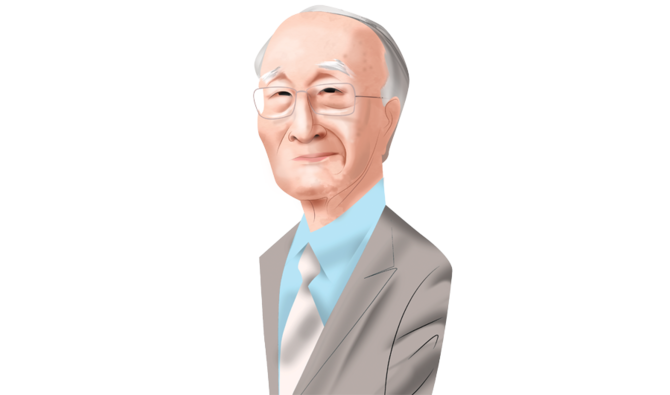

DUBAI: When Nobuo Tanaka talks, people listen. In the course of nearly five decades at the top echelons of global policymaking in economics, trade and energy, he has been advising governments and multinational organizations on some of the most pressing issues in the world, usually with a focus on the all-important global energy business.
Now, the 69-year-old Japanese thought-leader wants some peace — not in the sense of retiring to the countryside, but as president of the country’s prestigious Sasakawa Peace Foundation, whose lofty aim is to “pursue new forms of governance for human society.”
In downtown Tokyo last week, the Middle East was much on his mind. It was just a couple of days after the attacks on oil installations in Saudi Arabia, and Tanaka had just attended a gathering of Saudi and Japanese refining engineers, led by senior executives of Saudi Aramco, the target of the attacks.
The meetings were a scheduled event organized by the Japan Cooperation Center Petroleum, which promotes international connections in energy. But it gave Tanaka the opportunity to gauge Aramco’s view on the attacks through the eyes of its senior technicians.
“There are obvious risks of supply disruption, and if it develops into a direct conflict in the Gulf there would be serious consequences,” he said. But he added that the global reserve capacity could see the world, and resource-hungry Japan, through the energy stress.
Major oil importers in Asia should jointly consider how to ensure energy security.
The country has good reasons to pay close attention to what goes on in the Middle East, Tanaka explained. About 85 percent of its oil imports come through the Straits of Hormuz, and about half of that comes from Aramco facilities. Since 2009, Sasakawa has administered the Middle East Islam Fund to widen Japan’s knowledge of the region and contribute to policy debates there.
“Japan has an obvious energy-related interest in the Middle East, but I’m not sure we understand all the issues there, especially on religious matters and women’s empowerment,” Tanaka said. His own understanding had been expanded via his longstanding relationship with the Kingdom’s new Energy Minister Abdul Aziz bin Salman — “my very good friend” — as well as connections with the King Faisal Center for Research and Islamic Studies.
Tanaka’s energy expertise and network were augmented by a four-year stint as head of the International Energy Agency (IEA), where he helped manage the global energy community’s response to the fallout from the financial crisis, which sent oil prices gyrating wildly.
Toward the end of his time at the IEA came another cataclysmic event that has changed how Japan, and Tanaka, see the energy world. The 2011 earthquake and tsunami, and the damage done to the nuclear reactor at Fukushima — not to mention the 18,000 deaths and large-scale evacuations that resulted from the disaster — caused a fundamental rethink of the country’s policy toward nuclear energy.
Before 2011, there had been more than 50 nuclear reactors in Japan, which saw nuclear technology as the best alternative to its fossil fuel poverty. Now there are only nine, and there is a wide debate in nuclear-sensitive Japan about the future.
“Nuclear was seen as the solution, but after 2011 that has changed. Now it’s more costly than renewable energy,” said Tanaka. “Nuclear power was seen as cheap, safe and clean, but not anymore. Japan is the only non-weapon country that has the right to do the full spectrum of reprocessing and enrichment of nuclear fuels, under IEA scrutiny.”
BIO
Born Tokyo, 1950
EDUCATION
• University of Tokyo, economics
• Case Western Reserve University, Cleveland, US. MBA
CAREER
•Japan’s Ministry of Economy, Trade and Industry
• Director of science, technology and industry, OECD
• Japanese Embassy, Washington DC, responsible for energy, trade and industry
• Executive director, International Energy Agency
• Adviser on sustainability at Institute for Energy Economics, Tokyo
• Professor at Graduate School of Public Policy, University of Tokyo
• President, Sasakawa Peace Foundation
Japan is learning lessons that other countries, including Saudi Arabia, could benefit from, he believes. The Kingdom has its own ambitions in peaceful development of nuclear energy, but the issue has been hugely complicated by the current confrontation with Iran.
Tanaka sees one potential solution to the nuclear conundrum as the integral fast reactor (IFR), a US technology that experts believe is safer and more efficient than other reactor types, and which does not produce weapons-grade products. “It’s proliferation resistant and passive safe, and could be the model for future nuclear systems. IFR isn’t perfect, but it’s more desirable,” he said.
Tanaka believes that Japan, from its unfortunate position as the only country ever to have suffered a military nuclear attack, can help lead the world in peaceful nuclear policy. He has made several visits to Tehran with Sasakawa to explain his view to Iran’s leadership, and believes this approach could solve one of the other intractable issues of the global scene: North Korea’s nuclear policies.
In a 2018 paper entitled “Iran and North Korea: Japan must take the initiative in the peaceful use of nuclear power,” Tanaka argued that “Japan has a responsibility to ensure that the technology and human resources as a global leader in the peaceful use of nuclear power be maintained in the years to come.”
Another current thorny issue is the escalating trade dispute between Japan and South Korea over the question of reparations for the use of forced labor by the Japanese during their many years of occupation of Korea. It was thought that the subject had been settled many years ago in a bilateral agreement, but that has since fallen apart in a bitter spat that has all but broken trade relations between two of the biggest powers in Asia.
“It’s serious. Korea refused to negotiate, mainly because of internal politics, and it’s now spiraling out of control,” Tanaka said. The US “hegemon” should take a lead in resolving the matter, he added, though he sees little chance of that happening under the current administration.
In another paper after US President Donald Trump’s election, Tanaka argued that the world had entered an era of “inconceivable uncertainty,” especially with regard to energy, and that policymakers in Japan and other Asian powers might have to plan for a world with less American participation.
“To cope with the unprecedented uncertainties and unpredictability of Trump’s America First geopolitics, major oil importers in Asia should jointly consider how to ensure collective energy security and sustainability. Now is the time to think about the unthinkable,” he wrote.
One example of something previously “unthinkable” is the proposal by Masayoshi Son — CEO of Japan’s SoftBank and a partner with Saudi Arabia’s Public Investment Fund in the Vision Fund — to create an “Asia Super Grid” to distribute energy generated from renewable sources in Japan, China, Korea and other countries in the region.
Tanaka thinks the plan has a good deal of merit, though he points to regulatory and technical difficulties in Japan. “Son broke the telecommunications monopoly with SoftBank’s mobile network. Now let’s see if he can break the grid monopoly. Japan is risk averse, so Son is regarded as something of an outsider,” he said.
Another area in which Tanaka sees big similarities between Japan and Saudi Arabia is the position of women in business, politics and society. Both are largely traditional societies where women have been regarded primarily as mothers and homemakers, and where their involvement in the wider economy has been restricted.
While Japanese women do not face the kind of cultural impediments now being slowly unwound in Saudi Arabia, they find it hard to break through the “glass ceiling” of the Japanese economy. “Women’s representation in (Japan’s) Parliament is very low, as it is in politics and business,” Tanaka said.
Sasakawa’s Asia Women Impact Fund aims to promote understanding of these issues, and to promote relationships with Muslim-majority countries throughout Asia. With only a small indigenous Muslim population, Tanaka noted that there is a rising number of mosques in the Tokyo region as the number of tourists and business visitors from Islamic countries increases.
One policy recommendation that he believes should be implemented immediately, which would make life in Japan more welcoming for Muslim visitors, is directed at the country’s culinary profession: “We need more halal restaurants. It’s so difficult to find a good one in Tokyo.”