LONDON: Britain’s Thomas Cook scrambled on Friday to find an extra $251 million (£200 million) to satisfy its lenders and secure the survival of the world’s oldest holiday company.
Last month Thomas Cook, the pioneer of the package tour, agreed key terms of a £900 million recapitalization plan with Chinese shareholder Fosun and its banks.
Thomas Cook, which employs 21,000 people across 16 countries, warned on Friday that this could mean shareholders losing all of their investment.
“The recapitalization is expected to result in existing shareholders’ interests being significantly diluted, with significant risk of no recovery,” Thomas Cook said.
Lenders are demanding another £200 million in underwritten funds to support Thomas Cook in its winter trading period, when its cash is usually at a low ebb.
“Discussions to agree final terms on the recapitalization and reorganization of the company are continuing between the company and a range of stakeholders,” Thomas Cook said.
“These discussions include a recent request for a seasonal standby facility of £200 million, on top of the previously announced 900 million pounds injection of new capital.”
Thomas Cook, which has around 600,000 customers on holiday in Europe, has struggled with competition in popular destinations, high debt levels and an unusually hot summer in 2018 which reduced last-minute bookings.
A source close to the discussions said on Thursday that Royal Bank of Scotland (RBS) had hit Thomas Cook with a last-minute demand for the extra funding, adding that the situation “was becoming more critical.”
A spokesman for RBS said the bank did not “recognize this characterization of events” and was working with all parties to “try and find a resolution to the funding and liquidity shortfall at Thomas Cook.”
Under the original terms of the plan, Fosun — whose Chinese parent owns all-inclusive holiday firm Club Med — would contribute £450 million ($552 million) of new money in return for at least 75 percent of the tour operator business and 25 percent of the group’s airline.
Thomas Cook’s lending banks and bondholders were to stump up a further £450 million and convert their existing debt to equity, giving them in total about 75 percent of the airline and up to 25 percent in the tour operator business, the group said.
Thomas Cook said on Friday it would provide further updates “in due course.”


![]()

Britain’s Thomas Cook scrambles for $250m to avert collapse
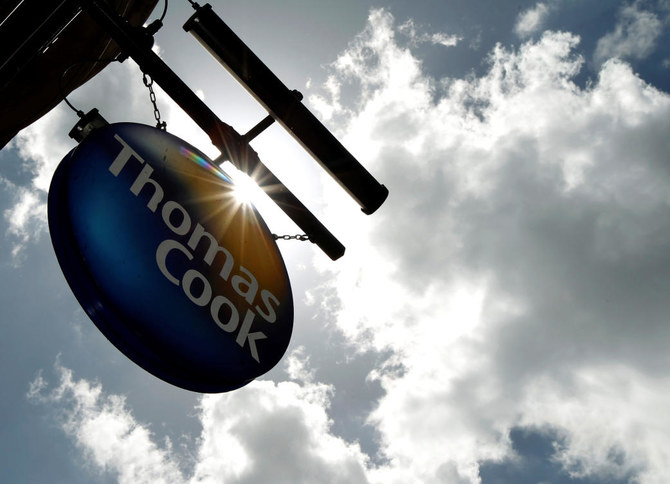
Britain’s Thomas Cook scrambles for $250m to avert collapse
- Thomas Cook employs 21,000 people across 16 countries
- Lenders are demanding another £200 million in underwritten funds to support Thomas Cook in its winter trading period


Latest updates





© 2026 SAUDI RESEARCH & PUBLISHING COMPANY, All Rights Reserved And subject to Terms of Use Agreement.