LONDON: Airbus raised its 20-year forecast for jetliner demand on Wednesday despite expected slower growth in traffic, as it predicts airlines will replace ageing fleets with smaller, more fuel-efficient new planes.
The industry faces a squall of new pressures from trade tensions, the partial unwinding of globalisation and an anti-flying campaign from climate activists, notably in Europe.
Airbus Chief Commercial Officer Christian Scherer voiced alarm about the prospect of a tit-for-tat tariff war between the United States and Europe after the World Trade Organization signalled that Washington can impose sanctions in a long-running dispute over aircraft subsidies.
The European planemaker expects demand for new planes to be led by Asia, where the industry has been enjoying a boom in demand due to the growth of cities and a burgeoning Asian middle class.
Demand from China is expected to leapfrog the United States and Western Europe, while India and new manufacturers like Vietnam are growing the fastest.
In its annual long-term forecast that sheds light on world trends, Airbus predicted the world's fleet would more than double to 47,680 jets by 2038.
Airbus expects airlines and leasing companies to take delivery of 39,210 new passenger jets and freighters over the next two decades compared to 37,389 previously forecast, as airlines seek to tap into the fuel savings offered by newer jets.
It shaved its 20-year forecast for average traffic growth to 4.3% a year from 4.4%.
'LOSE-LOSE' TRADE BATTLE
Airline traffic growth has slowed this year amid trade tensions between the United States and China.
"Increased protectionism and other geopolitical risks remain a concern," Airbus said in its Global Market Forecast.
Scherer said possible sanctions related to the dispute with Washington over aircraft subsidies had so far had no impact on U.S. demand for Airbus jets.
"Ultimately they will have an impact on airplanes and therefore the price of tickets and that is not good. If there is an impact, the same impact will happen here in Europe," he said, referring to the likelihood of European countermeasures.
"It is a lose-lose impact," Scherer told reporters.
Touting the industry's record in cutting emissions, in a week that Swedish teenage climate change activist Greta Thunberg pressed the U.S. Congress for action on climate change, Airbus said the industry could still achieve carbon-neutral growth because new planes are so efficient.
Environmental groups backing a global "climate strike" say more radical steps are needed to avert a disaster.
"We are on a path to de-carbonise but we can't do it alone," Scherer said, calling for investment in sustainable biofuels.
Airbus revised up its demand forecast for the industry's most-sold single-aisle jets by 4% to 29,720 planes but cut the medium segment including its A330neo by 2% to 5,370.
It followed U.S. rival Boeing in scrapping separate forecasts for the world's largest aircraft after deciding to halt production of the Airbus A380 due to weak demand.
It now includes these aircraft with the largest twin-engined jets, with the resulting combined category up 22% to 4,120 jets.
Airbus raised its 20-year forecast for services like repairs, training and cabin upgrades to $4.9 trillion from $4.6 trillion.
Once focused mainly on building their jets, Airbus, Boeing and other manufacturers are stepping up competition for a slice of this market to gain access to lucrative recurring revenues.


![]()

Airbus revises up jet demand, warns of 'lose-lose' tariff war
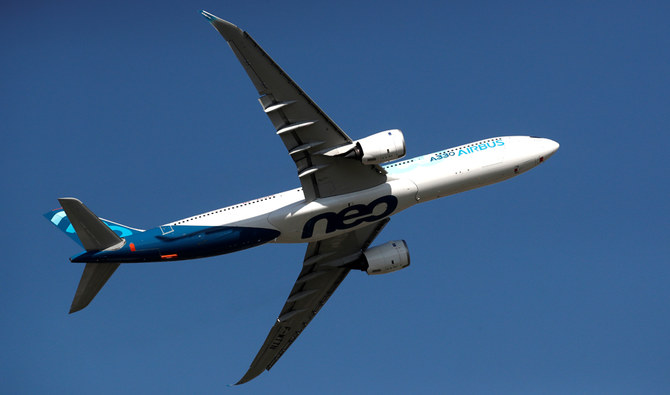
Airbus revises up jet demand, warns of 'lose-lose' tariff war
- Airbus expects airlines and leasing companies to take delivery of 39,210 new passenger jets


Latest updates


© 2026 SAUDI RESEARCH & PUBLISHING COMPANY, All Rights Reserved And subject to Terms of Use Agreement.