




KARACHI: The teeming metropolis of Karachi, a melting pot of religions, ethnicities and languages, has a single cremation ground and the ashes of over a hundred Pakistani Hindus waiting to reach the River Ganges, buried for now, under the bureaucracy of a strict Indian visa regime.
With a Hindu population estimated at roughly 4 million in the Muslim majority country of 208 million people, most members of the community live in Pakistan’s southeastern province of Sindh.
Over 250,000 Hindus live in Karachi city alone, with its crematorium next to a dilapidated Hindu graveyard. In Hindu practice, cremation grounds are usually built near rivers or freshwater streams, so the ashes of the deceased can be disposed of easily and quickly.
But for many of Pakistan’s Hindus, whose ancestors remained in Muslim Pakistan during the partition of the sub-continent in 1947, a last wish to cross the border into India is gathering dust.
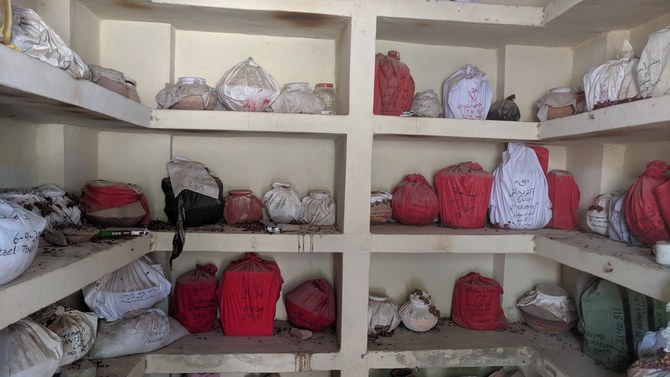
Among almost a hundred others, in a small room are the asthi, or cremated remains, of Atam Parkash, a Pakistani-Hindu businessman who died of cancer in May this year, and who asked that his ashes be taken to the ancient city of Haridwar in northern India, where the River Ganges, considered holy by most Hindus, exits the Himalayan foothills. The river is the site of thousands of cremations and ash scatterings every day.
“My brother asked that his asthi be scattered in the River Ganges, but I don’t know if we will ever be able to fulfil his wish,” his brother, Sunny Ghansham, told Arab News. His fears are not unfounded.
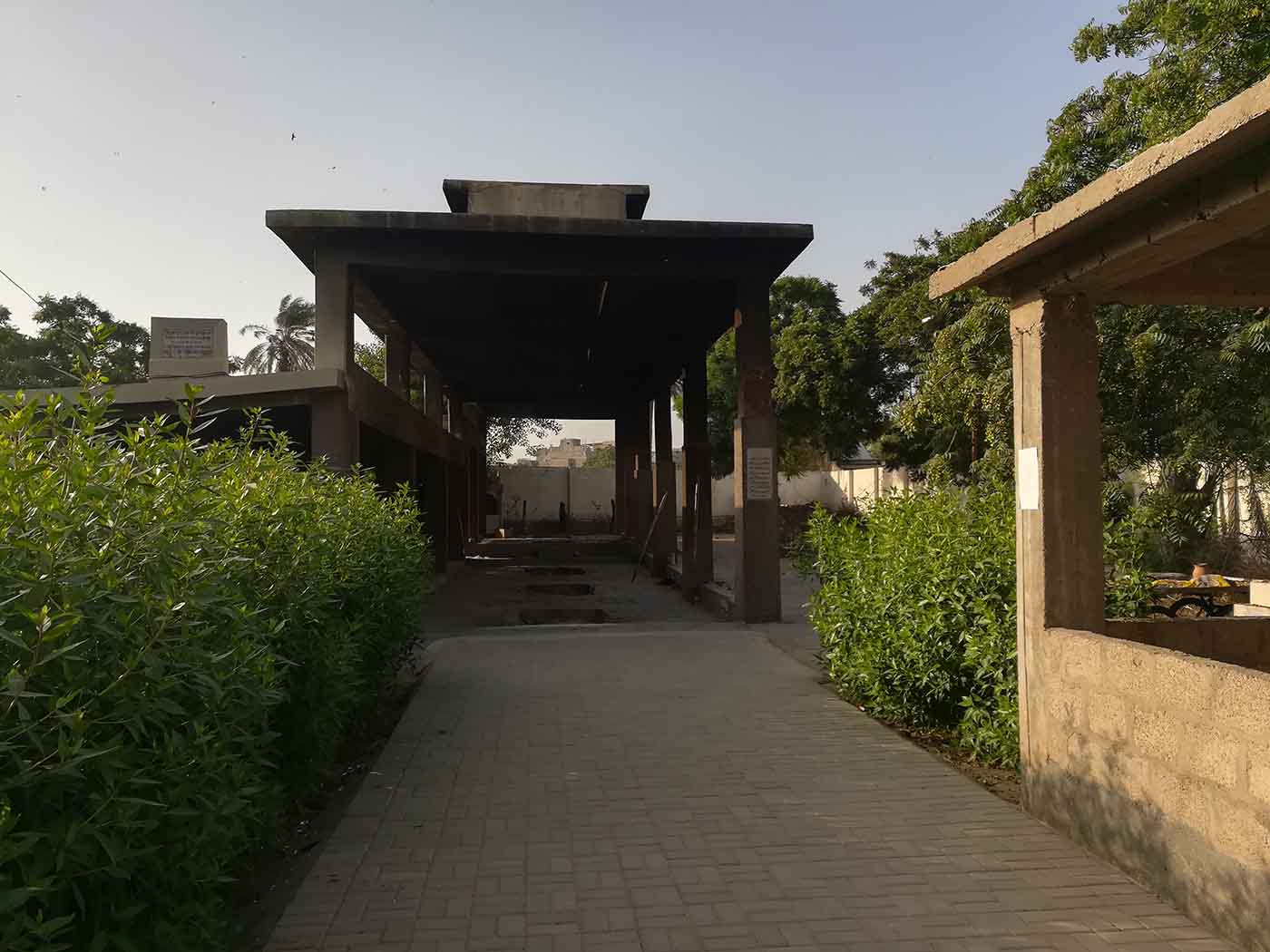
A view of Karachi's Hindu crematorium, which is the only cremation ground for the 250,000 Hindus who live in Pakistan's largest city, on Sept. 11, 2019. (AN photo)
Relations between Pakistan and India, both nuclear-armed countries, have always been strained primarily over the disputed Kashmir valley, which both own in part but claim in full.
On August 5th, tensions dramatically escalated when India flooded the valley with troops, restricted movements and cut off communications as Prime Minister Narendra Modi withdrew special rights for Indian-administered Kashmir. Pakistan responded by downgrading diplomatic ties, stopping all transport links and banning bilateral trade alongside making appeals to the UN and international community.
As a result, already hard-to-get Indian visas have now become a near impossibility, and it appears the ashes of some of Pakistan’s Hindus might never reach their desired resting places.
“Although currently strained ties have increased our worries, obtaining visas for taking asthis (across the border) was never an easy job,” said Shri Ram Nath, caretaker of the Karachi Shamshan Gath, or crematorium, who took charge of the institution in 2005, and found the remains of hundreds of people dumped inside a small room.
“When I entered the room, I saw hundreds of remains lying one over the other... like trash,” Ram Nath said.
“I inquired of the staff who told me those (remains) were lying there for Asthi Visarjan (immersion) in Ganga Mayian (River Ganges). When I checked closely, I found the remains of a man, his son and grandson among them,” he said.
After investigating the case, Ram Nath discovered that years ago, a man waiting for an Indian visa had kept the ashes of his father at the crematorium, but died before it was issued. His son then brought his ashes to the cremation ground, and hoped to one day scatter them in the River Ganges. His visa never came either, and he too, died in waiting.
Ram Nath called a community meeting and 50 Pakistani Hindus, whose friends and families had asked for their ashes to be scattered in Haridwar, applied for Indian visas. All were refused.
“Finally, in January 2011, with the help of some NGO’s in India, we got 11 Visas and took 135 remains (to the River Ganges), including those of the three generations of one family,” Ram Nath said.
In September 2016, Ram Nath was able to take 160 more remains to India but since then, a gap of three years has meant the arrival of over a hundred remains in-waiting for the Ganges, that now crowd the small room of the city’s only cremation site.
“If Pakistan can open Kartarpur despite tense relations, why can’t the relatives of deceased Pakistani Hindus be allowed...to go to India to take their ashes to Haridwar,” Sunny Ghansham said, referring to the proposed border corridor between India and Pakistan to facilitate Indian Sikh pilgrims coming to Pakistan.
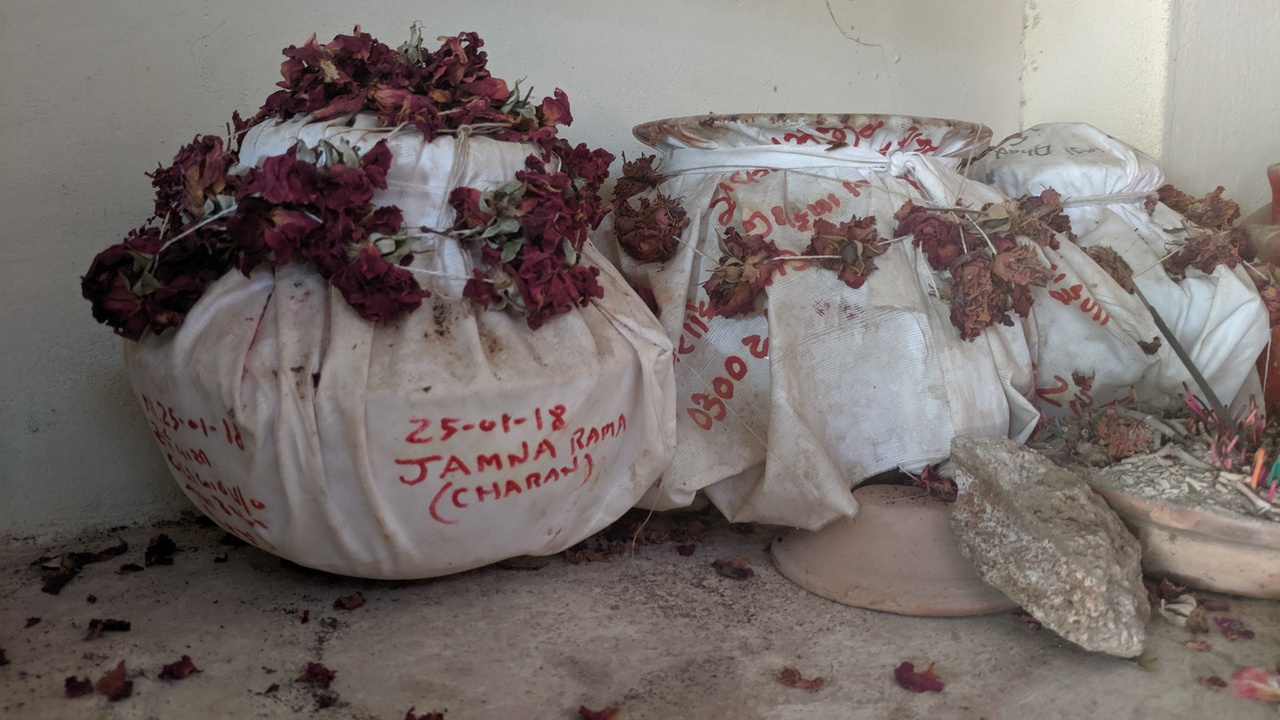
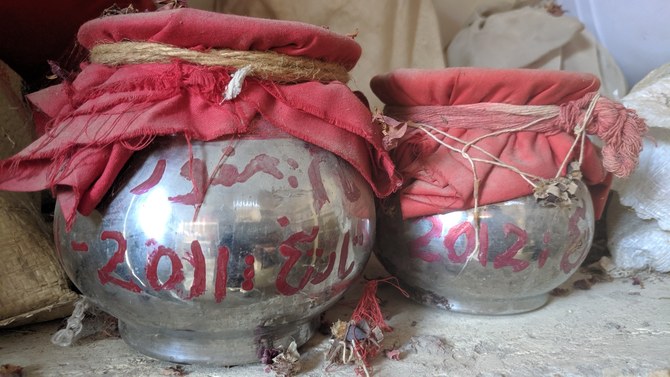
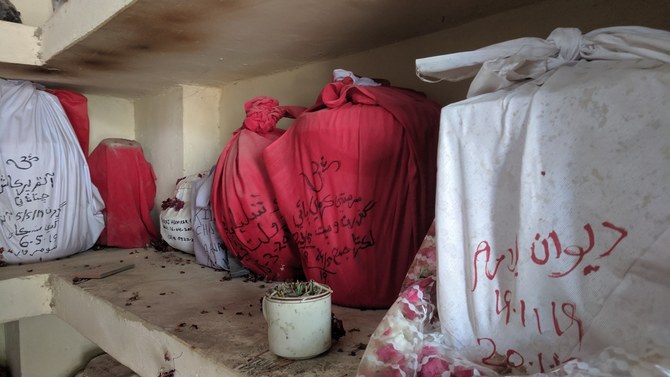
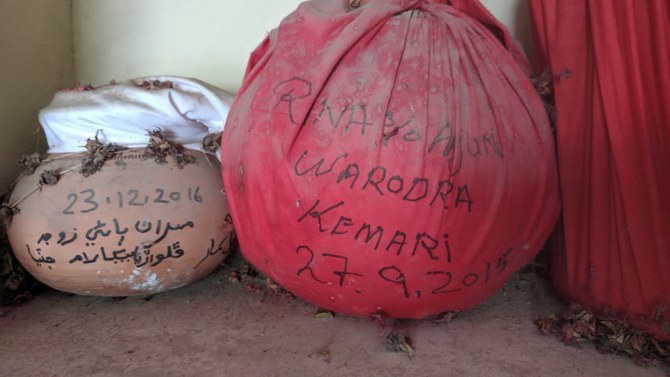
The image taken on September 11, 2019, shows the cremated remains of Pakistani Hindus, marked and stored sometimes for years, in a small room at Karachi's only cremation ground. (AN photo)
But relations between New Delhi and Islamabad are only getting more tense, with diplomatic courtesies largely suspended.
In August, the last ‘friendship’ bus from Delhi to Lahore, a popular means of travel between the two countries, pulled into a deserted bus stop and terminated service. Earlier this month, Pakistan refused to allow India’s President the use of its airspace, and Islamabad has been campaigning profusely for New Delhi’s international condemnation. India has defended itself by saying the constitutional revocation is Delhi’s ‘internal matter,’ and accuses Pakistan of smuggling militants across the border to fuel an insurgency in its part of Kashmir, a charge Pakistan vehemently denies.
Not all Hindus in Pakistan choose the Ganges in India for the scattering of their ashes, however. In fact, Ram Nath said, most ashes are immersed in the River Indus, which is also considered holy.
“Not all wish (for it), but those who do ask that their ashes be taken to Haridwar... we are obligated to fulfil their wish,” he said.
The immersion of ashes is also done at a point near the Karachi port, he said, but with increased littering and the mixing of sewage water, it is no longer considered a desirable place for the dead.
“We are bound to honor the will of the deceased,” Ram Nath said. “But it seems hard... very hard now.”


