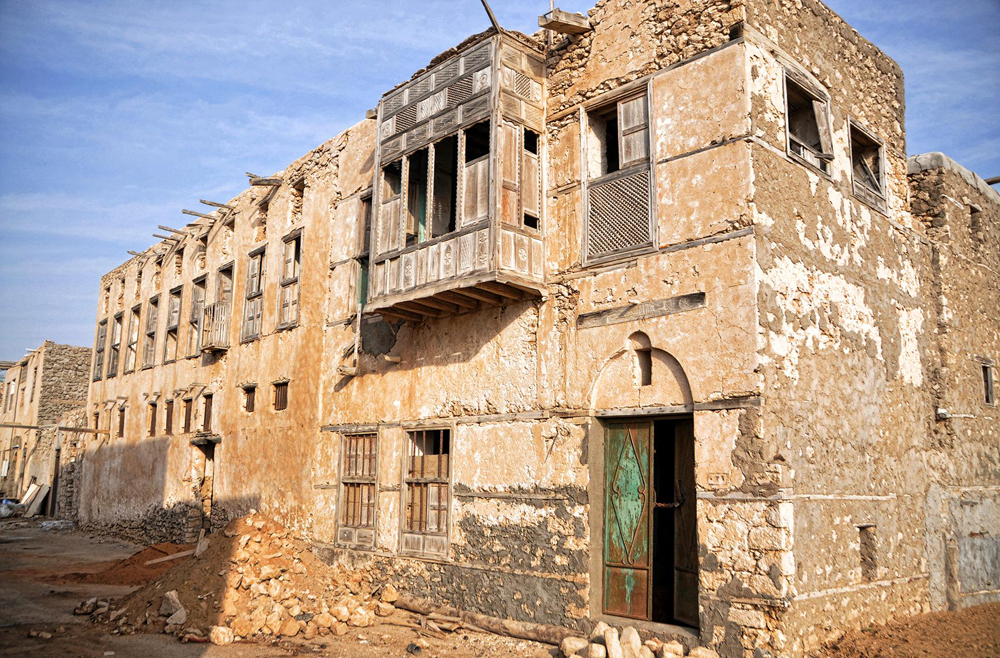
AL-WAJH: Saudi Arabia’s old Al-Wajh town, with its traditional buildings, walls and castles, has a great architectural heritage, and gives an insight into the designs and styles of old dwellings and the skills of locals.
The town’s location on the northwestern shores of the Red Sea coast has contributed to its rich history.
In ancient times, it was known as Al-Hijr port or Madain Saleh, and was mentioned by historians and geographers such as Al-Yaqoubi in his book “Al-Buldan,” and Al-Udhri in his book “Nizam Al-Murjan wa Masalik Al-Buldan.
 The town was a gateway for trade and cultural exchange between states on the east and west coasts of the Red Sea, in addition to being on the pilgrim route.
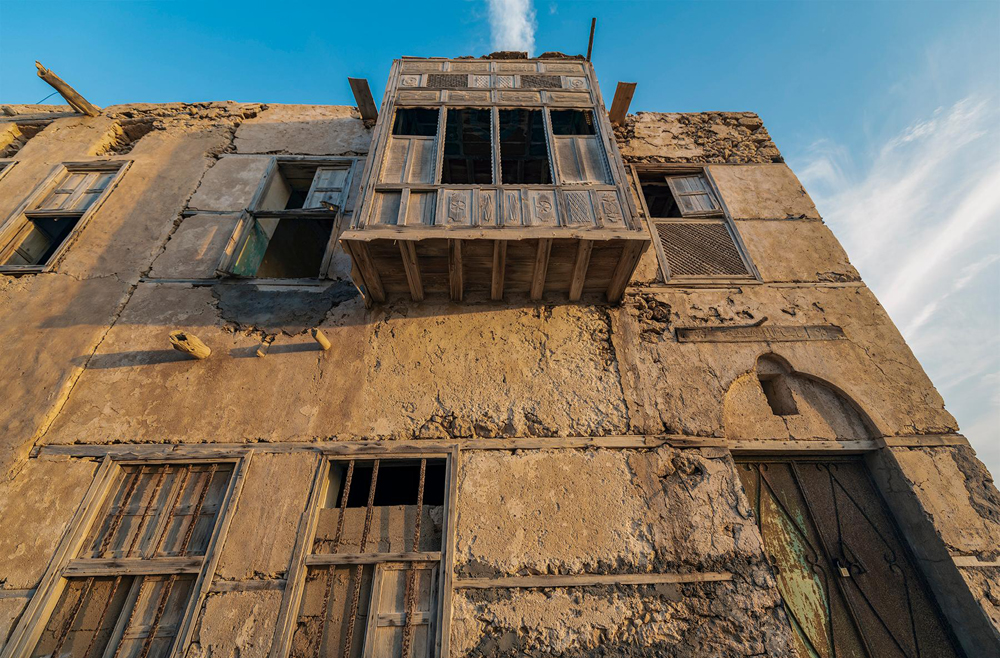
What attracts the attention of by-passers in the alleys and streets of old Al-Wajh is “rawashin” architectural designs (projecting latticed windows with intricate woodworks). The beauty of its designs add a special character to traditional buildings here and in other coastal towns where Arab and foreign cultures have mixed.
The town’s location is a crossroads for travelers coming from north and northwestern Arabia, and a maritime gateway for those visiting from the African continent to the Holy Lands to perform Hajj or to visit and do trade.
In addition to its beautiful designs on the facades of buildings, rawashin contributes to reducing indoor temperatures during summer. Wood has an isolating characteristic that minimizes the infiltration of sand and dust into houses. In addition, its design allows communication between neighbors while still preserving privacy.
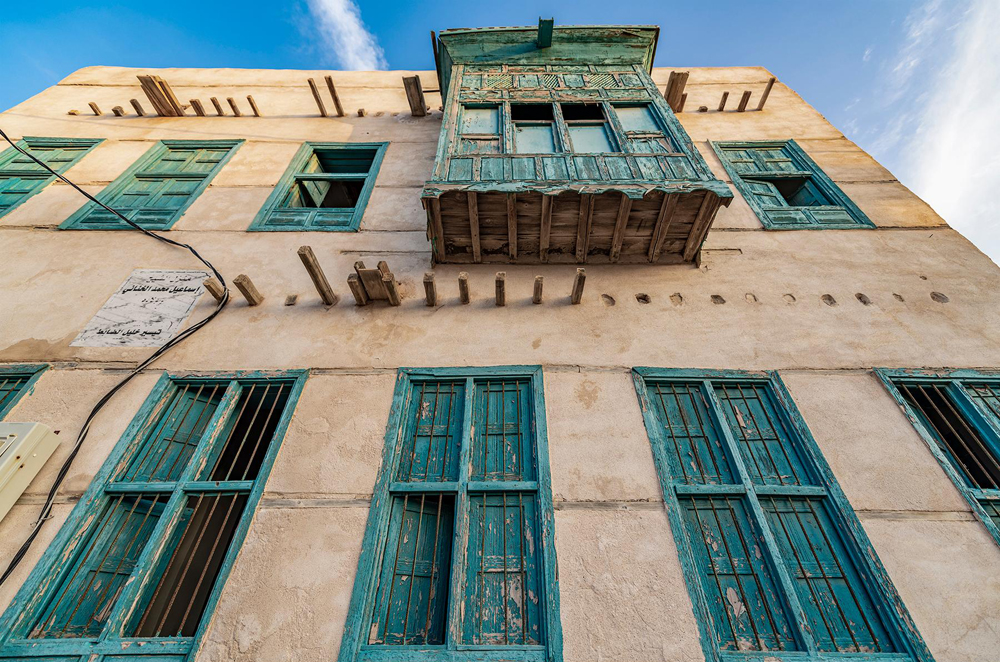
Abdul-Malik Al-Harbi, a craftsman, said that rawashin was one of the major traditional industries in Al-Wajh. Rawashin are usually made on the spot. Decorations are carved out of the wood before the structure is assembled on the building’s windows.
Al-Harbi said that the passion for this design has generated competition among craftsmen, which has led to variety in the materials used and the enrichment of the beauty of its architectural designs.
Ali bin Suleiman Al-Balwi, a researcher specializing in the history of Tabuk, said that rawashin was also a widespread design in the cities of Hijaz and other provinces due to the influence of trade.
He said that its design helped to control air flow and indoor lighting. In addition, it served as a stand for water jars that contributed to natural air-conditioning in houses.