MUMBAI: Competition in India’s booming streaming market is heating up as Netflix joins forces with a director of Bollywood feel-good blockbusters and Apple launches its TV platform for 99 rupees ($1.39) a month.
Netflix announced late Wednesday a long-term partnership with Karan Johar’s Dharmatic Entertainment to make a range of new fiction and non-fiction series and films for the platform.
Johar has directed eight films including “Kuch Kuch Hota Hai” with Bollywood megastar Shah Rukh Khan, and “Raazi,” nominated for best picture at next week’s Indian International Film Academy (IIFA) Awards, dubbed the Bollywood Oscars.
“It’s going to be P.H.A.T — pretty hot and tempting,” said Johar, whose Dharma Entertainment is one of India’s biggest production firms and which already teamed up with Netflix for the successful “Lust Stories” anthology.
Netflix launched in India in 2016 and two of its Indian-made series have won critical acclaim — “Sacred Games” starring Saif Ali Khan and Nawazuddin Siddiqui, and “Leila” with Huma Qureishi.
But Netflix faces stiff competition in Asia’s third-largest economy as Amazon’s Prime Video, Disney’s Hotstar, Alt Balaji and other local platforms jostle for digital subscriptions and eyeballs.
US technology giant Apple on Wednesday announced the launch of its streaming platform Apple TV+ in India, hoping to upend competition.
Netflix is available in India from 199 rupees a month and as millions of first-time users access Internet in Asia’s third-largest economy, analysts expect competition to intensify.
India’s video-streaming industry is expected to grow at nearly 22 percent per annum to 119 billion rupees ($1.7 billion) by 2023 according to consultancy PwC, Bloomberg News reported.
Netflix chief Reed Hastings has said the company’s goal is 100 million customers in India — almost 25 times its estimated subscriber base there as of this year, Bloomberg said.


Netflix, Apple cross swords in Indian streaming market
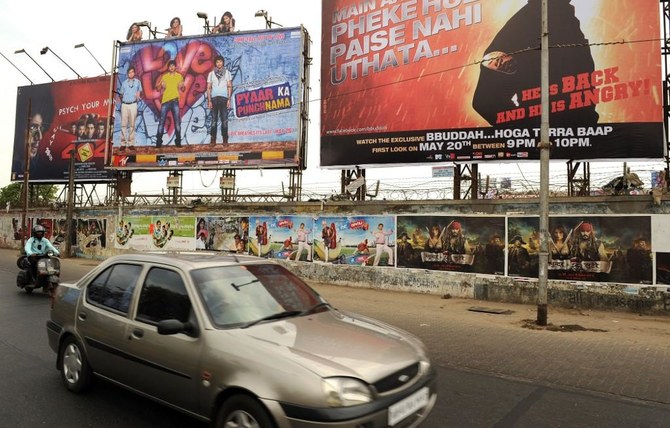
Netflix, Apple cross swords in Indian streaming market

- Netflix launched in India in 2016 and two of its Indian-made series have won critical acclaim — “Sacred Games” and “Leila”
- US technology giant Apple on Wednesday announced the launch of its streaming platform Apple TV+ in India, hoping to upend competition


Study finds nearly half of UK news stories on Muslims show signs of bias
- Centre for Media Monitoring finds 20,000 out of 40,913 articles from 30 major news outlets contain bias and 70% link Muslims to negative behaviors or themes
- Findings reveal ‘deeply concerning evidence of structural bias’ in portrayal of Muslims by UK press and point to ‘systemic problem’ within the media, says center’s director
LONDON: Nearly half of news articles published in the UK in 2025 that referenced Muslims or Islam contained some degree of bias, according to a report issued on Monday by the Centre for Media Monitoring. It also found that about 70 percent of stories linked Muslims to negative behaviors or themes.
The nonprofit organization, which tracks the ways in which Muslims and Islam are portrayed in the media, examined 40,913 articles from 30 major news outlets and found that about 20,000 showed some form of bias.
The study looked at “structural patterns” in coverage that “shape public narratives” about Muslims amid rising hostility toward the community.
“As the largest study of its kind ever conducted in the UK, this report presents deeply concerning evidence of structural bias in how Muslims are portrayed in the UK press,” said Rizwana Hamid, the director of the organization.
It found that 70 percent of the articles it reviewed highlighted negative aspects related to Muslims, though not all of the stories were biased in themselves. The wider patterns were also troubling: 44 percent of the coverage omitted key context, 17 percent relied on generalizations, and 13 percent included outright misrepresentation.
Taken together, the monitoring center said, the findings amounted to evidence of an “information integrity crisis” that distorts public understanding, and “a deeply concerning trend” in reporting on Muslims.
The research points to a “systemic problem within our media ecosystem,” Hamid said.
“When entire communities are repeatedly framed through lenses of suspicion or threat, it inevitably shapes public attitudes, political debate and the everyday lives of British Muslims,” she added.
News brands targeting right-wing audiences were more likely to produce biased coverage, the report found.
The Spectator magazine and GB News were identified as having the highest proportion of “very biased” articles, and as the “worst across all five bias categories”: negative framing, generalizations, misrepresentation, lack of context, and problematic headlines.
Other outlets highlighted for displaying high levels of biased content about Muslims included The Telegraph, The Jewish Chronicle, Daily Express, The Sun, Daily Mail and The Times.
In contrast, the BBC, other broadcasters and left-leaning outlets recorded the lowest rates of bias in the study.
The research comes as British Muslims report rising levels of discrimination. Official figures published in October revealed that religious hate crimes against Muslims rose by 19 percent in the year to March 2025 compared with the previous 12 months.