ISLAMABAD: Key Pakistani politicians and analysts have hailed Saudi Arabia’s condemnation of Israeli Prime Minister Benjamin Netanyahu’s intentions to annex the Jordan Valley in the occupied West Bank and made strong comparisons with Prime Minister’s Narendra Modi’s recent revocation of Indian-administered Kashmir’s special status.
In a controversial, televised statement on Tuesday, Netanyahu pledged Israel would move to annex Israeli settlements throughout the West Bank if he won a stiffly contested election just a week away. The West Bank was captured by Israel in a 1967 war, but Palestinians, who signed interim peace deals with Israel in the 1990s, seek to make the area part of a future state.
Around 65,000 Palestinians and 11,000 Israeli settlers live in the Jordan Valley and the northern Dead Sea area.
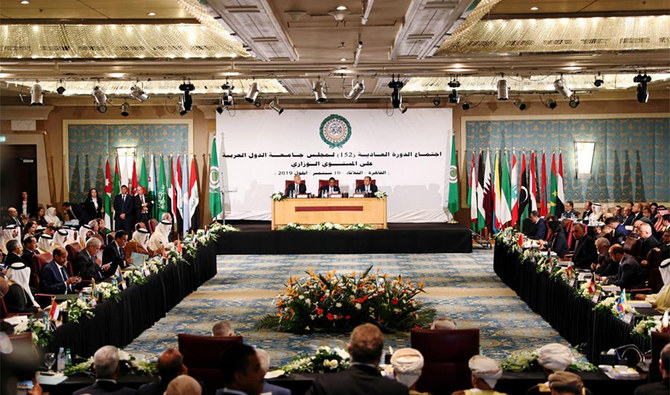
After the announcement, Saudi Arabia has led the call to condemn Netanyahu’s remarks, and described it as “a very dangerous escalation.”
“I must appreciate Saudi Arabia for taking a firm and clear position and denouncing the announcement by Netanyahu. I would also like to commend the immediate (calling) an emergency OIC meeting by Saudi Arabia,” Sehar Kamran, former senator from the opposition Pakistan Peoples Party, told Arab News, and likened Netanyahu’s annexation plans to Modi’s move in Indian-administered Kashmir in August.
“We see (only) symbolic reactions from the Muslim world on such illegal annexations which has encouraged Netanyahu and Modi to fulfill their dangerous agendas,” she said.
Arab League foreign ministers and the European Union also condemned Netanyahu’s plan, saying it would undermine any chance of progress for Israeli-Palestinian peace.
In a statement issued by the Royal Court, Saudi Arabia called for an emergency meeting for the Organization of Islamic Cooperation (OIC) at the level of foreign ministers, “to discuss this issue, develop an urgent plan of action and review the attitudes toward Israel, to address this announcement and take the necessary measures.”
“We welcome the kingdom’s rejection and condemnation of Israeli Prime Minister’s announcement and I think Pakistan should join Saudi Arabia too on this issue in OIC proposed meeting,” Senator Raja Zaffar ul Haq, the leader of the opposition in the Senate from the Pakistan Muslim League (PML-N) said.
US President Donald Trump has thrown his support behind Israel since taking office, including by recognizing Jerusalem as Israel’s capital and cutting hundreds of millions of dollars in aid to the Palestinians. Trump also recognized Israeli sovereignty over the occupied Golan Heights, seized from Syria in 1967.
Now, Pakistan’s leading analysts and academics are drawing comparisons between Israel’s annexation plan and India’s abrogation of partial constitutional autonomy for the disputed region of Kashmir, which both India and Pakistan own parts of but claim in full.
“In fact, it is India that has followed Israel’s example by annexing Kashmir. There is a strong similarity between the two annexations. The Muslim world has been silent on the creeping Israeli expansion over the years and a divided house can’t do much,” Pakistani political analyst and author, Zahid Hussain, told Arab News.
“With the expansion of settlements in the West Bank, the process of annexation had already started with the tacit support from the Trump administration. Netanyahu just wants to formalize the annexation,” he said.
Lahore-based politics professor Rasul Bakhsh Rais, from the Lahore University of Management Sciences, said the situations in the West Bank and Kashmir were similar.
“In both cases, Muslim majority areas have been annexed by an occupying state. Both are attempting to fragment the native populations by gerrymandering geography,” he said.
On August 5th, India flooded its part of Muslim majority Kashmir valley with troops and imposed a complete curfew and communications lockdown, as Prime Minister Modi withdrew special rights for the region.
Modi and his Hindu nationalist Bharatiya Janata Party (BJP) had pushed for radical political change in Kashmir even before he won re-election in May, saying its laws hindered integration with the rest of India.


![]()

Pakistani leaders laud Saudi stand on Netanyahu’s annex pledge, draw Kashmir parallels
Pakistani leaders laud Saudi stand on Netanyahu’s annex pledge, draw Kashmir parallels
- Saudi Arabia called emergency OIC meeting of foreign ministers after Netanyahu’s post-election pledge to annex Jordan Valley
- India has followed Israel’s example by annexing Kashmir, analyst says
Latest updates




© 2026 SAUDI RESEARCH & PUBLISHING COMPANY, All Rights Reserved And subject to Terms of Use Agreement.