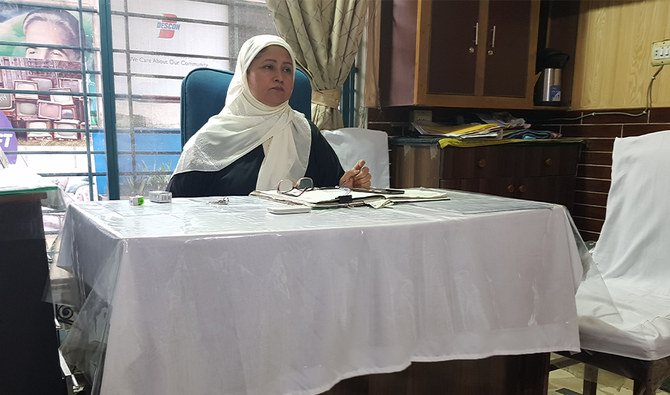


LAHORE — When Rubina Shakeel created a makeshift classroom in her car porch to teach poor children from her neighborhood in the eastern city of Lahore 19 years ago, she did not expect so many would show up. But within a few months, with over two dozen crammed into her porch, she knew she had to find a way to finance herself, and their education.
The inspiration for the financing came from an unlikely place: a heap of garbage. When she saw a member of her house staff packing up a bag of waste to sell from Shakeel’s own home, the business of trash struck a chord.
At the time, Shakeel could not have known that her empire of scrap would bring in millions of rupees in revenue in just a few years time, and allow thousands of children in the city to attend school for free.
“I started collecting the waste on my own,” Shakeel told Arab News with a hint of pride, during an interview at her expansive, two-acre head office and warehouse in the outskirts of Lahore.
“I sold my first cache of litter for Rs. 37 ($0.3). The amount was enough for the expense of one child for a month...and in four months, I was able to meet the expenses of 37 children,” she said.
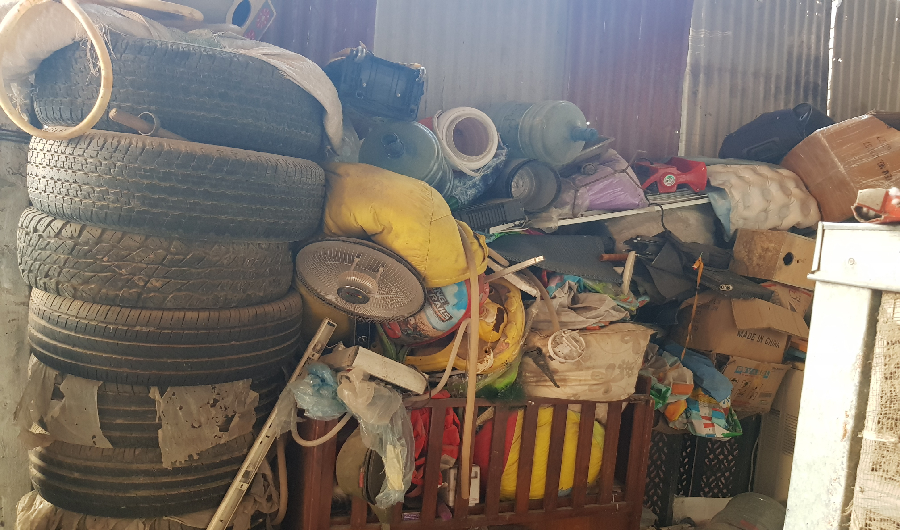
Lahore alone a ballooning population of over 11 million people generated piles of garbage spilling into the city’s streets, with 7,200 tons of waste generated every day. (AN Photo)
In Lahore alone, a ballooning population of over 11 million people and the high rate of rural-urban migration, has generated piles of garbage spilling into the city’s streets, with 7,200 tons of waste generated every day and managed by a single organization, the Lahore Waste Management Company (LWMC) run by the city district government.
“Each person (in Lahore) contributes 650 grams of waste every day. We collect 6,000 tons on a daily basis and transport it to a dumping site,” Asif Iqbal, Deputy General Manager of LWMC, told Arab News.
Under the LWMC, the city’s waste management collects the thousands of tons of waste and dumps it at Lakhodair landfill on the banks of the Ravi river.
But for Shakeel, the teeming waste heaps are opportunities to turn trash to cash and educate 4,660 students in eight schools, with 145 teachers, 40 administrative staff members and 50 volunteers now working with her welfare organization.
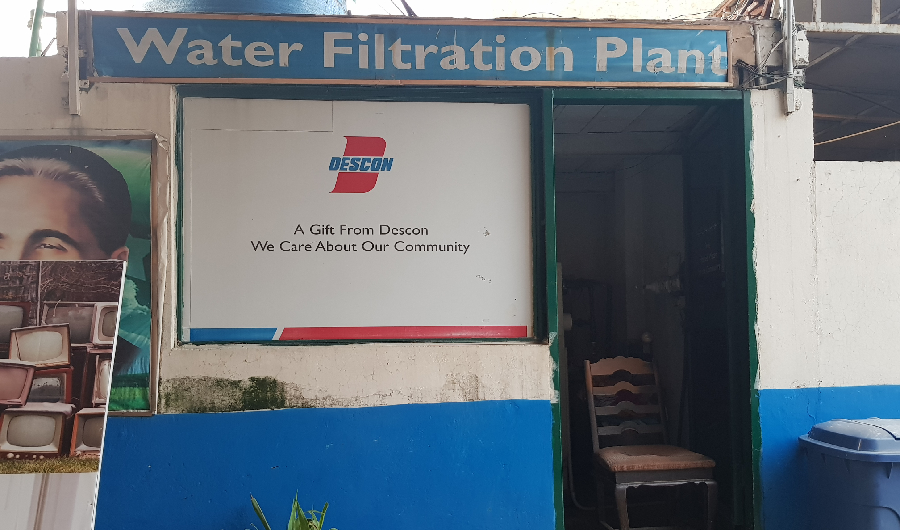
Organization also run water filtration plant in Lahore. (AN Photo)
She calls her school system, ‘Aabroo,’ an Arabic word that means dignity- and the irony of dignifying her students through garbage-selling is not lost on her.
“Waste is a curse for others but a blessing for us,” Shakeel said with a smile, and added that trash collection from people’s homes allowed her organization to educate some of society’s most underprivileged children up to higher secondary school level.
“We take a child in nursery and educate him or her till the intermediate (level), provide them with free books, uniforms, food, clothes,” she said and added that the major share of the organization’s total funds, 40 percent, came from trash.
Just across the street from the head office, which also houses two four-story school buildings, a primary school, a health center, a warehouse and a cattle farm, is Adiala drain, the city’s largest and most notorious open sewer, which throws up liquid waste and a rank, lingering stench that no longer seems to bother anyone in the area.
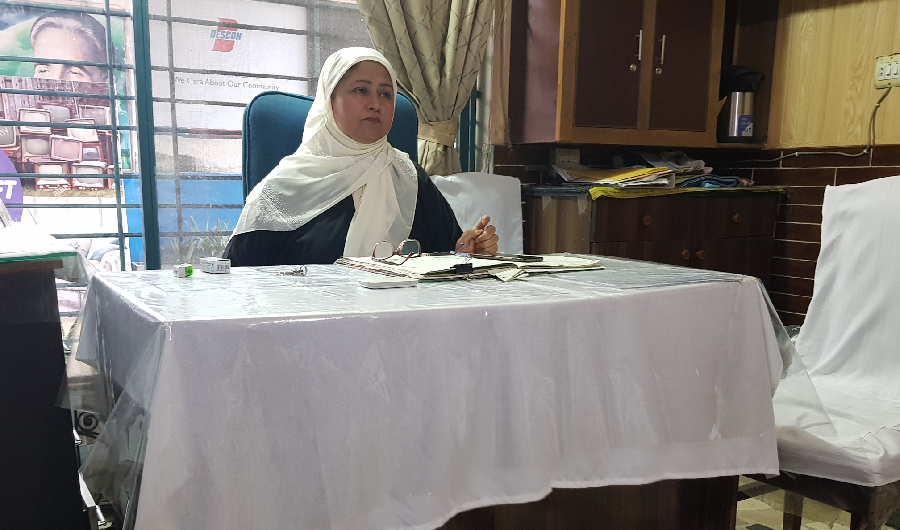
Rubina Shakeel created a makeshift classroom in her car porch to teach poor children from her neighborhood in the eastern city of Lahore 19 years ago. (AN Photo)
With 8,000 homes in Lahore registered with Shakeel’s Aabroo Welfare Educational Organization, each household is given bags for solid waste, which are then collected by Shakeel’s staff every week.
Thousands of bags stuffed full of garbage are transported to the organization’s warehouse, where they are sorted and segregated by item.
“We collect 20-21 tons of waste every month and... earn Rs. 1.7 million ($10,900) by selling it to recycling factories registered with the Punjab government. Our (total) expenditures...are Rs. 3.7 million ($23,700),” Shakeel said.
Alongside the sale of trash and charity, the school has an “adopt a child” program, which allows people to contribute Rs. 1,000 per child every month, with 1,500 students currently ‘adopted.’
Rubina Shakeel educate 4,660 students in eight schools, with 145 teachers, 40 administrative staff members and 50 volunteers now working with her welfare organization. (AN Photo)
Food for the students is prepared inside each schools’ own kitchen and the schools have a unique added feature: cattle farms, with farm-fresh milk for the often malnourished students.
“We noticed some students were malnurtured and their parents could not afford to provide (them) a glass of milk. I talked to my sister and she agreed to donate two buffalos. Another lady donated three buffalos. Now we have 30 buffalos,” Shakeel laughed.
For the future, Shakeel has an orphanage planned for 200 students, which is currently under construction.
“Nothing is waste,” she said and looked around, the distant odor of the nearby sewer drifting in with the summer wind.