

'Sheikh Zayed's painting brings me luck,’ says Lahore roadside artist

1 / 4
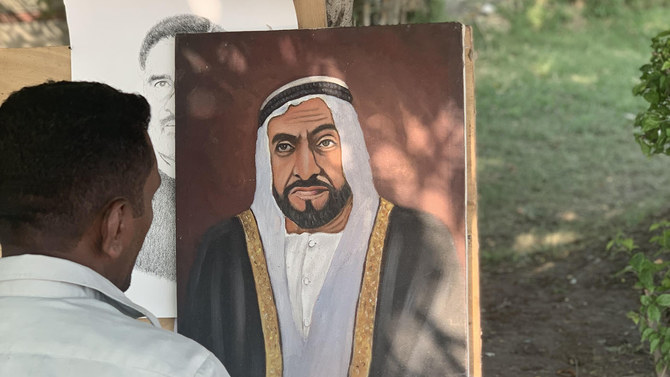
Shoukat Ali sits face to face with his ‘lucky’ portrait of Sheikh Zayed by the side of the main road in Lahore, on Sept. 7, 2019. (AN photo)
2 / 4
Lahore-based street artist Shoukat Ali in his usual spot by the side of a busy city road with his oil painting of Sheikh Zayed in Lahore, on Sept. 7, 2019. (AN photo)
3 / 4
Shoukat Ali sits face to face with his ‘lucky’ portrait of Sheikh Zayed by the side of the main road in Lahore, on Sept. 7, 2019. (AN photo)
4 / 4
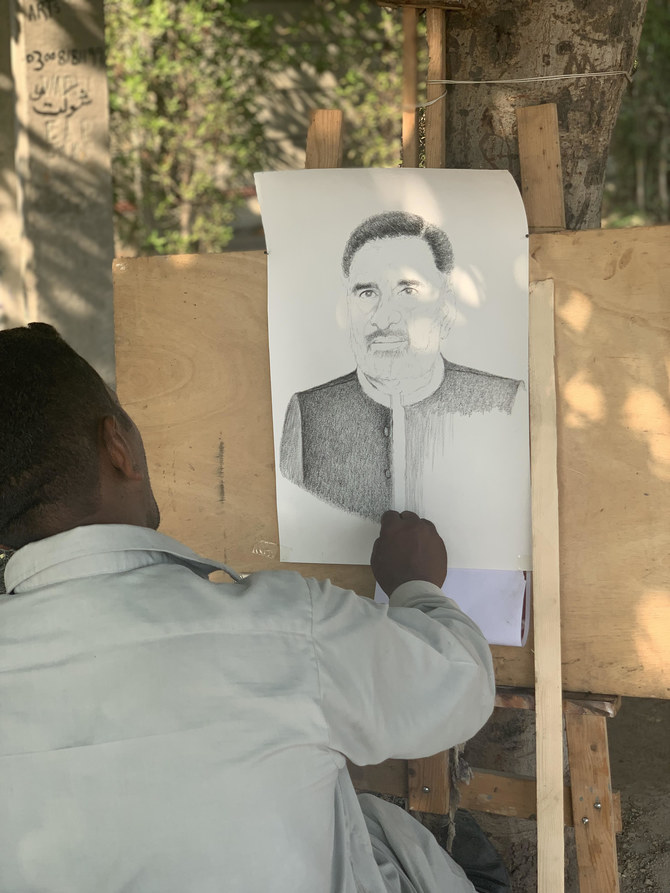
Shoukat Ali working on a commissioned portrait of a man in his usual spot by the side of a busy city road in Lahore, on Sept. 7, 2019. (AN photo)
Updated 07 September 2019
Follow

'Sheikh Zayed's painting brings me luck,’ says Lahore roadside artist

  • Roadside artist charges $13 for a commissioned portrait
  • ‘Don’t know who he is, but brings in customers’

LAHORE: Under the shade of a roadside tree next to a four-lane highway that leads to Lahore’s international airport, artist Shoukat Ali, 40, is hard at work next to a portrait of the UAE’s Late Sheikh Zayed bin Sultan, oblivious to the roar of rush hour traffic.
Ali, the son of a milk-man, has been sitting under the same tree for the last five years he said, and manages to attract roughly ten to twenty customers a month, who stop and commission their portraits with the artist.
“I don’t know who he is, but he helps me bring in customers,” Ali said, pointing to the oil painting of the late ruler of UAE and adds, “He’s lucky for me.”
Next to it, there is a pencil sketch of a smiling Maryam Nawaz, a recognizable face in the country, and daughter of ex-Pakistani Prime Minister, Nawaz Sharif.
“I know he is a King,” Ali said, and beamed. “I like his face.”
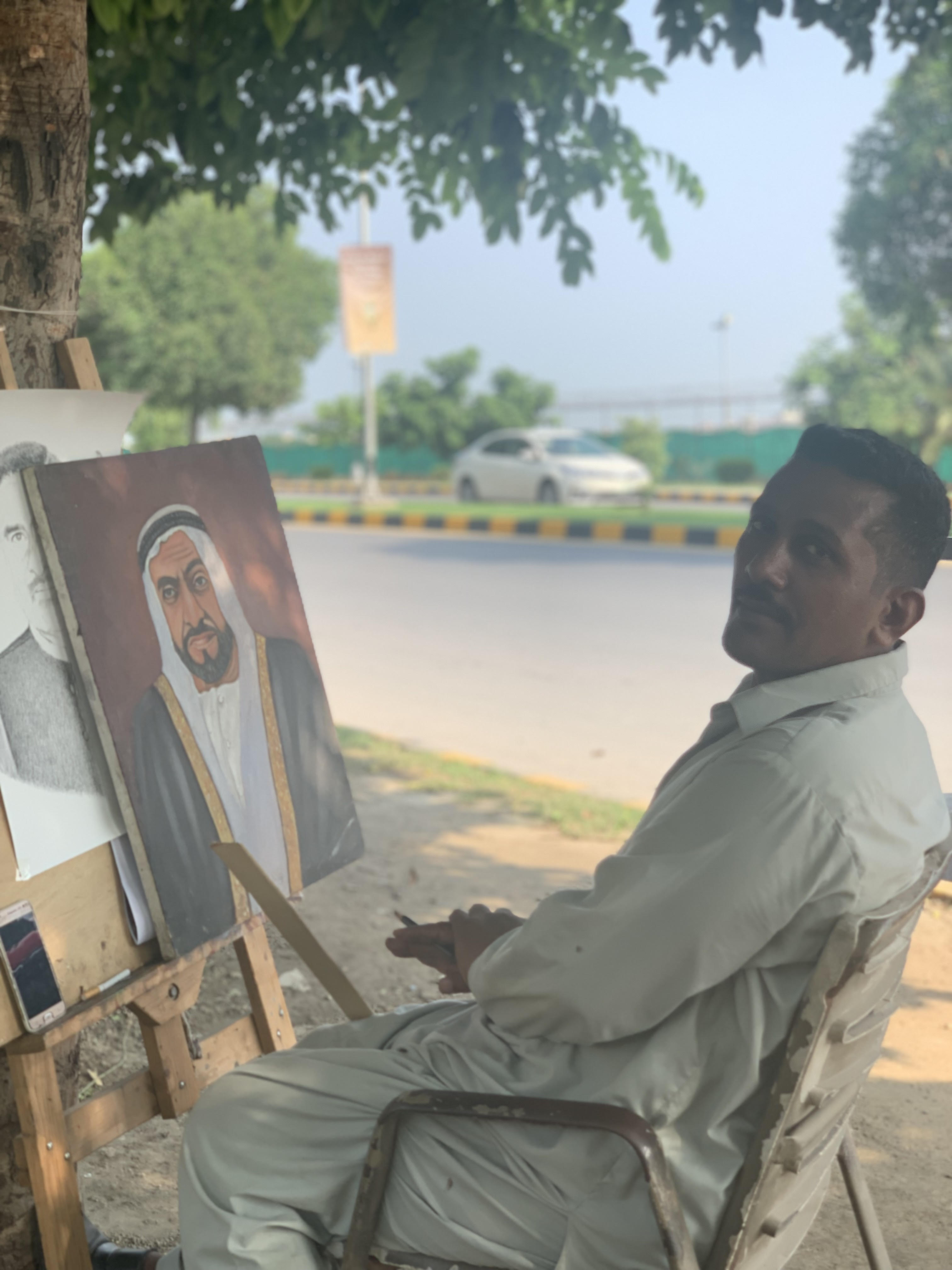


Lahore-based street artist Shoukat Ali in his usual spot by the side of a busy city road with his oil painting of Sheikh Zayed in Lahore, on Sept. 7, 2019. (AN photo) 

Ali dropped out of school in grade six, and began pursuing his hobby of making portraits, cutting out pictures of people from newspapers and practicing on any scrap of paper he could find. Eventually, he started charging for his services and even trained for some years with a mentor in Lahore’s Lakshmi Chowk, a part of the city’s old quarter, once considered the heart of its architectural and food legacies.
Now, working with a thick black pencil sharpened down to less than half its size, Ali says he makes just enough to get by. One portrait usually goes for Rs. 2,000 ($13), and coupled with a few tuitions to art students living nearby, his work brings in on average Rs. 30,000 a month ($193).
Still, he insists, life is good.
“I’m happy,” he said. “I don’t have to pay any rent here, or electricity bills.”
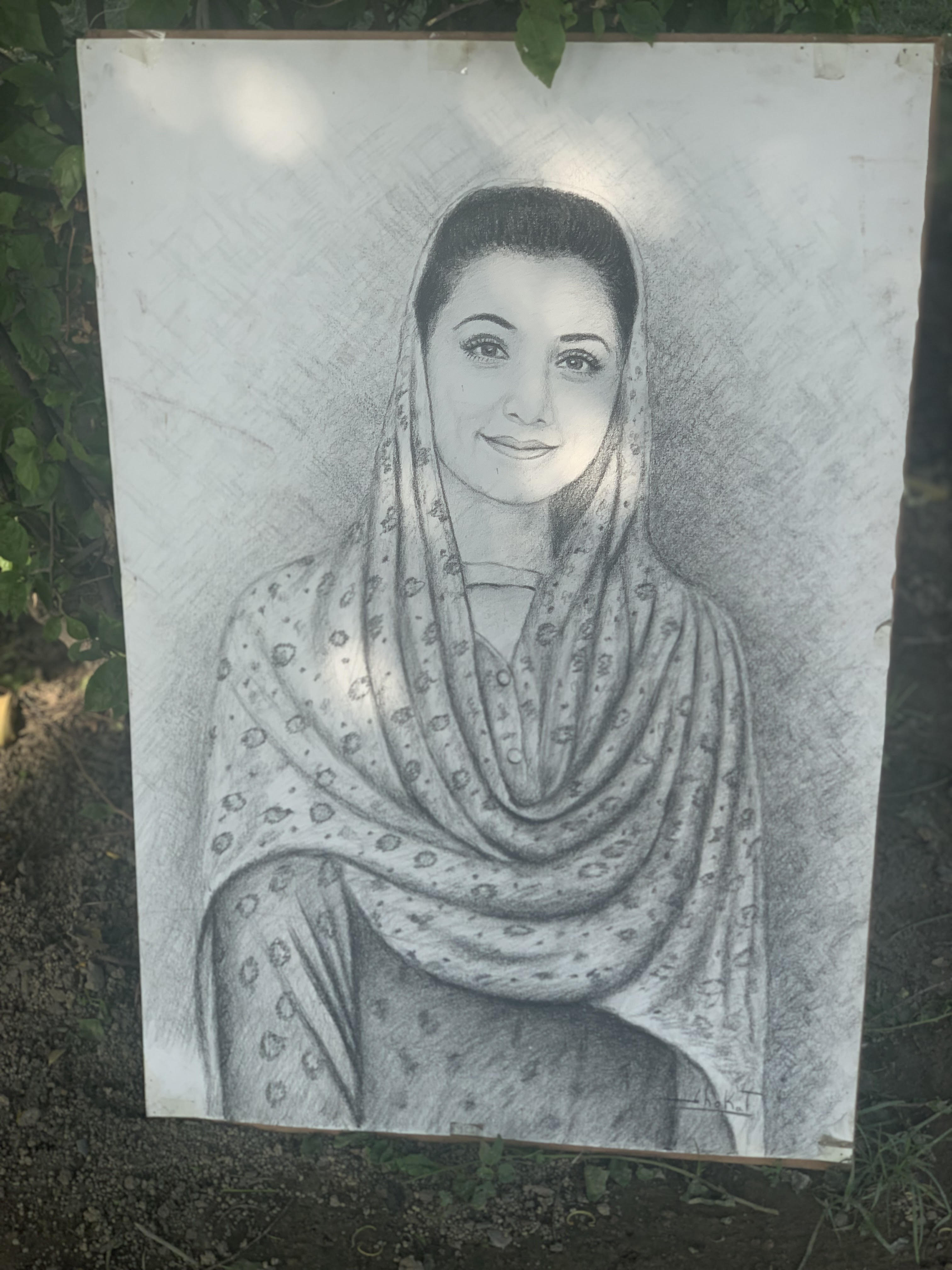


A pencil sketch of Maryam Nawaz by artist Shoukat Ali, among the side of a busy main road in Lahore, on Sept. 7, 2019. (AN photo) 

Nearby, on an electricity pole which serves as his only advertising medium, his name and phone number are written in a scrawl under the word “Arts.”
“What’s his name?” he asked, pointing to his prized portrait of Sheikh Zayed and then repeated it twice to remember over the relentless rumble of speeding cars.
Then, picking up a single cigarette from the wobbly easel in one hand, he put his pencil to paper and got right back to work.


Pakistan sends vessels to Saudi, UAE ports to secure crude supplies amid regional crisis

Updated 07 March 2026
Follow

Pakistan sends vessels to Saudi, UAE ports to secure crude supplies amid regional crisis

  • The development comes as countries scramble to secure energy supplies amid US-Israeli strikes on Iran and Tehran’s counterattacks
  • If Islamabad arranges, Aramco has assured a large crude carrier can be loaded at Yanbu and stationed near Pakistan, minister says

ISLAMABAD: Pakistan has sent vessels to ports in Saudi Arabia and the United Arab Emirates to secure crude oil supplies, the Pakistani petroleum minister said late Friday, as tensions in the Middle East continue to threaten global energy flows.

Global oil markets have been rattled since the United States and Israeli began pounding Iran last week, prompting retaliatory strikes from Tehran across the region. The conflict has raised fears of disruptions in energy supplies, particularly through the Strait of Hormuz, and pushed petroleum prices.

Pakistani Petroleum Minister Ali Pervaiz Malik and others said Islamabad was monitoring international energy markets and domestic supply conditions as they announced a hike of Rs55 ($0.20) per liter in petrol and diesel prices, promising to bring down the prices as soon as the conflict is resolved.

Describing the situation as “extraordinary,” Malik said they did not know how long the Middle East crisis would last and it was important to stretch Pakistan’s available petroleum reserves as much as they could to ensure a steady supply to consumers during the crisis.

“At the regional and global level, you can clearly see that countries are scrambling to secure energy supplies. Pakistan is also part of this effort because a significant portion of our energy supplies comes through the Strait of Hormuz,” he said, adding that Prime Minister Shehbaz Sharif has engaged the Saudi government to secure alternative sources.

“With the help of the Foreign Office, two Pakistan National Shipping Corporation (PNSC) vessels are currently on their way, one toward Yanbu port and the other toward Fujairah port, to bring crude oil from outside the Hormuz region in order to meet Pakistan’s energy needs.”

In addition, he said, Aramco had assured that if Pakistan arranged, a Very Large Crude Carrier (VLCC) can be loaded at Yanbu and stationed near the Pakistani waters.

“From there, PNSC (Pakistan National Shipping Corporation) feeder vessels will ensure a continuous supply of crude oil to our refineries, so that even during this difficult phase Pakistan’s energy requirements continue to be met,” Malik shared.

The statement came as long queues of vehicles were seen outside petrol stations nationwide as Islamabad moved to raise petroleum prices to keep the supplies in check.

Pakistan, which relies heavily on imported fuel to meet its energy needs, is particularly vulnerable to global oil price shocks that can quickly feed into inflation and pressure the country’s external accounts.

Officials at Friday’s presser said Pakistan, which reviews petroleum prices fortnightly, will be considering them more frequently, potentially on a weekly basis, and any reduction in global oil prices would be passed on to consumers.

Finance Minister Aurangzeb said a high-level government committee formed by PM Sharif had been meeting daily to review developments in global petroleum markets and their potential impact on Pakistan’s economy.

“Pakistan currently maintains adequate energy stocks and macroeconomic stability,” Aurangzeb said, adding that the government’s response was based on preparedness rather than panic.