



LAHORE – Pakistani Foreign Office Spokesperson Dr. Mohammad Faisal said on Wednesday though a few differences remained to be resolved, Pakistan and India had agreed to open the Kartarpur border crossing for Sikh pilgrims in November, a rare glimmer of cooperation after tension flared over the neighbors’ decades-old Kashmir dispute.
Arch-rivals Indian and Pakistan have fought two wars over the Kashmir region that both rule in full and govern in part and their forces regularly trade fire across a 740-km old cease-fire line, known as the Line of Control, the de-facto border.
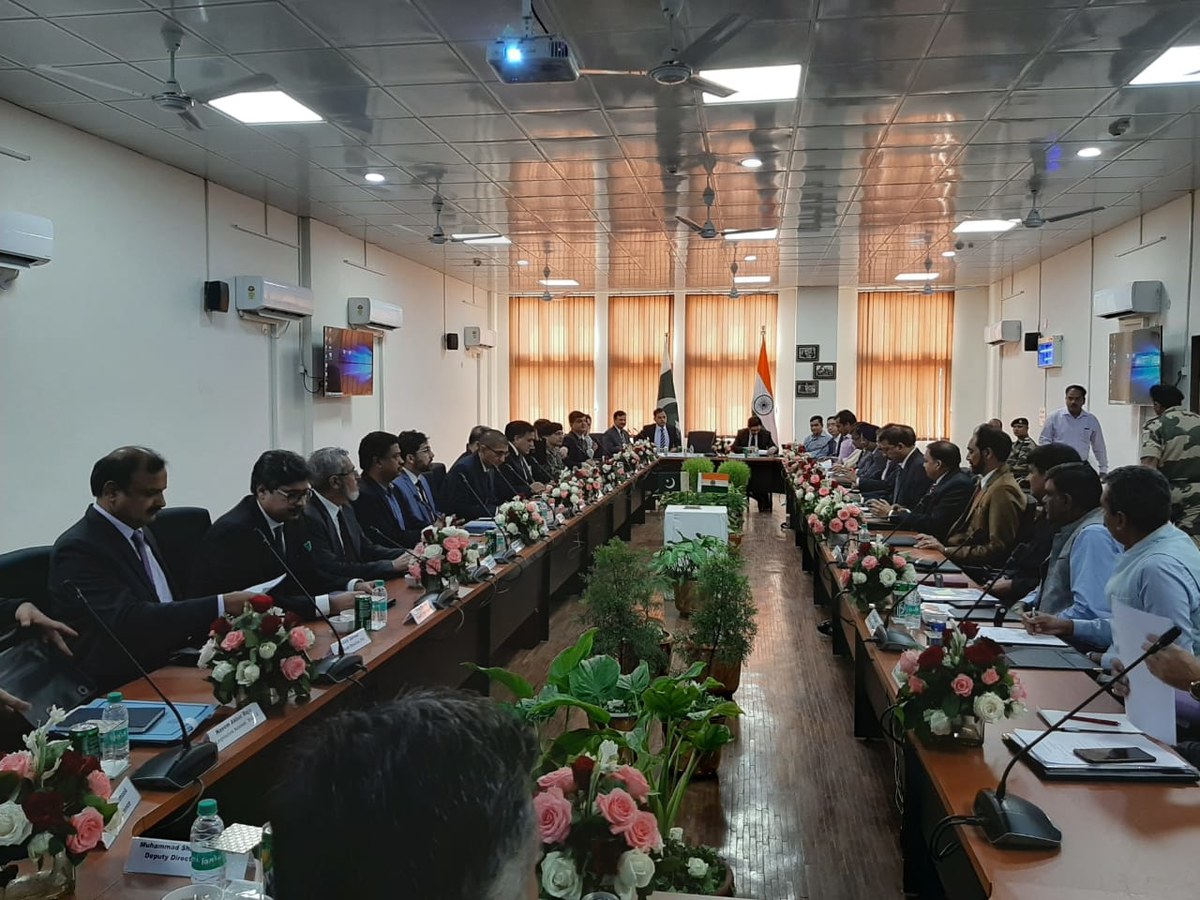
Pakistan and India hold talks at Atari in India on the opening of a key border crossing, the Kartarpur Corridor, for Sikh pilgrims on September 04, 2019. (Photo Courtesy – Ministry of Foreign Affairs)
Recently, tensions were sparked once more between the nuclear-armed nations when India revoked the constitutional autonomy of the part of the Himalayan region of Kashmir that it administers and moved to quell objections by shutting down communications and clamping down on local leaders. Pakistan has reacted with fury to India’s decision, cutting trade and transport ties and expelling India’s ambassador.
Briefing journalists at the Wagah border, a mainland border crossing between Pakistan and India, Faisal said: “The two countries have agreed on opening Kartarpur Corridor in November.”
The Sikh minority community in India’s northern state of Punjab and elsewhere has long sought easier access to the temple in Kartarpur, a village just over the border in Muslim-majority Pakistan.
Many Sikhs see Pakistan as the place where their religion began: its founder, Guru Nanak, was born in 1469 in a small village near the eastern Pakistani city of Lahore.
But to get there, travelers must first secure hard-to-get visas, travel to Lahore or some other major Pakistani city and then drive to the village, which is just 4 km (2-1/2 miles) distant from the Indian border.
Wednesday’s talks are a follow-up of an agreement the neighbors struck last year to open a new route, the Kartarpur corridor, giving the pilgrims direct and visa-free access to the holy site that will be fenced off.
The 20-member Pakistani delegation that traveled to Atari, India, for the third round of talks on Wednesday was led by the foreign office spokesman and included members of the Interior Ministry, Communication and Works Department, NADRA and other relevant departments. The Indian side was led by the Joint Secretary of the Indian Interior Ministry.
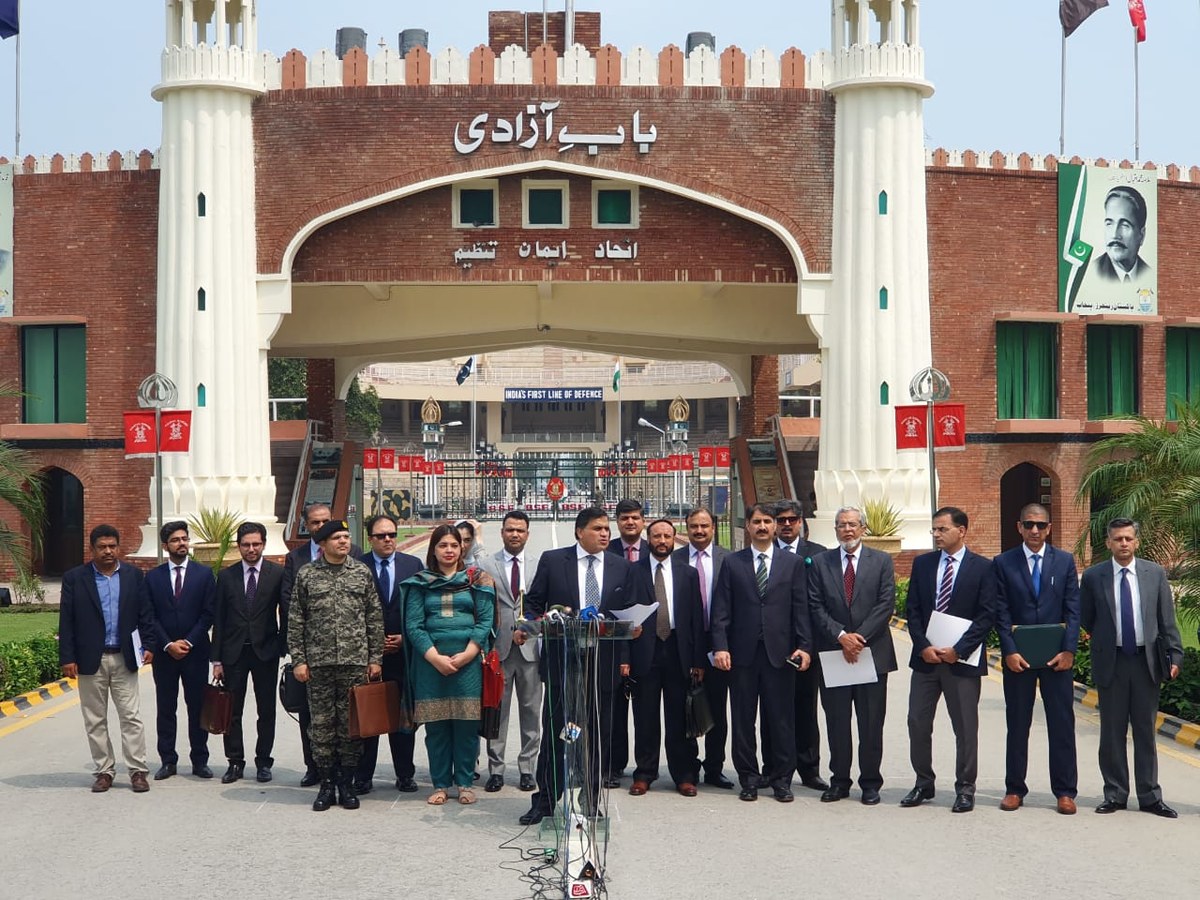
Pakistan’s Foreign Ministry spokesman Mohammad Faisal speaks to reporters following talks with India about the opening of a key border crossing, the Kartarpur Corridor, for Sikh pilgrims on September 04, 2019. (Photo Courtesy – Ministry of Foreign Affairs)
Faisal said talks were “positive” despite prevailing tensions between the two countries, reiterating that the meeting was “Kartarpur-focused.”
“Pakistan has completed 90 to 95 percent work on its side and the rest would be completed before the date [November],” Faisal said. “Following the directions of Prime Minister Imran Khan, we will open the corridor on the birthday of Guru Nanak [in November].”
Earlier in the day, before the Pakistani delegation left for Atari, Faisal said differences related to the corridor would be resolved as Pakistan had shown a lot of flexibility and was hopeful that with a little reciprocity from India, the border crossing route would be completed on time.
Faisal said he had now invited the Indian side to come to Pakistan for a final meeting to go over sticking points.
A statement issued by the head of the Indian delegation said the two countries had agreed on visa-free travel of Indian pilgrims to Gurdwara Kartarpur Sahib based on their faith but no formal agreement had been signed.
“However, owing to certain differences on a few key issues, an agreement could not be finalized,” the statement said. “Pakistan has insisted on charging a service fee for allowing pilgrims to visit Gurdwara Kartarpur Sahib, which is not agreeable in the spirit of smooth and easy access through the corridor. Pakistan has also shown its unwillingness to allow the presence of Indian protocol officials at the gurdwara premises. Pakistan side has been urged to reconsider its position.”
All facilities on the Indian side would be ready for a pilgrimage through Kartarpur Corridor on the occasion of the 550th Birth Anniversary of Guru Nanak, the founder of Sikhism, the statement said.


