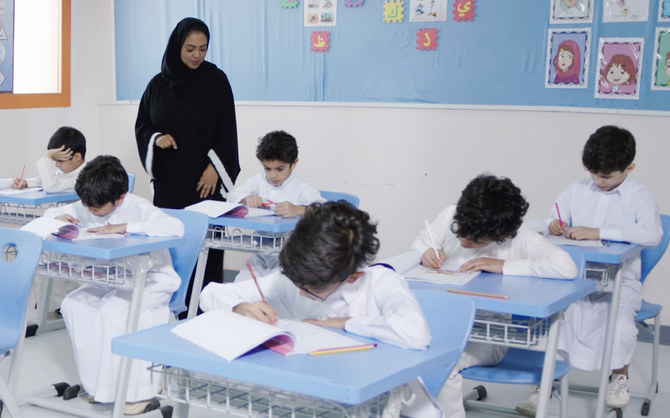

JEDDAH: Female teachers will educate boys in 1,460 state-run schools across the Kingdom for the first time.
“With this project, the Ministry of Education aims to improve the efficiency of the educational system and ensure that every child has access to quality education around the Kingdom,” Suaad Al-Mansour, assistant director general of education in Jeddah, told Arab News.
(AN Photo/Huda Bashatah)
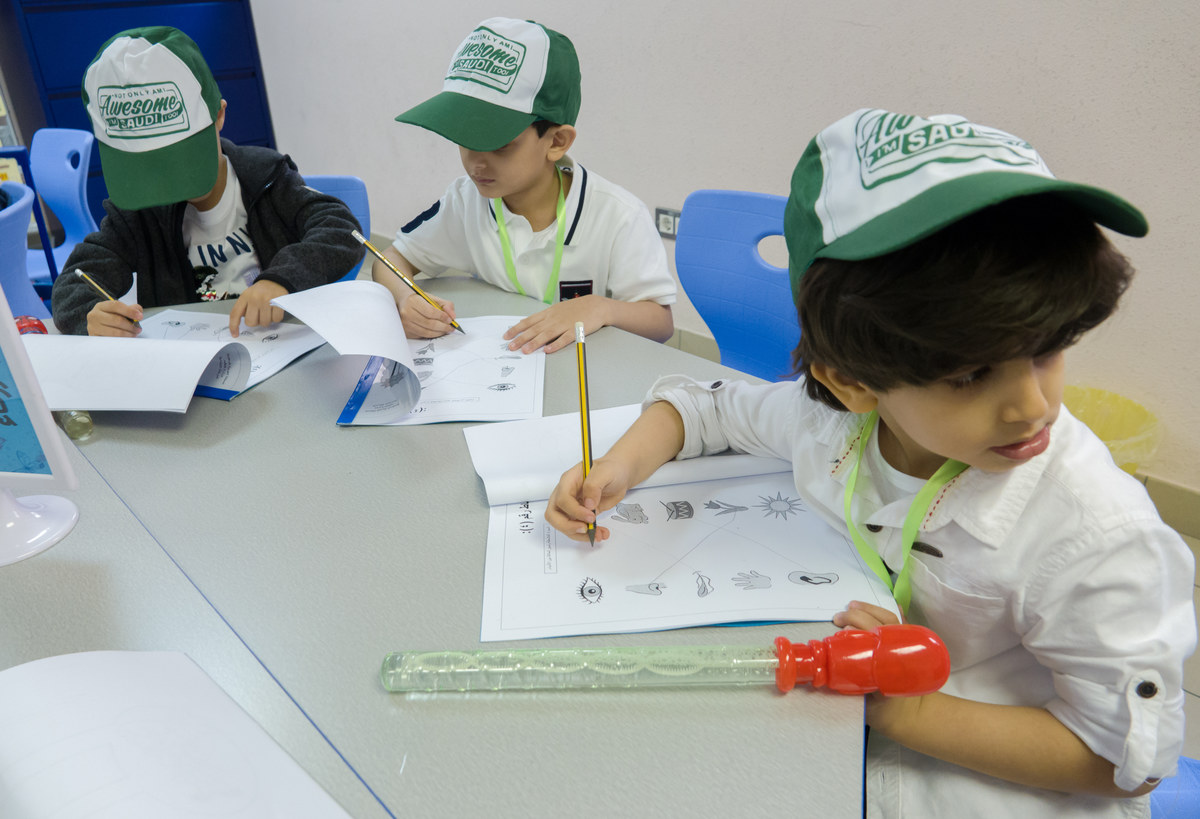
Al-Mansour said the Early Childhood Schools Project included kindergartens for boys and girls between aged 4-5 years-old and the first three primary grades for students between 6-8 years.
She said there will be no mixed classes in primary grades. “There are separate classrooms, toilets, and other facilities for the young boys and girls.”
IN NUMBERS
1,460 - Early Education Schools
3,313 - Classrooms for 83,000 kindergarten students
3,483 - Classrooms for 81,000 early childhood education students
13.5% of young male students will be taught by women
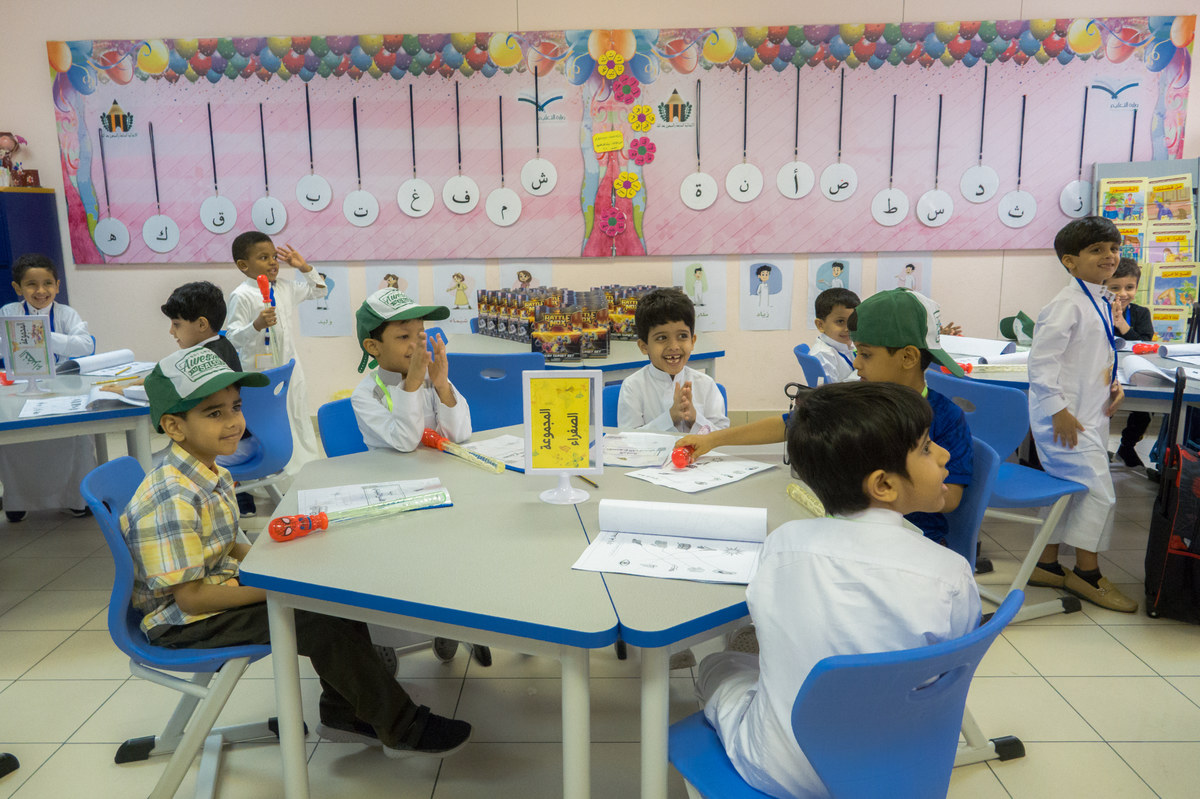
(AN Photo/Huda Bashatah)
Besides improving the quality of education, the ministry aims to increase space utilization efficiency and take full advantage of public school buildings.
According to the ministry, women will teach 13.5 percent of young boys, saving $533 million from the education budget in space alone.
Moreover, the ministry also aspires to increase children’s enrollment in public kindergarten schools versus private schools by 21 percent this year.
During the summer vacation, the ministry set up 3,313 kindergarten classes to accommodate 83,000 children.
Al-Mansour noted that early childhood is the most important stage in building a child’s personality, and said a female teacher is more approachable and less intimidating for young boys at that stage.
“This project will bridge the gap young boys used to face after moving from kindergarten to primary school. The classes at early childhood schools are specially designed to fit their needs at this age, and being taught by women will give them a more fruitful learning experience.”
Many private schools around the Kingdom assigned primary teaching to female teachers decades ago. The General Department of Education in Jeddah Region has held workshops with leaders in the private sector to share their experience with public institutions.
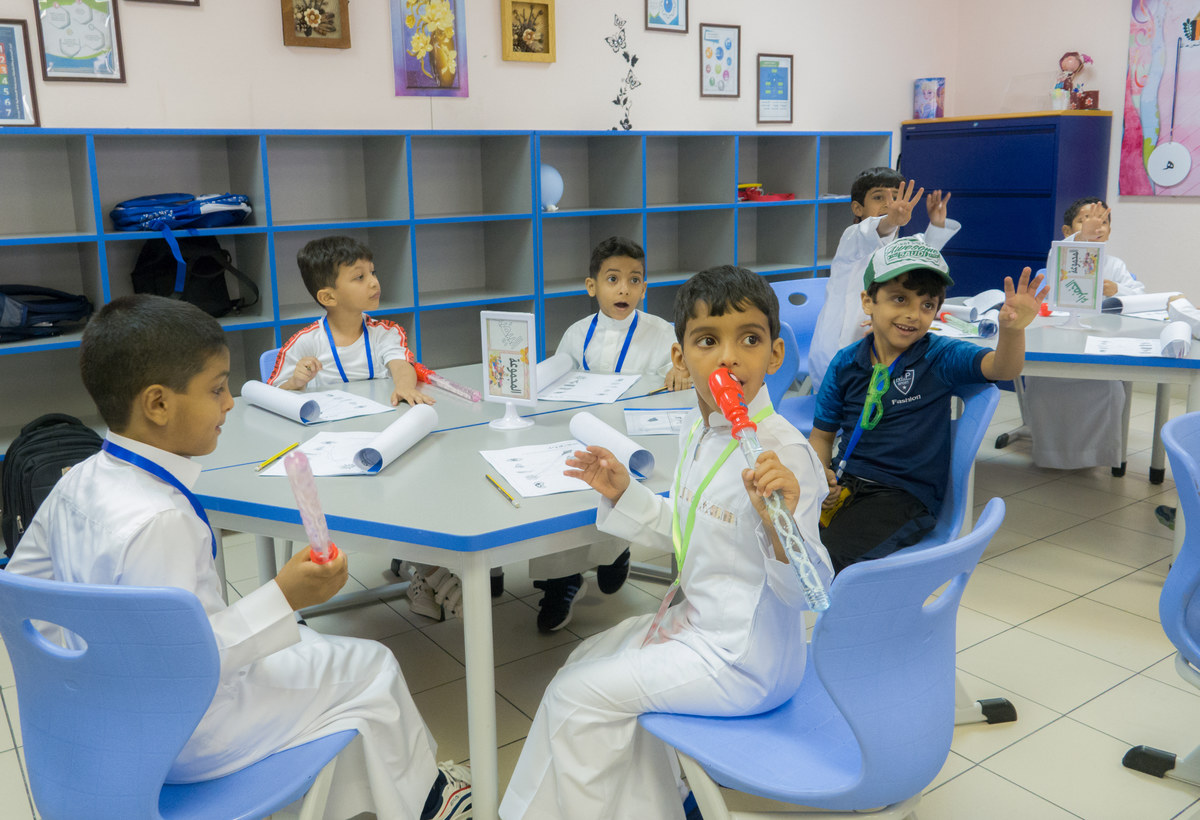
(AN Photo/Huda Bashatah)
For the first time, female teachers are teaching young boys in 1,460 government schools across the Kingdom. Women will teach 13.5 percent of young male pupils, saving SR2 billion from the education budget in space alone
Arab News visited the 177th Primary School in Jeddah and met with the staff and young pupils.
Principal Rajhah Al-Jihani told Arab News that she was impressed with the community’s awareness of the importance of the Early Childhood Project.
FASTFACT
“In our school, we have a total of 6 classes for young boys, two classes for each grade. The ministry has given us 200 seats, and 180 seats are already occupied. It expresses the community’s welcoming of the project.”
Al-Jihani explained that the school organized a training course for teachers on early childhood teaching, including teaching techniques and upbringing strategies, as well as an introduction on the project and its goals.
Maryam Al-Zahrani, an early childhood teacher at the school with 22 years of experience, said that the first day is crucial, and that it was “necessary for the student to feel that the woman in front of him is more like their mother” than just a teacher.
“I nominated myself as soon as the project was announced,” she said. “I am happy with this experience.”
About 6 million students across the 13 administrative regions of the Kingdom returned to school on Sunday after almost four months of summer vacation.