

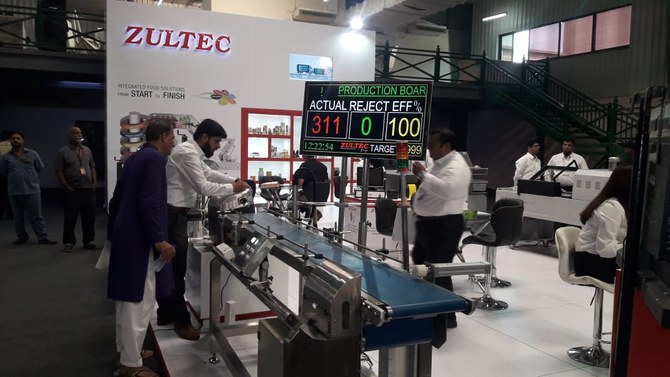

KARACHI: Zultec, a Jeddah-based company has invested $10 million in Pakistan and plans to invest an additional $10 million to set up production facilities in the engineering, printing and packaging sectors, an official at the company said on Tuesday.
Headquartered in Saudi Arabia, Zultec specializes in Information Technology and also has retail, engineering and materials businesses in over 13 countries.
On Tuesday, the group was one of several Middle East-based companies that exhibited their products at an international exhibition of plastics, printing and packaging at Karachi Expo Center. Over 300 exhibitors from 35 countries are participating in the three-day international exhibition, as well as the second exhibit of food and beverage processing and packaging companies.
“Zultec Group has recently set up offices in Karachi, Lahore and Islamabad for manufacturing facilities, including engineering solutions printing and packaging solutions and IT solutions as well,” Umair Ali Khan, Director Business Development of Zultec Group told Arab News. “We have recently invested $10 million in Pakistan and we are looking for another $10 million, subject to project feasibility and timelines.”
Khan said Saudi companies were keen to invest in Pakistan, given strong economic ties between the two countries, which both governments had resolved to strengthen further following February’s visit by Saudi Crown prince Muhammad Bin Salman to Islamabad.
“We want to bring expertise into the Pakistani market especially in the meat industry, dates processing and food industry ... [bring here] the solutions which we are providing in Saudi Arabia,” Khan said.
Other countries’ exhibitors and experts attending the two exhibitions in Karachi include those from China, England, France, Germany, Belarus, Greece, Cyprus, Indonesia, Iran, Italy, Japan, Malaysia, Netherlands, Palestine, Korea, Spain, Saudi Arabia, Singapore, Thailand, Turkey, Taiwan, the United Arab Emirates, the United Kingdom and the United States.
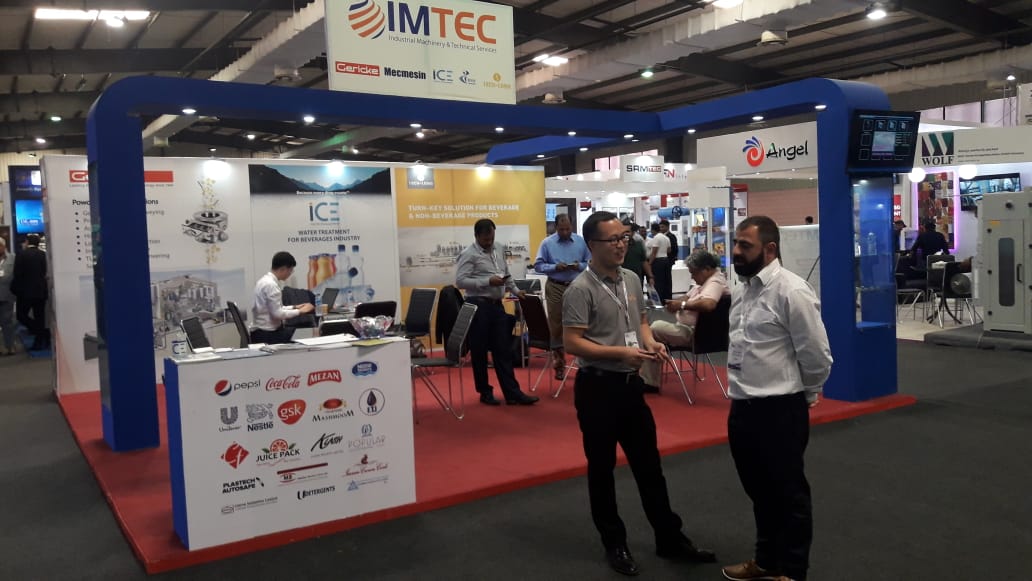
Over 30 Chinese companies are participating in the two exhibitions being held at the Karachi Expo Center in Karachi, Pakistan, on Aug. 27, 2019. (AN photo)
Many exhibitors from the Middle East are showcasing their products in Pakistan for the first time and plan to set up local supply and distribution chains.
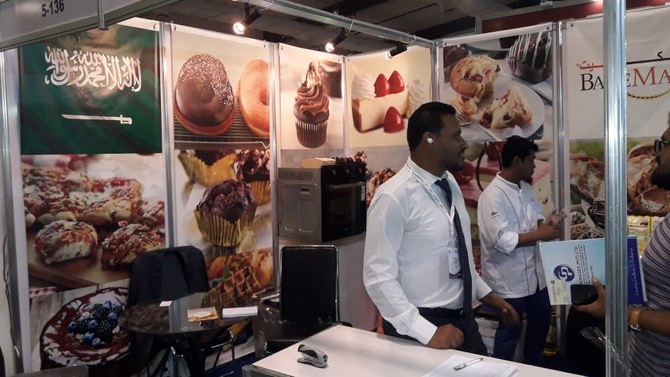
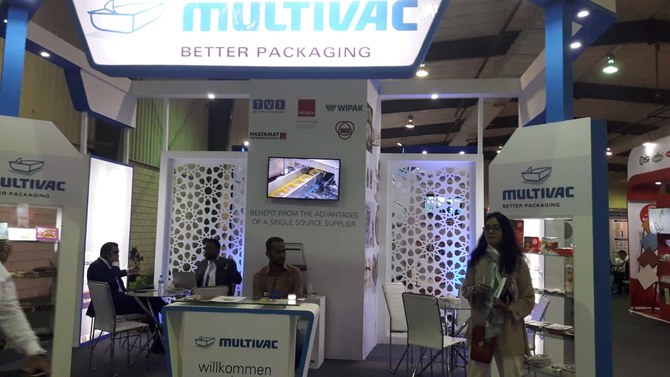
“This is a huge market and we are looking for marketing prospects of our products, mainly related to bakery and confectionery items,” Kareem Diab, Export Manager of Bake Mate, a Riyadh-based company, told Arab News.]“This product is largely used in Pakistan’s in pastry shops but not being commercially manufactured here,” Diab said, showing a power pack for cake-making. “We are already marketing this product in 12 countries and Pakistan is a very important target market because many Pakistanis living in Saudi Arabia know about the product already. We have been participating in this exhibition since 2013; this is a very important show for us to meet existing and potential customers to share new ideas and solutions,” said Amir Sotoudeh, Managing Director at MULTIVAC Middle East, a provider of packaging solutions for food products, life science and health care products, and industrial goods. “We directly interact with customers without any intermediary to make sure to deliver best quality machinery.”
Pakistan also hosts a growing number of Chinese companies at these exhibitions.
“Last year 20 Chinese companies participated in the show and this year 32 companies are displaying their products. More Chinese companies are willing to come to the show,” said Josephine Liu, an Overseas Specialist for the Eastyida International Exhibition Shanghai. “The two countries are supporting each other in business development. Pakistan is developing very fast and needs Chinese machines and products of high quality at low prices.”


