

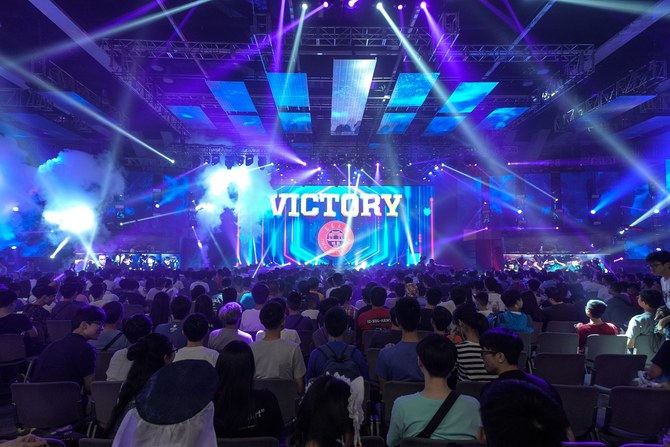

LONDON: It isn’t often that a new sport becomes part of the cultural mainstream. For example, at next year’s Tokyo Olympics skateboarding will be included in the competition for the first time, marking a culmination of over 70 years as a hobby that turned into a competitive sport.
Much like skateboarding, another sport has bubbled up from its subculture beginnings into the monoculture: Electronic sports — or simply eSports. What started as an amateur pursuit is now too popular to ignore, but is still a mystery to the casual observer. Dismissing eSports as a fad today is akin to somene in 2000 proudly proclaiming that they don’t think the internet will amount to much. It is estimated that by the end of 2019, the total audience of eSports will have grown to an around 454 million viewers and associated revenues — mainly from advertising — will increase to over $1 billion.
The sport is distinct from casual gaming on a console in your living room. ESports consists of competitive multiplayer videogame competitions between professional players, either as individuals or as teams. Although organized online and offline competitions have long been a part of gaming culture, they were a largely amateur pursuit until the early 2000s. The meteoric rise of eSports over the past decade has been led primarily by South Korea, China, Europe and North America. Other regions are catching up quickly, and the Arab world is no exception. Gamers have known this for a while but now investors, governments and the general public are getting on board.
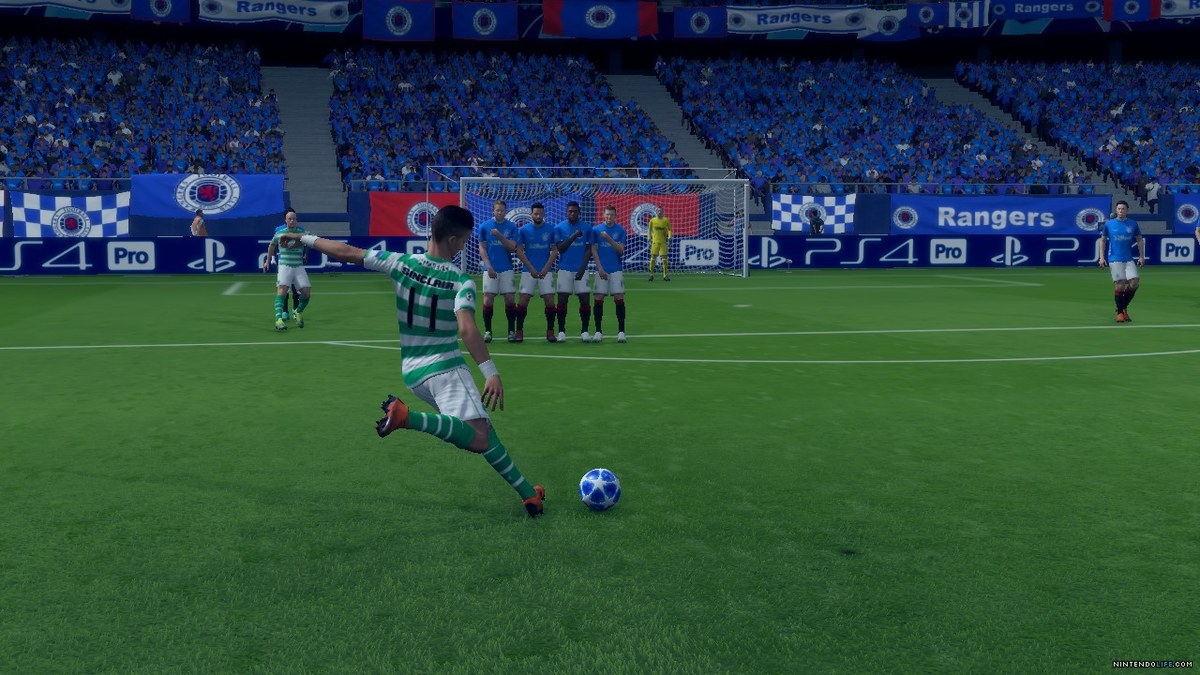
FIFA is one of the most popular games in the Gulf. (FIFA)
It is not premature to talk of an Arab eSports movement — there do appear to be regional specificities in the Middle East. Saaed Sharaf, founder of eSports Middle East and head of the Syrian eSports Association, draws us a map of the region.
“In the Levant and North Africa, you tend to have more freemium PC players, compared to the Gulf which is dominated by costlier consoles,” he says. Even the games played seem to differ, with “Player Unknown’s Battlegrounds” (PUBG), “Dota2” and “League of Legends” dominating the Levant and North Africa, and “Fortnite,” “Overwatch” and “FIFA” leading the way in the Gulf. The faultlines emerging mirror those in most other sectors in the Arab world, between a wealthy,well-connected and government-supported Gulf and a scrappier, independent entrepreneurial culture in the Levant and North Africa.
Media plays a central role in eSports, with many tying its rapid expansion in the 2000s to the explosion in livestreaming platforms such as now-defunct Panda.tv, YouTube, and, most importantly, Twitch. These platforms are central to the growth and promotion of eSports online, and they drive fans to attend offline competitions. Eric Husni, a gamer and entrepreneur, thinks these platforms haven’t done enough in the Arab world. That’s why he’s launched a new regional platform, Rawa, that aims to help Arab gamers develop the media side of their careers. “While Arab creators have mastered YouTube, Instagram and other platforms, the switch to live broadcasting — especially for gaming — hasn’t been an easy one, culturally.” Husni says. “We don’t have household names like Ninja in the region. We’re trying to change that with a distribution platform for content for the region.” Husni believes that without this vital element of the ecosystem, there is no way eSports can reach its full potential in the Arab world.

Eric Husni. (Supplied)
While enthusiasm and optimism around eSports is growing in the region, there are still structural problems that slow down growth. For example, there are no servers — players in the Levant connect to European servers, and those in the Gulf connect to Asian ones. This means the “ping” — essentially the network latency between a player's client and the game server — puts Arab players at an immediate disadvantage. Winning decisions in most games are made in milliseconds, and the lag caused by the distance from servers means that players in the Middle East are one step behind from the start.
Luciano Rahal is a veteran former pro with leading eSports team Nasr, and now works in PR and communications at Riot Games, publishers of one of the most popular multiplayer online battle arena games in the world: “League of Legends.” He talks excitedly about the recent announcement by Amazon Web Services (AWS) stating that it would be setting up a server in Bahrain. “It’s a step closer to being competitive. The potential is huge, but there is still an infrastructure gap to fill,” he says.
Rahal adds that those challenges extend to the rest of the ecosystem, beyond technical infrastructure. For example, visas are hard to come by for international players who might want to attend tournaments in the Middle East.
Other regional challenges are in line with those that eSports face globally. Women make up a tiny fraction of the ecosystem. Sharaf says that, globally, women make up 30 percent of eSports’ players, but in the Middle East that figure is closer to eight percent. “We’re witnessing some clubs forming female rosters and some companies organizing female-only tournaments,” he says. Given that one third of eSports viewers in the region are women, it’s hopefully only a matter of time before representation in the ranks of players comes in line with the global average.
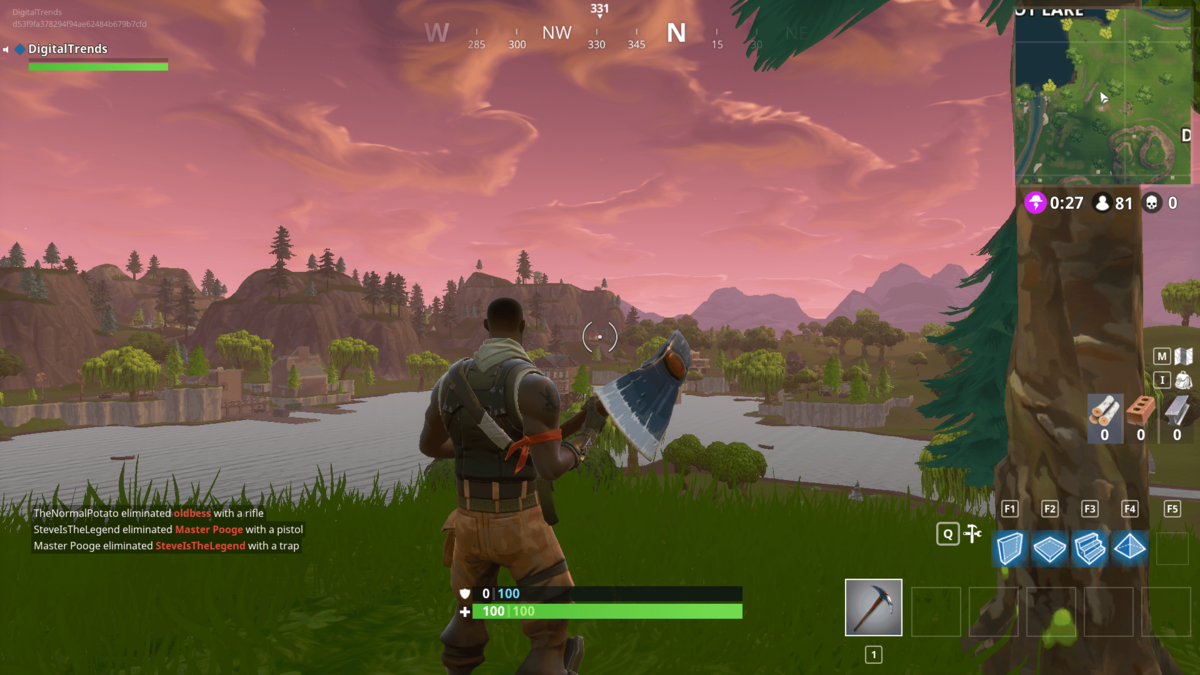
Fortnite is leading the way in the Gulf. (Fortnite)
Talking to industry insiders, you get the feeling that eSports in the Arab world are at a turning point. A lot of the what is expressed by those involved in eSports regionally is not frustration that the Arab word is behind, but eagerness to get things done. There is also pride that, despite the challenges, the Arab world is leaving its mark on eSports. There are Arab players at the top of every game, including Lebanese “Dota2” player Maroun "GH" Merhej. He plays with Team Liquid (along with Jordanian-Polish gamer Amer “Miracle” Al-Barkawi) and ranks eighth worldwide in terms of earnings, having brought in close to $3.2 million from 36 tournaments.
Recently, MBC — the region’s largest broadcaster — announced that it would be setting up the MENA region’s first professional eSports league in partnership with ESL, the leading league operator in the world. ESL has close to two decades of experience in medium-to-large-scale events and leagues, which brings an immediate sense of legitimacy to the newly formed league. Charbel Khoury, head of marketing at MBC Group’s emerging media division, says the network has eSports squarely in its sights. With a new generation of consumers cutting the cord with traditional media, MBC has identified an opportunity. The group’s thinking, Khoury says, was “How do we bring back millennials to our ecosystem, create brand stickiness and eventually migrate them to the rest of our offerings?”
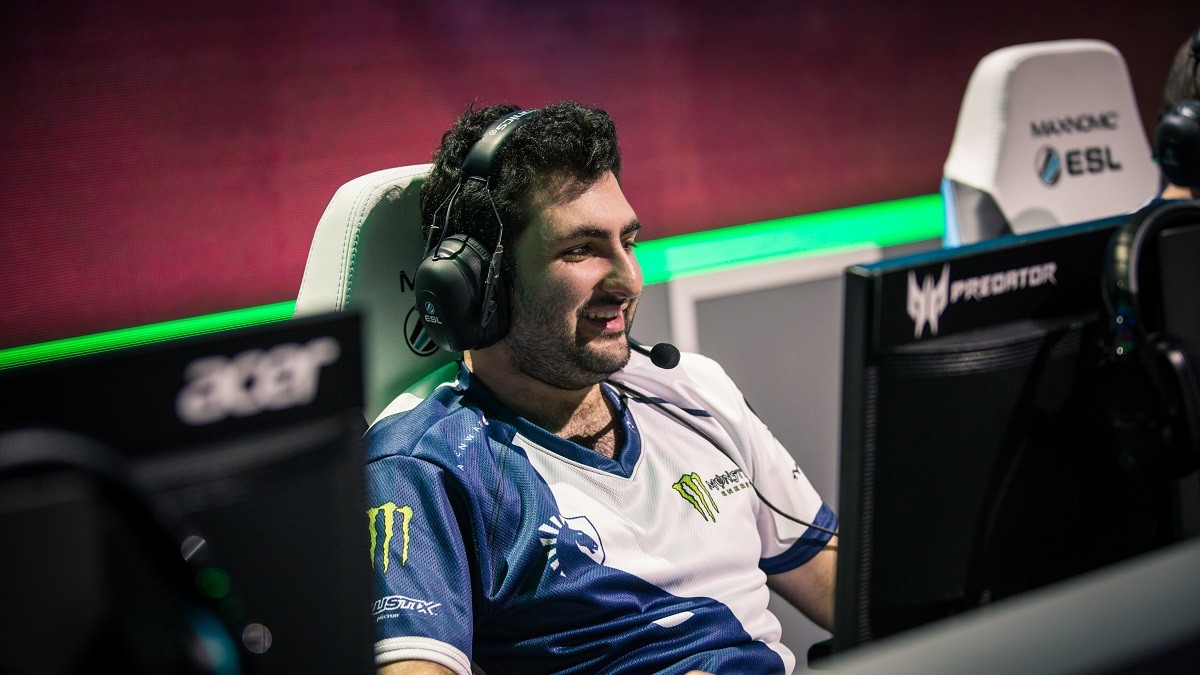
Lebanese gamer Mroun Merhej. (Supplied)
There is certainly plenty of showbiz appeal to eSports. Tournaments are exciting festivals of light and sound, the players have near-superhuman reflexes, and the money at stake can be overwhelming. Throw in brands, governments and investors — all of whom are now muscling in — and this could be a recipe for great success or a complete disaster. But talking to people in the grassroots scene, they all seem to feel the same: the region is doing very well, but there is a still a lot to be done.
Sharaf singles out the potential of Saudi Arabia. “(With its) technical infrastructure, government investment, internet penetration and consumer buying power, it can be on the global map as powerhouse in five to 10 years if they continue their progress on the same level.”
Rahal, from Riot Games, sees an even shorter timeline, estimating the region will be fully integrated into the global eSports landscape in three to four years. But he warns that stakeholders need to be smart, because “the sport itself will be different by then too, given its exponential growth.” Gamers have lightning-fast reflexes; the rest of the ecosystem needs to keep up.


