GAZA STRIP, Palestinian Territories/CAIRO: A Hamas delegation arrived Saturday in Egypt for the latest round of talks on a proposed truce and hostage release in Gaza, Egyptian state-linked media Al-Qahera News reported.
Al-Qahera News, linked to Egyptian intelligence services, quoted an unnamed high-ranking source as saying that “there is significant progress in the negotiations” between the Palestinian militant group and Israel, and that the Egyptian mediators have “reached an agreed-upon formula on most points of contention.”
A top Hamas official earlier accused Israeli Prime Minister Benjamin Netanyahu on Friday of trying to derail a proposed Gaza truce and hostage release deal with his threats to keep fighting the Palestinian militant group.
“Netanyahu was the obstructionist of all previous rounds of dialogue... and it is clear that he still is,” senior Hamas official Hossam Badran said by telephone.
Foreign mediators have waited for a Hamas response to a proposal to halt the fighting for 40 days and exchange hostages for Palestinian prisoners, which its chief Ismail Haniyeh has said the group was considering in a “positive spirit.”
A major stumbling block has been that, while Hamas has demanded a lasting ceasefire, Netanyahu has vowed to crush its remaining fighters in the far-southern city of Rafah, which is packed with displaced civilians.
The hawkish prime minister has insisted he will send ground troops into Rafah, despite strong concerns voiced by UN agencies and ally Washington for the safety of the 1.2 million civilians inside the city.
World Health Organization chief Tedros Adhanom Ghebreyesus said the agency was “deeply concerned that a full-scale military operation in Rafah... could lead to a bloodbath.”
“The broken health system would not be able to cope with a surge in casualties and deaths that a Rafah incursion would cause,” an agency statement said.
Badran charged that Netanyahu’s insistence on attacking Rafah was calculated to “thwart any possibility of concluding an agreement” in the negotiations brokered by Egyptian, Qatari and US mediators.
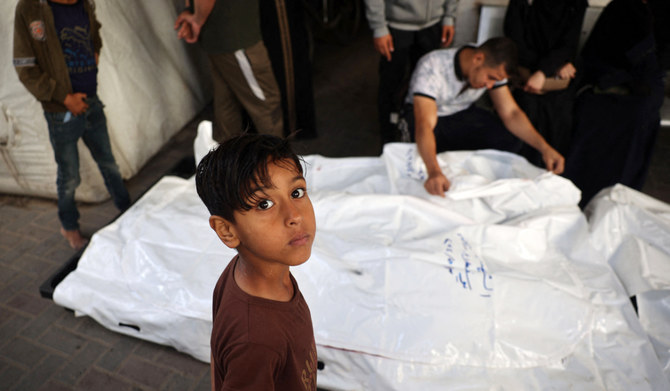
Israeli air strikes killed several more people in Rafah overnight, Palestinian medics and the civil defense agency said.
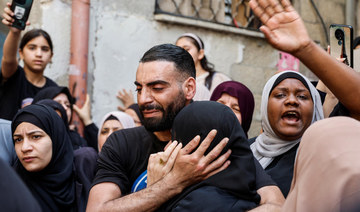
One bereaved resident, Sanaa Zoorob, said her sister and six of her nieces and nephews were killed.
Two of the children “were found in pieces in their mother’s embrace,” Zoorob said, appealing for “a permanent ceasefire and a full withdrawal from Gaza.”
The war broke out after Hamas’s October 7 attack on Israel resulted in the deaths of more than 1,170 people, mostly civilians, according to an AFP tally of Israeli official figures.
The militants also took some 250 hostages, of whom Israel estimates 128 remain in Gaza.
The army says 35 of them are dead, including 49-year-old Dror Or, a resident of the badly hit kibbutz Beeri, whose death was confirmed by authorities on Friday.
Israel’s devastating retaliatory campaign has killed at least 34,622 people in Gaza, mostly women and children, according to the Hamas-run territory’s health ministry.
Israel has weathered an international backlash over the spiralling death toll.
Pro-Palestinian protests that have rocked US campuses for weeks were more muted Friday after a series of clashes with police, mass arrests and a stern White House directive to restore order.
But similar demonstrations have spread to campuses in Britain, France, Mexico, Australia and elsewhere.
Turkiye announced on Thursday that it was suspending all trade with Israel, valued by the government at $9.5 billion a year.
President Recep Tayyip Erdogan said the move was intended to “force Israel to agree to a ceasefire and increase the amount of humanitarian aid to enter” Gaza.
Yemen’s Iran-backed Houthi rebels, who have carried out months of attacks on merchant shipping in the Red Sea in a costly blow to maritime trade, said they would extend their attacks on Israel-bound shipping to the Mediterranean “immediately.”
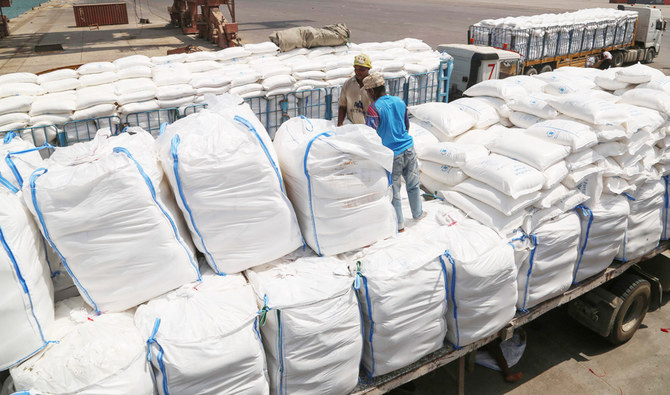
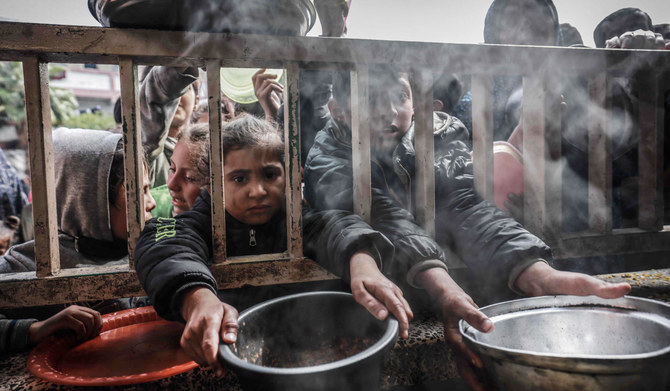
Israel’s siege has pushed many of Gaza’s 2.4 million people to the brink of famine.
US pressure has prompted Israel to facilitate more aid deliveries to Gaza, including through the reopened Erez crossing that leads directly into the hardest-hit north.
Food availability has improved “a little bit,” said the World Health Organization’s representative in the Palestinian territories, Rik Peeperkorn.
But he warned that the threat of famine had “absolutely not” gone away.
Five Israeli human rights groups that took Israel to court over restrictions on aid to war-torn Gaza said the state’s insistence that it has met its obligations was “incomprehensible.”
The government had told the supreme court that the steps it had taken went “above and beyond” its obligations under international law.
Gisha and four other Israeli non-profit organizations retorted that the shortages evident inside Gaza indicated “the respondents are not meeting their obligations, not to the required extent nor at the necessary speed.”
The US-based charity World Central Kitchen resumed operations this week, after suspending them in the aftermath of Israeli drone strikes that killed seven of its staff as they unloaded aid in Gaza on April 1.
The group’s kitchen manager Zakria Yahya Abukuwaik said: “We realized after the kitchen closed that many mouths were left hungry.”
World Central Kitchen was involved in an effort earlier this year to establish a new maritime aid corridor to Gaza from Cyprus to help compensate for dwindling deliveries by land from Israel.
The project suffered a new blow Friday when the US military announced high winds had forced troops working to assemble a temporary aid pier off the Gaza coast to relocate to the Israeli port of Ashdod.
“The partially built pier and military vessels involved in its construction have moved to the Port of Ashdod, where assembly will continue, and will be completed prior to the emplacement of the pier in its intended location when sea states subside,” US Central Command said in a statement.
Several Arab and Western governments have also airdropped aid into northern Gaza. Civil defense spokesman Mahmud Basal said one person was killed and several injured when they were hit by falling pallets.