

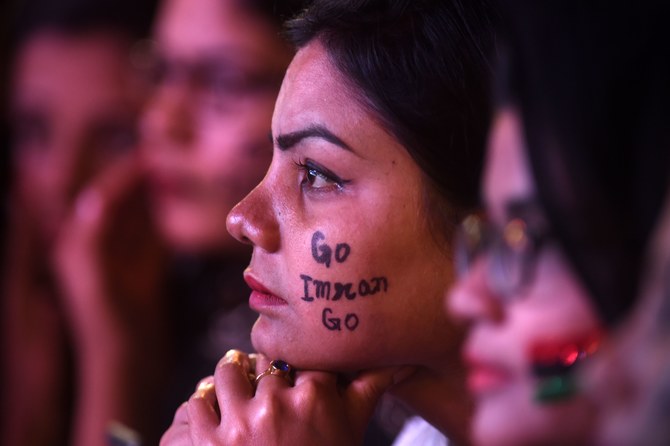

QUETTA: Pakistan’s main opposition parties held protest rallies in cities across the country on Thursday, accusing Prime Minister Imran Khan’s government of ruining the economy and seeking to intimidate and silence its opponents.
The so-called “Black Day” protests, a year after Khan’s PTI party swept to power following a bitterly contested election, come amid mounting economic problems for Pakistan and a political climate that has grown increasingly angry.
Surging prices of fuel and everyday staples, a plunging currency that has lost a quarter of its value since the election and allegations of media censorship and stifling opposition voices has fueled the protests.
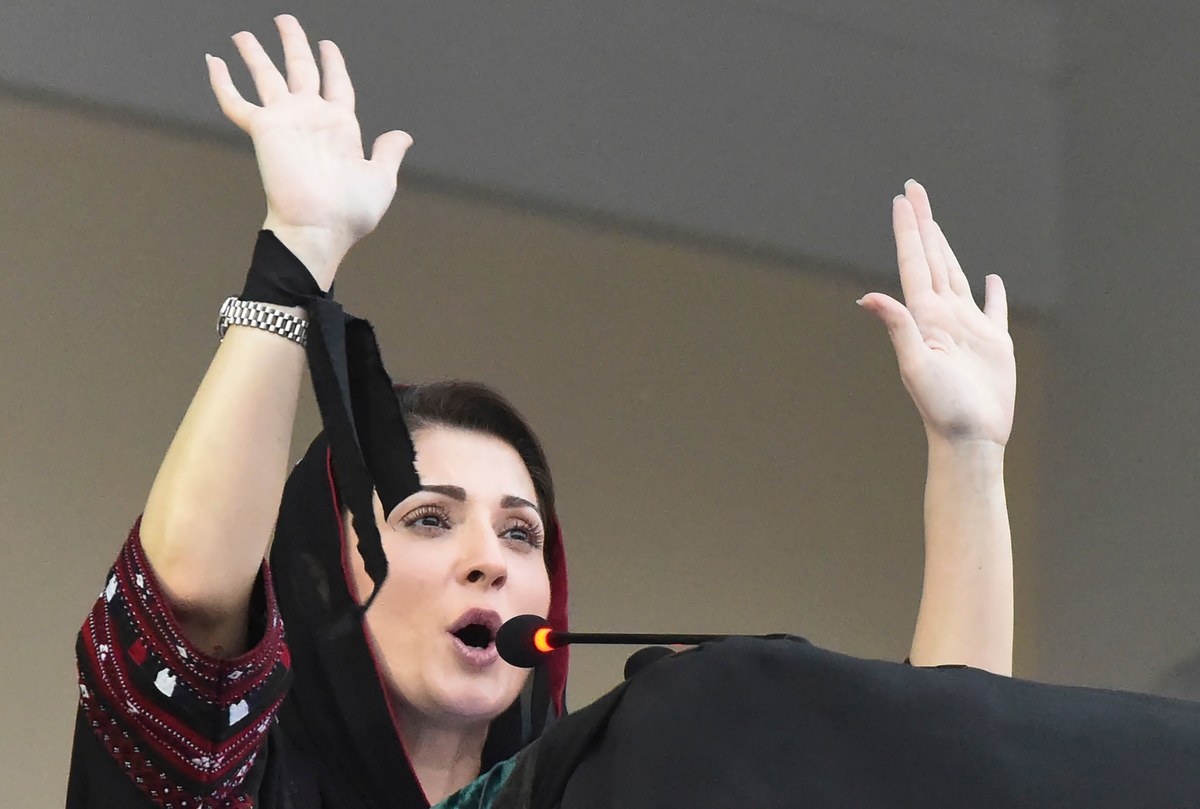
Maryam Nawaz, daughter of jailed former Pakistani prime minister Nawaz Sharif, addresses the gathering during an anti-Imran Khan protest rally in Quetta on July 25, 2019. (AFP)
“Every day in the presence of Imran Khan is a black day,” Maryam Nawaz, leader of the PML-N party that was ousted from power in last year’s election told a crowd of thousands of supporters in a football stadium in the western city of Quetta.
She accused Khan of accepting “dictation” from US President Donald Trump during his visit to Washington and proposed a march on the capital Islamabad but did not name a date.
In Karachi, Pakistan’s commercial capital, thousands of supporters of the PPP, Pakistan’s other main opposition party, gathered to hear party leader Bilawal Bhutto, son of the murdered former prime minister Benazir Bhutto.
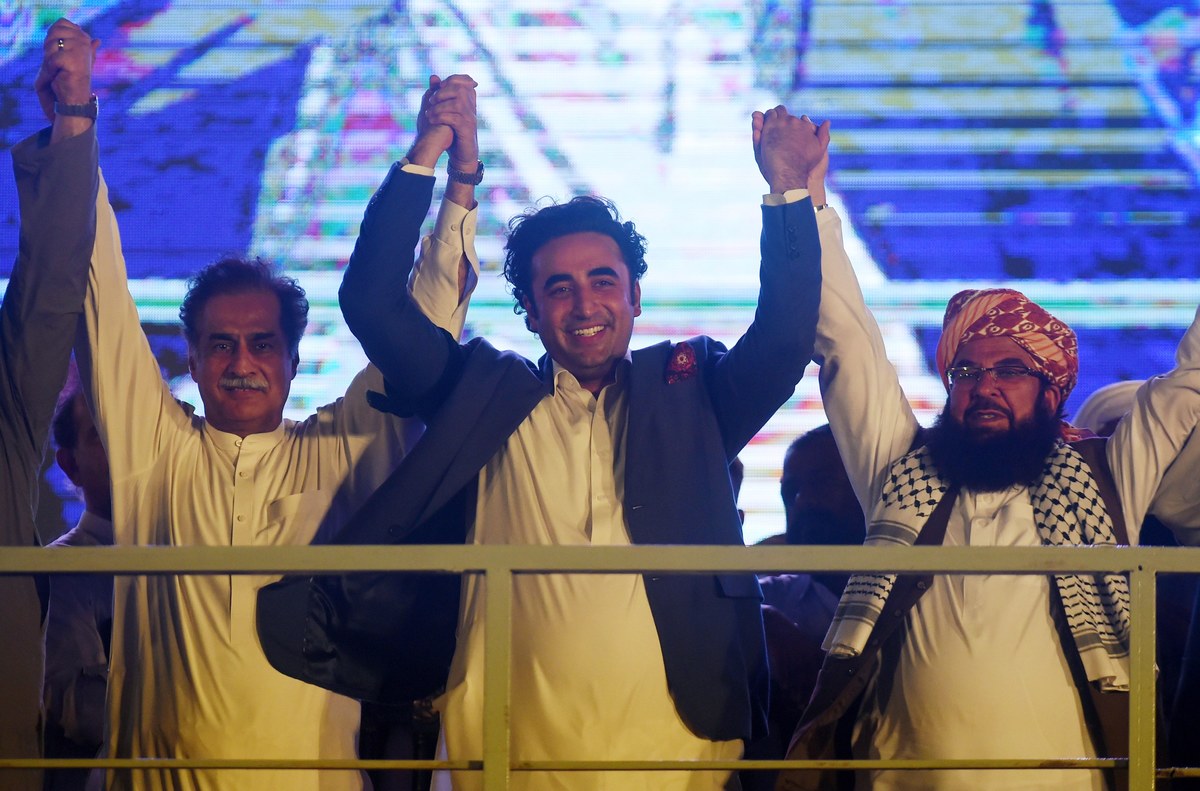
Chairman of Pakistan Peoples Party (PPP), Bilawal Bhutto Zardari (C), join hands with other opposition parties leaders during an anti-Imran Khan protest in Karachi on July 25, 2019. (AFP)
Banners reading “PTI brought price hikes, PTI brought joblessness, PTI brought economic terrorism” hung over the main stage. There were similar protests in other cities including Lahore and Peshawar.
Khan’s government came to power with Pakistan already nearing a balance of payments crisis, and this month agreed a $6 billion bailout with the International Monetary Fund that came with tough austerity conditions including more taxes and an agreement to let the rupee currency fall sharply.
It has dismissed the opposition protests and blamed the economic turmoil on massive corruption and economic mismanagement by previous governments, accusing their leaders of shifting millions of dollars out of the country illegally.
PML-N founder and former Prime Minister Nawaz Sharif, Maryam Nawaz’s father, is currently serving a 7-year sentence on corruption charges. His successor, Shahid Khaqan Abbasi, has also been arrested on corruption charges. He denies wrongdoing.
The arrests have fed the anger of opposition parties, who say the government has manipulated the justice system to crush its adversaries.
Earlier this month, PML-N officials produced video evidence they said showed the judge responsible for sentencing Nawaz Sharif had been blackmailed into convicting him. The judge, who said the PML-N had also attempted to blackmail him, has since been sacked from the court that decided the Nawaz case.


