LAHORE: Pakistani pharmaceutical companies import more than 50 percent of their raw material from India and China to produce medicines, according to the Federation of Pakistan Chamber of Commerce and Industry (FPCCI).
“A big chunk of the raw material used in locally produced medicines is imported from India since our neighboring country has an established industry of raw materials for medicines,” Khwaja Shahzeb Akram, head of the pharmaceutical committee at the FPCCI told Arab News.
The material bought from India is cheaper than any other part of the world, he said.
According to industry experts, the trade has the nod of Pakistan government, which despite the estranged relations between the two nuclear-capable south Asian neighbors, prefers to rely on its arch rival than revive its own industry.
“Pakistan government allows to import medicines from India that are not manufactured in the country,” Akram said.
Pakistan imported medicines worth Rs1.37 billion from India between January and June 2019, officials of federal health department revealed in a recent meeting of Senate’s Standing Committee on National Health Services Regulations and Coordination.
The meeting was also informed that the imported medicines were lifesaving drugs, including anti-venom vaccines, anti-rabies shots and other tablets and syrups.
“In the committee meeting, employees of the federal health department acknowledged that medicines were being imported from India … The issue was raised by Senator Rehman Malik who asked for a list of imported items. The department officials said they would provide details of imported medicines during the next meeting and the matter was deferred,” Senator Dr. Asad Ashraf, the committee member, told Arab News.
He also added that Senator Malik had asked the government to make it mandatory for Pakistani pharmaceutical companies to produce snake venom serum and anti-rabies vaccines to meet the shortage, instead of importing these items from India.
“India has an established medicine raw material industry which unfortunately Pakistan lacks. We are dependent on imported raw material for medicines,” said Amjad Ali Jawa, former chairman of the Pakistan Pharmaceutical Manufacturers Association. “We import different vaccines and life-saving drugs, mostly related to cancer and don’t have an alternative option,” he added.
Given the low cost of production of medicines in India and the fact that Pakistan’s Ministry of Health often allows the multinational corporations (MNCs) to increase the price of their drugs at will, huge quantities of medicines including antibiotics, analgesics, sedatives, tranquilizers, hormones, anti-hypertensive and contraceptives are smuggled into Pakistan from India, according to the Pharmaceutical Journal, though it is difficult to get reliable statistics in this connection.
The volume of import of medicine from India in 2018 was much higher, said Akram.


![]()

Indian drugs continue to flood Pakistani markets despite diplomatic row
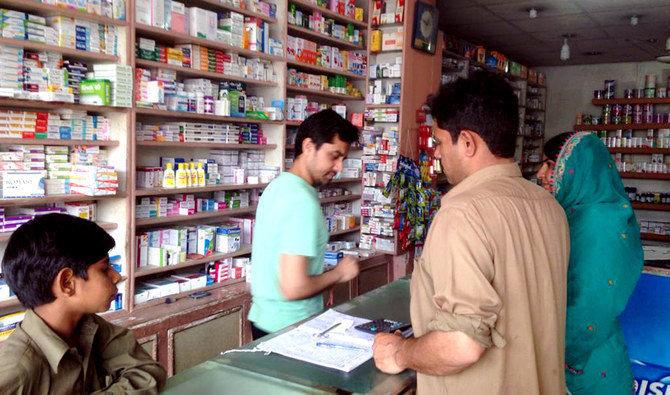
Indian drugs continue to flood Pakistani markets despite diplomatic row
- Pakistan imported medicine from India worth Rs1.37 bn in 2019, Senate committee told
- Raw material for medicines, life saving drugs, vaccine for cancer top the list of imports
Latest updates


Recommended


© 2026 SAUDI RESEARCH & PUBLISHING COMPANY, All Rights Reserved And subject to Terms of Use Agreement.