ISLAMABAD: Pakistani Twitter users have slammed US President Donald Trump for saying Pakistan’s arrest this week of the alleged mastermind of the 2008 Mumbai attacks had come after a 10-year search, as the suspected militant leader has been in and out of Pakistan prisons for the last decade and even addressed public rallies.
Pakistani authorities arrested Hafiz Saeed on terrorism funding charges on Wednesday. Saeed, who founded the Lashkar-e-Taiba militant group, is accused by India and the United States of carrying out the Mumbai attacks which killed more than 160 people. Saeed has denied any involvement and Pakistani authorities say they have not found any evidence against him either.
“After a ten year search, the so-called “mastermind” of the Mumbai Terror attacks has been arrested in Pakistan. Great pressure has been exerted over the last two years to find him!” Trump tweeted.
Notable Pakistanis took to Twitter to set the record straight about Saeed who would often address public rallies and regularly give sermons at Pakistani mosques. He also leads a political party, which took part in the 2008 general elections.
“Finding him [Saeed] was never an issue,” former Pakistani envoy to the United States, Husain Haqqani, said. “He operated freely and was highly visible. He has been arrested and released many times over. @POTUS shd immediately fire whoever gave him the wrong information,” he added, referring to the US president.
In 2017, Saeed was put under house arrest by Pakistani authorities and subsequently released after being cleared of charges against him, drawing strong criticism from Washington and New Delhi.
In February this year, Pakistan banned two charities linked to Saeed, just days before a global watchdog was due to vote on a US-backed motion to put Islamabad on a watchlist for failing to curb terrorist financing. Saeed is also designated a terrorist by the United States and the United Nations.
Farhatullah Babar, a senior leader of the opposition Pakistan Peoples Party, said Saeed “has always been around, not ‘found’ now.”
“‘Arrested’ many times in past also in face of pressure and released when int’l pressure relented,” Babar said. “Again ‘arrested’ on eve of Imran visit to US, will be free soon for sure. So ill informed Pres of US. Unbelievable.”
Popular Pakistani TV anchor Hamid Mir wrote: “The tweet made by @realDonaldTrump about Hafiz Saeed is nothing but foolishness.”
Wednesday’s arrest also comes days before a visit to Washington by Prime Minister Imran Khan, who has promised to crack down on militant groups operating in Pakistan.
“Trump will leave no opportunity to prove his ignorance time and again,” journalist Ansar Abbasi tweeted. “Yet thanks to him for telling us that Hafiz Saeed is arrested by IK [Imran Khan] govt following US pressure.”
Saeed has repeatedly denied his involvement in any terror activities and said his network, which includes 300 seminaries and schools, hospitals, a publishing house and ambulance services, has no ties to militant groups.


![]()

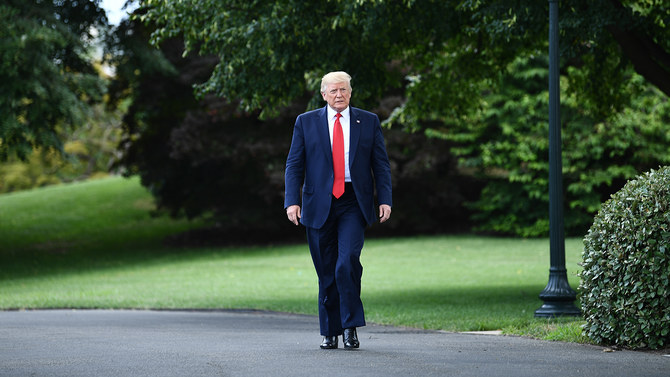
Pakistani Twitterati roast Trump for tweeting Hafiz Saeed arrested after “ten year search“
Pakistani Twitterati roast Trump for tweeting Hafiz Saeed arrested after “ten year search“
- Notable Pakistanis take to Twitter to set record straight about the alleged Mumbai attacks’ mastermind
- Saeed has been in and out of Pakistani prisons for years, addresses public rallies and heads a political party
Latest updates


© 2026 SAUDI RESEARCH & PUBLISHING COMPANY, All Rights Reserved And subject to Terms of Use Agreement.