LONDON: The battle to become Britain's next prime minister enters the home straight on Wednesday with both candidates hardening their positions on Brexit, putting the future government on a collision course with Brussels.
Ex-London Mayor Boris Johnson, the favourite to replace Theresa May, and Foreign Secretary Jeremy Hunt, are now both referring to Britain's departure with no overall deal in place as a realistic prospect.
The business community and many lawmakers fear dire economic consequences from a no-deal Brexit, which would lead to immediate trade tariffs for some sectors including the automotive industry.
Johnson and Hunt are taking part in a final question-and-answer session later on Wednesday before the result of the vote by Conservative Party members is announced next Tuesday.
The new party leader will be confirmed as prime minister by Queen Elizabeth II on the following day.
Britain has twice delayed its scheduled departure from the European Union after 46 years of membership as May tried and failed to get her deal with Brussels through parliament.
The two candidates vying to replace her have vowed to scrap a "backstop" provision in the agreement that Brussels insisted upon to keep the Irish border open.
Their latest attacks on the measure during a debate on Monday prompted a plunge in the value of the British pound.
The currency fell again Wednesday to its lowest level against the US dollar in over two years.
"The tougher stance from both Boris Johnson and Jeremy Hunt in terms of their rhetoric on Brexit is clearly weighing on the pound," said market analyst Neil Wilson.
"Make no mistake, this decline in the pound is down to traders pricing in a higher chance of a no-deal exit."
The backstop has proved a key stumbling block in the Brexit process.
The measure would keep open the post-Brexit border between British-ruled Northern Ireland and EU member the Republic of Ireland whatever the outcome of negotiations over the future relationship between London and Brussels.
Johnson announced early in his campaign that he would not sign up to it and would pursue a no-deal Brexit if required, leading his opponent to follow suit.
However, European leaders have been adamant that the backstop must remain a part of any divorce deal, raising the prospect of a no-deal Brexit.
German Defence Minister Ursula von der Leyen, who will become European Commission president in November, said the draft withdrawal agreement provided "certainty".
She also broached a possible further delay to Britain's departure, saying: "I stand ready for a further extension of the withdrawal date, should more time be required for a good reason."
Johnson has pledged that under his leadership, Britain will leave "do or die" on the current deadline of October 31.
A majority of lawmakers in the House of Commons are opposed to a no-deal Brexit, but attempts to pass legislation blocking the scenario have failed.
Reports this week suggested Johnson is considering plans to end the current session of parliament in early October, leaving MPs powerless.
Finance Minister Philip Hammond said Wednesday it was "terrifying" that some Brexit supporters thought that no deal would leave Britain better off.
And in a speech in London, May said the "best route" for Britain was to leave with a deal.
Delivering her last major address, she railed against the trend towards "absolutism" in Britain and abroad, and urged her successor to compromise.
"Whatever path we take must be sustainable for the long term, so that delivering Brexit brings our country back together. That has to mean some kind of compromise," she said.


![]()
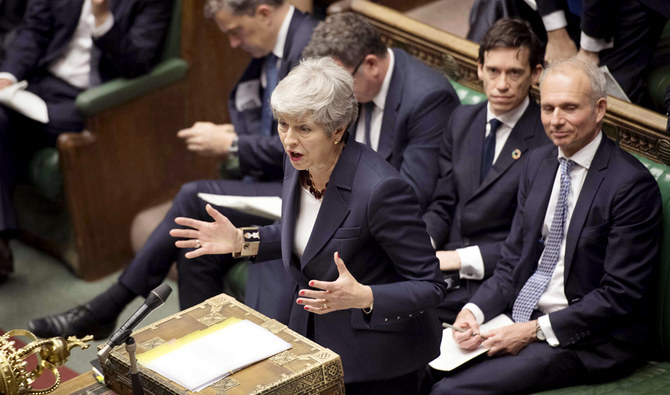
No-deal Brexit looms as race for new British PM wraps up

No-deal Brexit looms as race for new British PM wraps up
- Many lawmakers, business community fear dire economic outcome
- A majority of lawmakers in the House of Commons are opposed to a no-deal Brexit


Latest updates


© 2026 SAUDI RESEARCH & PUBLISHING COMPANY, All Rights Reserved And subject to Terms of Use Agreement.