VATICAN CITY: The mystery of the 1983 disappearance of the 15-year-old daughter of a Vatican employee took yet another twist Saturday following excavations this week at a Vatican City cemetery. The Vatican said it had discovered two sets of bones under a stone slab that will be formally opened next week.
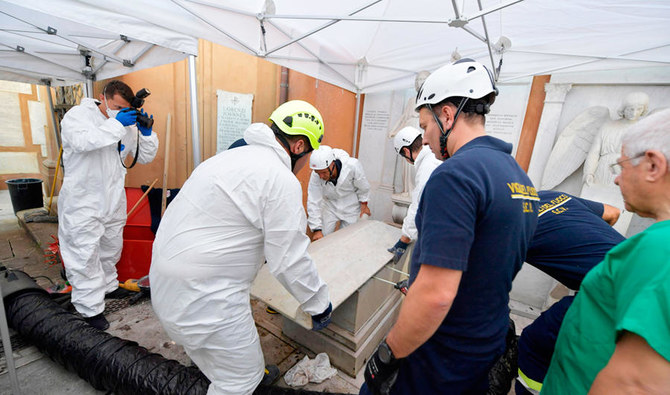
The new discovery came after Vatican on Thursday pried open the tombs of two 19th-century German princesses in the cemetery of the Pontifical Teutonic College in hopes of finding the remains of Emanuela Orlandi.
Orlandi’s family had received a tip that she might be buried there. But the tombs turned out to be empty, creating yet another mystery about where the dead princesses were.
The Vatican vowed to keep investigating and noted that any bones in the tombs might have been displaced during structural work carried out on both the college building and a cemetery near St. Peter’s Basilica in the 1800s and in more recent decades.
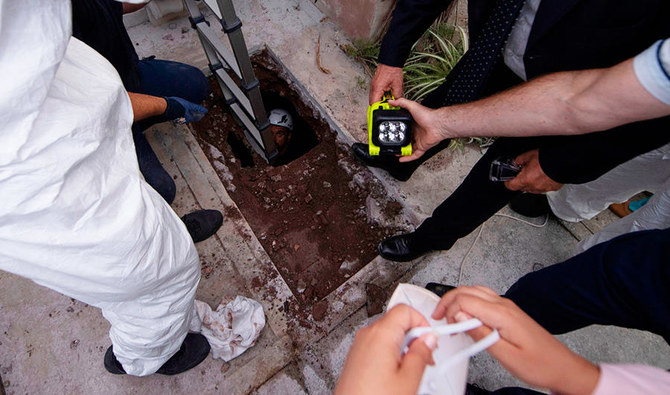
On Saturday, Vatican spokesman Alessandro Gisotti said further searches had centered on the areas adjoining the princesses’ tombs. He said investigators had located two ossuaries, or sets of bones, under a stone slab manhole covering inside the Teutonic college itself.
He said the area was immediately sealed off and would be opened in the presence of forensic experts on July 20.
Gisotti added that the bones were found in two holes carved out of a large stone that was covered by an old pavement stone a few meters (yards) behind the princesses’ tombs. That area is now technically inside a building of the Teutonic College, after expansion work on the building encroached onto the cemetery field.
The last recorded structural work done on the building and the cemetery was in the 1960s and 1970s. Orlandi disappeared in 1983.
She vanished after leaving her family’s Vatican City apartment to go to a music lesson in Rome. Her father was a lay employee of the Holy See.
Her case has been one of the enduring mysteries of the Vatican, kept alive by the Italian media and a quest by her brother to find answers. Over the years, her disappearance has been linked to everything from the plot to kill St. John Paul II to the financial scandal of the Vatican bank and Rome’s criminal underworld.
The last major twist in the case came in 2012, when Italian forensic police exhumed the body of a reputed mobster from the crypt of a Roman basilica in hopes of finding Orlandi’s remains as well. The search turned up no link.
Last year, bones were found underneath the Vatican’s embassy to Italy in Rome. Italian media immediately speculated the remains could belong to Orlandi or another girl who went missing at around the same time. But forensic tests showed the bones long predated their disappearances.
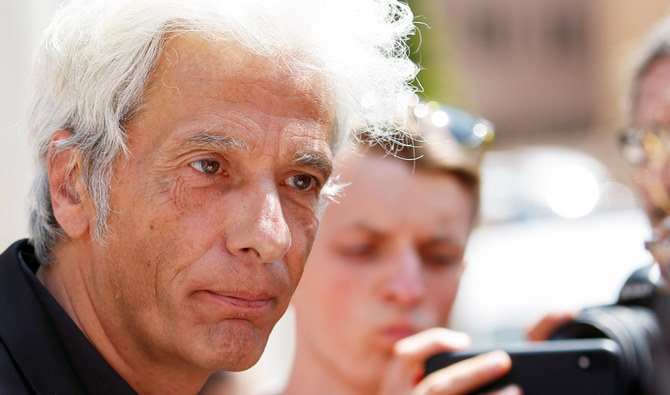
Pietro Orlandi, the missing girl’s brother, has long demanded the Vatican give the family full access to all information it has about his sister’s disappearance.
The family’s lawyer, Laura Sgro, said Saturday she had been informed of the discovery of the bones and that the family was pleased that the investigation was continuing.
“Our interest is to actively cooperate with Vatican prosecutors to understand better how those two tombs could have been empty,” she said in a statement. “If we understand together, it’s better.”
In 2017, an Italian investigative journalist caused a sensation when he published a five-page document that had been stolen from a locked Vatican cabinet that suggested the Holy See had been involved in Orlandi’s disappearance. The Vatican immediately branded the document a fake, though it never explained what it was doing in the Vatican cabinet.
The document was purportedly written by a cardinal and listed supposed expenses used for Orlandi’s upkeep after she disappeared.
Gisotti said this week that the Holy See “has always shown attention and closeness to the suffering of the Orlandi family and in particular Emanuela’s mother” and that its decision to excavate the Teutonic cemetery at the family’s request was evidence of that attention.


Vatican mystery over missing girl deepens as bones are found
Vatican mystery over missing girl deepens as bones are found

- Pietro Orlandi, the missing girl’s brother, has long demanded the Vatican give the family full access to all information it has about his sister’s disappearance


WHO warns of health risks from ‘black rain’ in Iran
- “The black rain and the acidic rain coming with it is indeed a danger for the population, respiratory mainly,” WHO spokesperson Christian Lindmeier told a press briefing in Geneva, adding that Iran had advised people to stay indoors
GENEVA: The World Health Organization warned on Tuesday that the “black rain” falling in Iran after strikes on oil facilities could cause respiratory problems, and it backed Iran’s advisory urging people to remain indoors.
The UN health agency, which has an office in Iran and works with authorities on health emergencies, said it has received multiple reports of oil-laden rain this week.
HIGHLIGHT
Tehran was choked in black smoke on Monday after an oil refinery was hit, in an escalation in strikes on Iran’s domestic energy supplies as part of the US-Israeli campaign.
Tehran was choked in black smoke on Monday after an oil refinery was hit, in an escalation in strikes on Iran’s domestic energy supplies as part of the US-Israeli campaign.
“The black rain and the acidic rain coming with it is indeed a danger for the population, respiratory mainly,” WHO spokesperson Christian Lindmeier told a press briefing in Geneva, adding that Iran had advised people to stay indoors.
Asked whether the WHO backed that advice, he said: “Given what is at risk right now, the oil storage facilities, the refineries that have been struck, triggering fires, bringing serious air quality concerns, that is definitely a good idea.”
One video sent to Reuters by a WHO staff member showed what they said was a cleaner mopping up black liquid at its office entrance in Tehran on March 8.


