DUBAI: Britain will facilitate the release of a seized Iranian tanker if Iran can provide guarantees the vessel would not breach European sanctions on oil shipments to Syria, Britain's top diplomat said late Saturday.
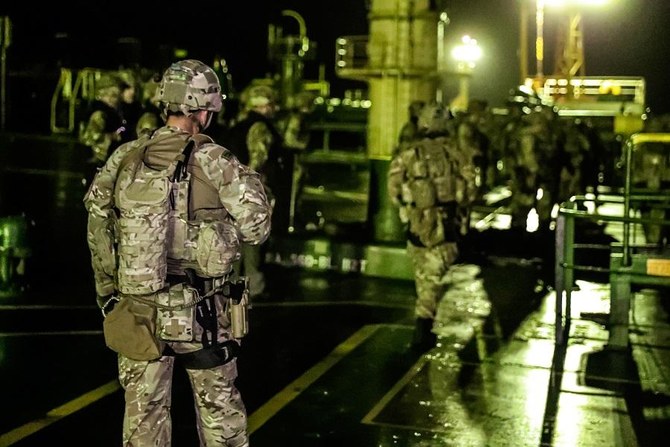
The comments by Jeremy Hunt could help de-escalate tensions that have spiked in recent days. In apparent retaliation for the seized tanker, Iranian paramilitary vessels tried to impede the passage of a British oil tanker through the Strait of Hormuz, only turning away after receiving "verbal warnings" from a British navy vessel accompanying the ship, the British government said.
Hunt said he held a "constructive call" with Iran's Foreign Minister Mohammed Javad Zarif and reassured him "our concern was the destination, not the origin, of the oil." Hunt wrote that Zarif told him Iran is not seeking to escalate.
The Foreign Office elaborated in a statement, saying: "This was about the enforcement of EU Syria sanctions: action was taken because of where the oil was going — a sanctioned Syrian entity — not because it was from Iran."
Ali Rabiei, an Iranian government spokesman, said British authorities would release the ship because "the tanker's destination was not what the British announced," according to state TV. Iranian officials had earlier denied the ship was bound for Syria.
A day earlier, Iran had reiterated its demands that the British navy release the tanker, accusing London of playing a "dangerous game" and threatening retribution.
The tanker's interception came on the heels of already high tensions in the Arabian Gulf as the Trump administration continues its campaign of maximum pressure on Iran.
President Donald Trump pulled the U.S. out of Iran's nuclear deal with world powers a year ago and has since re-imposed tough sanctions on Tehran's oil exports, exacerbating an economic crisis that has sent its currency plummeting.
The U.S. has also sent thousands of troops, an aircraft carrier, nuclear-capable B-52 bombers and advanced fighter jets to the Middle East in recent weeks.
Iran recently begun surpassing uranium enrichment limits set in its 2015 nuclear deal, saying these moves can be reversed if the other parties to the agreement — Germany, France, Britain, China, Russia and the European Union —come up with enough economic incentives to effectively offset the U.S. sanctions.
The Iranian supertanker, carrying 2.1 million barrels of light crude oil, was seized with the help of British Royal Marines earlier this month off Gibraltar, a British overseas territory near the southern coast of Spain.
Hunt told reporters on Saturday that he told Zarif if the U.K. could receive sufficient guarantees that that tanker was not headed for Syria "then we would be able to resolve the situation following of course, due process in the Gibraltar courts."
In recent days, Hunt has called for "cool heads" to prevail to ensure there is no "unintended escalation."
The U.K., meanwhile, is accelerating the dispatch of the HMS Duncan to relieve the HMS Montrose, the frigate operating in the Arabian Gulf that warned away the Iranian vessels. The HMS Duncan, a destroyer, is larger than the HMS Montrose.
Police in Gibraltar said Friday they arrested four crewmen of the Iranian ship, including its captain and chief officer. All are Indian nationals.
A senior Spanish official had said the interception was carried out at the request of the United States, but later Gibraltar's Chief Minister Fabian Picardo told parliament no other government had asked the territory to act.


![]()

UK says seized Iranian oil tanker could be released
UK says seized Iranian oil tanker could be released
- Jeremy Hunt made the comments after what he described as a “constructive call” with Iran’s Foreign Minister Mohammed Javad Zarif
- Hunt says Zarif told him Iran is not seeking to escalate


Latest updates


© 2026 SAUDI RESEARCH & PUBLISHING COMPANY, All Rights Reserved And subject to Terms of Use Agreement.