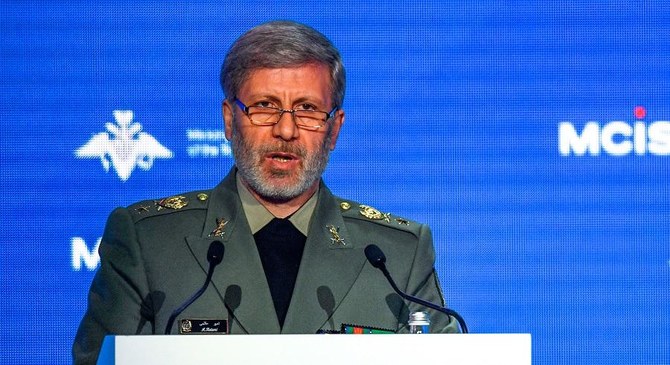
GENEVA: Britain’s seizing of an Iranian oil tanker last week was a threatening act that will not be tolerated, Iran’s Defense Minister Amir Hatami said on Monday in a speech broadcast live on state television.
Royal Marines impounded the tanker in Gibraltar on Thursday on suspicion it was carrying oil to Syria in violation of European Union sanctions. Iran denies the vessel was headed to Syria, where the government of President Bashar Assad is an ally of Tehran.
Authorities in the British territory said the tanker can be held for up to 14 days. An Iranian Revolutionary Guards commander threatened to seize a British ship in retaliation.
“These days we witnessed a threatening act from the government of England in the Strait of Gibraltar against a tanker from the Islamic Republic of Iran,” Hatami said. “This is an incorrect and wrong action, an action similar to maritime robbery...certainly these kind of robberies will not be tolerated.”
The tanker was not headed to Syria, Iran’s Deputy Foreign Minister Abbas Araqchi said on Sunday, without specifying the final destination of the vessel.
Hatami said Iran’s downing of an unmanned American aircraft last month sent a message that the Islamic Republic would defend its borders. Washington said the drone was shot down over international waters.
Separately, Iranian army chief Major General Abdolrahim Mousavi said on Monday that Iran is not looking for war with any country, according to the semi-official Mehr news agency.


![]()

Tanker detention by Britain was threatening act: Iran’s defense minister
Tanker detention by Britain was threatening act: Iran’s defense minister
- Royal Marines seized the tanker on Thursday for trying to take oil to Syria in violation of EU sanctions
- Gibraltar received permission from its supreme court to hold the tanker for 14 days


Latest updates


© 2026 SAUDI RESEARCH & PUBLISHING COMPANY, All Rights Reserved And subject to Terms of Use Agreement.