ISLAMABAD — An anti-graft crusade promoted by Pakistani Prime Minister Imran Khan has led to swathes of arrests of politicians, but critics say the economy is suffering as vital projects are put on hold by officials fearful of being caught up in the dragnet.
Khan won power last year vowing to root out corruption among what he cast as a venal political elite and views the probes into veteran politicians — including jailed former premier Nawaz Sharif and ex-President Asif Ali Zardari — as long overdue.
While few dispute the need to clean up Pakistani politics, the National Accountability Bureau (NAB) campaign has become a topic of fierce political debate.
Some in the business community say they worry the drive is hurting an ailing economy, which has just received a $6 billion International Monetary Fund bailout.
And the focus of the NAB so far on the new government’s political foes has prompted accusations it is a one-sided purge backed by Pakistan’s powerful military, which is seen to favor Khan. The government denies targeting political opponents.
NAB did not respond to a request for comment. The military also did not respond, but in the past it has denied interfering in politics or influencing NAB, an independent body within Pakistan’s legal system with its own investigators and courts.
The crackdown has also ensnared civil servants, who say they have become collateral damage in the accountability drive.
Six high-ranking officials who spoke to Reuters painted a picture of a civil service in disarray and decision-making at a standstill, with senior officials avoiding signing off projects or making decisions that could open them to bribery accusations.
“If a project works out, I don’t get a gold medal,” said one senior federal official. “But if it doesn’t work out, I might go to jail.” A second official spoke of an administrative “go-slow” amid a climate of fear in the bureaucracy.
POLITICAL CASES?
The government rejects accusations that NAB is impacting the economy, calling such allegations opposition propaganda, and says graft is to blame for Pakistan’s current economic woes.
Khan last month launched a commission to investigate projects and agreements that helped increase overall debt between 2008-2018, staffing it with members of NAB and military intelligence agencies.
Science Minister Fawad Chaudhry said government officials make up a small number of NAB cases, but their concerns had reached Khan and a special cell had been created within NAB to deal with bureaucrats’ issues.
“The rise of Imran Khan is basically a middle class revolution against corruption,” Chaudhry added. “You can’t expect from us that we will take the issue of corruption lightly.”
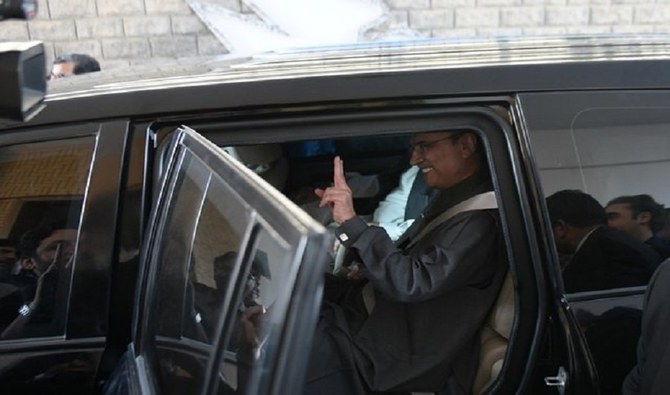
NAB last month arrested former President Zardari and his sister over alleged false bank accounts and money laundering. They both deny wrongdoing and call the arrests politically motivated.
Since Khan assumed power last August, NAB has continued investigating jailed former Prime Minister Sharif, who has alleged the military’s hidden hand is behind many of the anti-corruption cases against his family.
Fresh probes have also been opened involving Sharif’s brother and many of his closest allies, including at least eight ministers from the previous government. They all deny wrongdoing and say they are victims of persecution.
“Everybody who is against this government has a NAB case,” said one opposition politician who was a minister in the previous government.
Inquiries have also been launched against some prominent businessmen.
“KILLS CONFIDENCE”
Pakistan’s new liquefied natural gas (LNG) infrastructure, erected at breakneck speed by the previous administration, has emerged as a major anti-corruption battlefield.
LNG terminals built in 2016 and 2017 were vital to ending a decade of electricity shortages and turned Pakistan into one the world’s hottest LNG markets, with Qatar and Italy’s Eni signing long-term gas deals worth billions.
But Khan’s Pakistan Tehreek-i-Insaf (PTI) party has for years alleged corruption. In April, on NAB’s instructions, the government barred former Prime Minister Shahid Khaqan Abbasi, ex-Finance Minister Miftah Ismail, and six bureaucrats involved in the Qatar deal for the first terminal from leaving the country. They all deny wrongdoing. No allegations of wrongdoing have been made against the Qatari side.
Abbasi, who as petroleum minister masterminded Pakistan’s embrace of LNG, said he had to take a lead role because many officials were afraid of multi-billion dollar projects.
“Nobody wanted to do anything as they were scared of NAB,” said Abbasi, who said bureaucrats were now paying a price despite helping end electricity shortages. “We had good people who stuck their neck out and they’re all suffering today.”
A third LNG terminal and a new gas pipeline needed to keep up with rising energy demand have been on the “backburner” for more than a year as no decision making is taking place across ministries, according to an energy official.
“Bureaucrats being barred from leaving the country kills confidence,” he said. “We are going to have a (energy) crisis in a year or two.”
The result, say the officials who spoke to Reuters, is that senior colleagues nearing retirement are refusing to sign off on projects due to fears of being dragged out of retirement to answer NAB inquiries for years.
“If I have to make a decision about a $10 billion refinery... I’ll sit on this file for six months, and get the next guy to make that decision,” said the first senior federal official.
A senior civil servant in the Khyber Pakhtunkhwa province said he hasn’t approved any major project since late 2018.
“All bureaucrats know that once you are tagged with NAB, no matter if you’re innocent or you really did some corruption, you have no future,” he said. “You’re finished.”


![]()

’Government go-slow’, as Pakistan’s anti-corruption drive bites
’Government go-slow’, as Pakistan’s anti-corruption drive bites
- Anti-graft crusade promoted by PM Khan has led to swathes of arrests of politicians
- Focus so far on government’s political foes has prompted accusations of a one-sided purge
Latest updates


Recommended


© 2026 SAUDI RESEARCH & PUBLISHING COMPANY, All Rights Reserved And subject to Terms of Use Agreement.